
A standard dispute resolution clause can turn out to be the most expensive sentence in an international contract. In 2026 planning, the key question isn’t whether a contract includes mediation, arbitration, or litigation. The question is whether that clause gives the business control when money is frozen, supply chains are interrupted, or a local counterparty starts using procedure for tactical advantage.
For non-Israeli companies dealing with Israeli commercial contracts, the disadvantages of dispute resolution rarely appear in the sales pitch. They appear later, when a board expects speed, the business gets delay, and a paper victory still requires a second fight to enforce.
The 2026 Resolution Paradox
What looks efficient at signing often becomes unstable in conflict. Many CEOs still assume ADR is the low-friction answer to court risk. That assumption can distort pricing, reserves, and exit planning.

The problem is structural. A dispute clause doesn’t just determine forum. It shapes strategic advantage, information flow, settlement pressure, enforcement options, and management distraction.
Why the clause matters before the dispute
In cross-border contracts tied to Israel, the clause often governs more than a future hearing. It can affect the pace of negotiations after breach, the ability to compel evidence, and the practical value of any outcome.
A weak clause usually fails in one of three ways:
- It delays the fight: A mandatory step adds process without delivering resolution.
- It weakens pressure: The stronger party can exploit confidentiality, limited discovery, or procedural fragmentation.
- It produces a hollow win: The business obtains a decision but still struggles to convert it into payment or compliance.
Board-level test: If the clause cannot produce a fast, enforceable result against a resistant counterparty, it isn’t a risk-management device. It’s a liability.
The false comfort of standard language
Template clauses create false confidence because they sound balanced. “Good faith negotiation,” “mediation first,” and “binding arbitration” read like prudent compromise. Yet each phrase carries trade-offs that affect cash recovery, reputational exposure, and strategic deterrence.
This is especially important in franchise agreements, distribution arrangements, founders’ disputes, and commercial collaborations. In those settings, the wrong forum can keep the relationship alive just long enough to increase losses.
The clause must match the dispute profile. A licensing disagreement differs from a deadlocked joint venture. A payment default differs from an urgent restraint on asset movement. Standard wording rarely reflects that reality.
The Flawed Promise of Alternative Dispute Resolution
ADR gained prestige because it promised speed, lower cost, and commercial pragmatism. The historical record is less tidy. In the 1980s, over 600 large U.S. corporations adopted ADR policies, yet by the 1990s approximately 65% of cases facilitated by the American Arbitration Association were court-annexed, which meant ADR often became a step inside the judicial system rather than a true alternative, as noted in Thomson Reuters’ discussion of ADR’s historical limits.
That matters because the original promise was finality outside court. Instead, many companies got another layer of process.
Mediation, negotiation, and arbitration under pressure
Negotiation works when both sides want resolution. It breaks down when one side wants time, cover, or tactical ambiguity.
Mediation can preserve a business relationship. However, it depends on voluntary movement. If one side enters only to gather information or avoid immediate escalation, the process can drain momentum.
Arbitration sounds harder edged because it produces an award. Yet that strength can mislead decision-makers. A private tribunal still operates with constraints on appeal, evidence, and coercive process that may not suit every dispute.
ADR performs best when both parties still share an interest in solving the problem. It performs worst when one party benefits from drift.
Why the original model disappointed sophisticated companies
The early ADR wave assumed rational actors would prefer efficiency over attrition. In practice, some parties learned to use ADR as a tactical buffer. Delay became easier to disguise as cooperation.
That pattern still appears in international contracts. A party can insist on pre-arbitration meetings, resist document production, and then blame the other side for escalation. The clause then protects the wrong actor.
For businesses in construction, supply, or infrastructure, even seemingly practical dispute resolution services need to be assessed against a harder question. Will the process end the dispute, or merely stage-manage it while losses continue?
Where ADR still works, and where it doesn’t
ADR can still be effective in narrow circumstances:
- Relationship salvage: The parties want to continue trading.
- Technical disputes: A specialist neutral can grasp industry details quickly.
- Controlled conflicts: The amount at risk is modest relative to procedural cost.
It becomes dangerous where the business needs coercive tools, public precedent, or urgent remedies. In those disputes, the disadvantages of dispute resolution become less about legal theory and more about operational exposure.
A Comparative Analysis of Resolution Method Drawbacks
A multinational CEO doesn’t need abstract praise for process design. The board needs a comparison of failure modes. Litigation, arbitration, and mediation each impose different forms of cost and control loss.
The chart below captures the main drawbacks.
Dispute Resolution Methods Key Disadvantages
| Disadvantage | Litigation (Court) | Arbitration | Mediation |
|---|---|---|---|
| Speed risk | Court timetables can be slow and public procedure can expand the fight | Hearings can fragment and scheduling can prolong the case | One party can stall without consequence |
| Cost pressure | Legal spend can rise through full procedure and appeals | In complex cases, costs can exceed court litigation | Lower entry cost, but failed mediation can become an added layer before later proceedings |
| Fairness concerns | Formal rules can reduce arbitrariness, but process can still become burdensome | Arbitrator selection and procedural limits can create bias concerns | Power imbalance can shape settlement terms |
| Appeal rights | Broader challenge options exist | Very limited challenge rights | No imposed decision, so no true appellate correction |
| Precedent value | Public decisions can guide future conduct | Confidential awards usually create no precedent | Settlements create no precedent |
| Enforcement profile | Judgments may require recognition steps abroad | Awards can travel internationally more easily than mediated deals | Settlement often needs secondary enforcement action |
Arbitration is not automatically the cheaper option
Arbitration is often sold as leaner than litigation. In complex disputes, that claim can fail badly. Arbitration costs can exceed litigation by 20% to 50% in complex cases, and arbitration awards are overturned in only 1% to 5% of challenges, according to Calkins Law Firm’s discussion of ADR drawbacks.
That combination is a serious commercial problem. A company may spend more, obtain less procedural protection, and still remain trapped with a poor result.
Mediation has a fairness problem that contracts rarely address
Mediation is attractive because it sounds constructive. But a consensual process doesn’t guarantee a balanced one. The same source notes that power imbalances in non-binding ADR can lead to unjust outcomes in up to 30% to 40% of disputes.
That issue becomes acute in cross-border collaborations where one side controls the documents, the local market, or the immediate cash flow. In those cases, “commercial settlement” may mean the weaker party absorbs avoidable loss.
The decisive question isn’t whether the process is collaborative. It’s whether the weaker side has enough leverage to bargain at all.
Litigation’s weakness is obvious, but so is its leverage
Court litigation carries visible burdens. It is public, procedural, and often slower than executives want. Still, courts offer something private processes often cannot. They can issue orders with institutional authority, create public standards, and force disclosure under clearer rules.
That matters when the dispute threatens the company beyond the single claim. A breach in a regional distribution deal can trigger wider contract defaults, regulatory scrutiny, or a full crisis management scenario. In those moments, process discipline may be worth more than confidentiality.
The strategic comparison most contracts miss
The comparison isn’t “friendly versus hostile.” It’s control versus uncertainty.
A well-drafted clause should answer these practical questions:
- Can the company compel progress if the other side stalls?
- Can it get evidence before additional harm occurs?
- Can it challenge a flawed result?
- Can it turn the outcome into payment or compliance without a second war?
If the clause doesn’t answer those questions clearly, it leaves core business risk unresolved.
The Cross-Border Enforcement Trap in Commercial Contracts
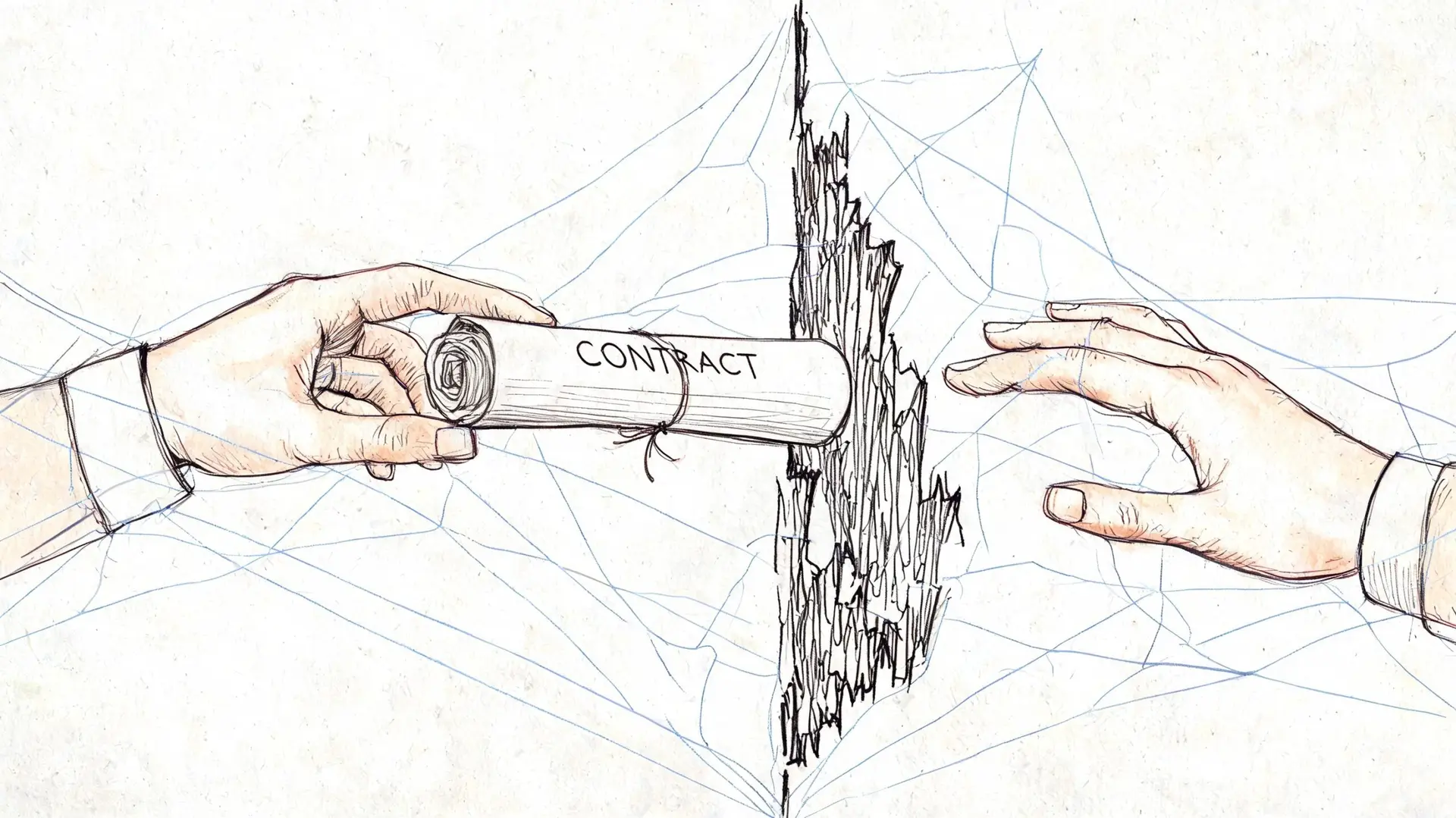
Cross-border disputes are where elegant clause drafting meets hard reality. A favorable outcome matters only if it can be enforced where the assets, revenue, or pressure points sit.
That’s why many standard ADR clauses fail under stress. They focus on procedure inside the hearing room and neglect the enforcement path outside it.
Arbitration travels better than mediation, but that isn’t the whole story
Under the New York Convention, arbitral awards are theoretically enforceable in 172 countries, while mediated settlements have no such automatic reciprocity, as explained in Harvard Business Review’s analysis of why ADR often fails. That distinction is fundamental for non-Israeli parties using Israeli contracts.
An arbitration award at least enters an existing recognition framework. A mediated settlement often requires a second legal step. That second step can erase much of the speed and savings that justified mediation in the first place.
The hidden weakness in mediated outcomes
A mediated deal often looks commercially elegant because both sides sign it voluntarily. Yet if one side later resists performance, the winner may need court action to convert agreement into enforcement.
That creates multiple risks at once:
- Delay risk: The parties return to formal proceedings after believing the matter was closed.
- Power reversal: The stronger party uses local procedure to renegotiate compliance.
- Evidence weakness: The neutral in ADR lacks coercive powers that a court may have provided earlier.
The same HBR source notes that empirical studies show outcomes favor the stronger party in 40% of ADR cases involving power imbalances due to the neutral’s lack of subpoena power. In practical terms, that means a well-capitalized counterparty can shape the process before the weaker side ever reaches a judge.
A mediated compromise isn’t an asset until a resistant counterparty can’t ignore it.
Israeli commercial contracts and foreign enforcement pressure
For non-Israeli companies in franchise, supply, management, or partnership deals linked to Israel, enforcement strategy must be drafted at the start. If assets sit in another jurisdiction, the clause must account for recognition risk, local procedural resistance, and the possibility that urgent relief will be needed before final merits are decided.
That is why communication discipline also matters before the dispute hardens. Cross-border misunderstandings can distort notice provisions, settlement exchanges, and later evidentiary positions. Teams that invest in effective communication for cross-border meetings usually put themselves in a stronger procedural position if the matter later escalates.
A victory that doesn’t convert is not a victory
Executives often treat “winning” as the end of the dispute. In cross-border reality, winning is only the midpoint. The second half is extraction.
If the counterparty controls local bank relationships, receivables, or operating entities, enforcement delay can create serious downstream harm. It can interfere with lending covenants, distributor confidence, and in some cases trigger secondary pressure such as bank account blockages.
The strategic lesson is simple. Draft for resistance, not cooperation. A dispute clause should assume that the losing party won’t perform voluntarily.
The Precedent Vacuum and Strategic Blind Spots
Confidentiality is often marketed as an advantage. For a one-off dispute, it may be. For a business with recurring legal issues, it can become a strategic handicap.
Private outcomes don’t build a rulebook for the next dispute. They also don’t send a public deterrent signal to future counterparties.
Why repeated disputes become harder to manage
In precedent-driven environments, predictability has economic value. It helps management assess exposure, reserve accurately, and negotiate from a known baseline.
ADR often removes that advantage. According to Duke Law scholarship on ADR and precedent, one study found 35% variance in ADR outcomes for similar disputes, compared with 15% in court cases. That gap reflects a core weakness of private adjudication. Similar facts may produce materially different outcomes.
The long-term cost of private inconsistency
A company with multiple franchisees, licensees, or commercial tenants needs repeatable standards. If each dispute disappears into a confidential settlement or award, management keeps paying to relearn the same lessons.
That creates several blind spots:
- Contract drafting blind spot: The legal team can’t refine clauses against a stable body of public interpretation.
- Pricing blind spot: The business cannot estimate likely downside with the same confidence.
- Deterrence blind spot: Counterparties don’t see a public track record of enforcement.
A business managing recurring occupancy or site issues under commercial lease agreements can feel this acutely. Without precedent, each dispute becomes a new debate over familiar language.
Confidentiality protects sensitive facts. It can also conceal recurring weaknesses in the contract model.
The strategic issue is not secrecy alone
The deeper issue is institutional memory. Courts create publicly accessible reasoning. Private processes usually create isolated outcomes.
For companies that operate across multiple jurisdictions, that difference affects negotiation power. Public court decisions can shape future settlements without another full hearing. Private awards usually cannot.
This is one of the least discussed disadvantages of dispute resolution. A business may preserve privacy in the short term while sacrificing predictability over years of contracting.
Actionable Steps for Strategic Risk Mitigation
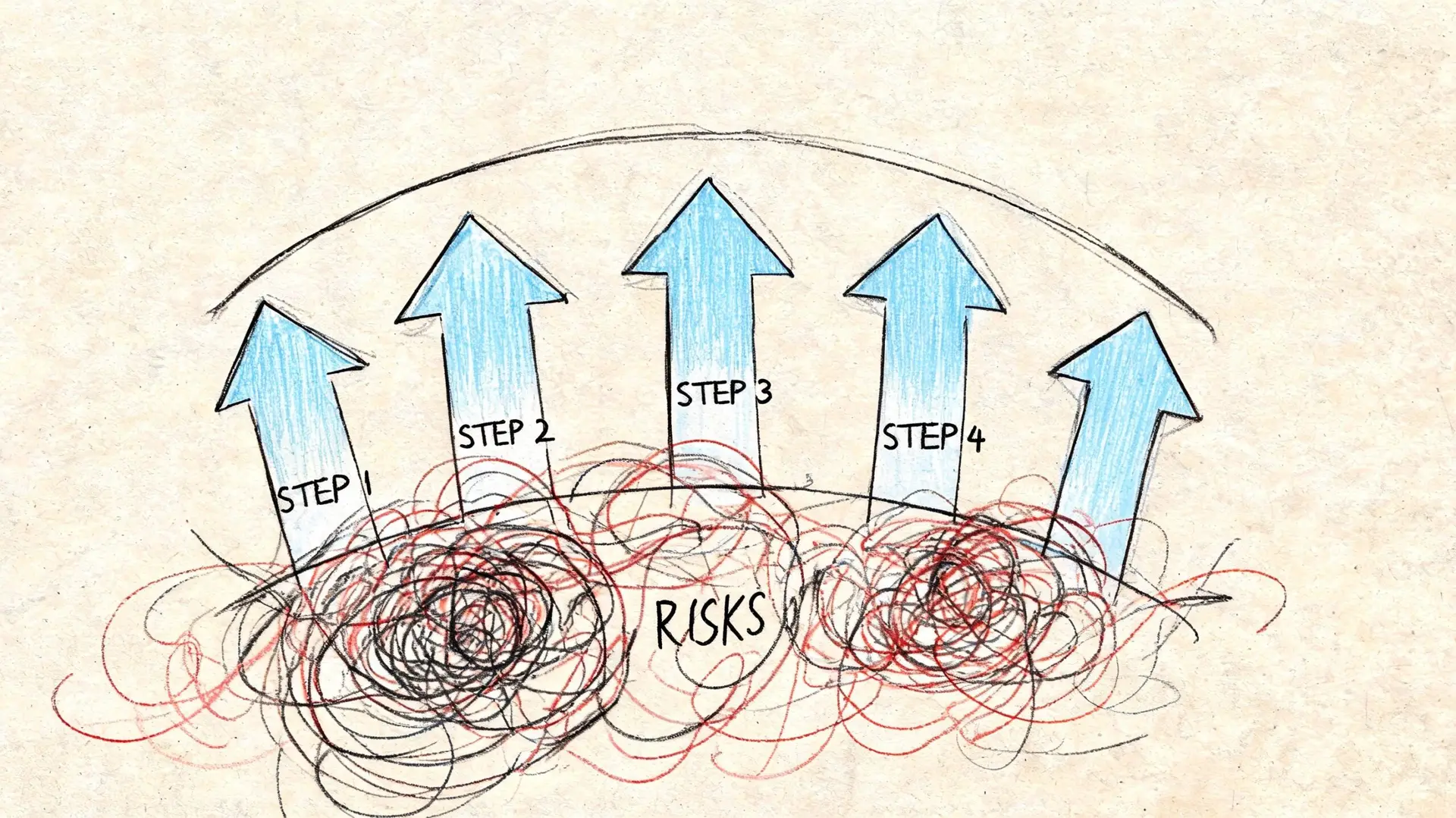
A strong dispute clause doesn’t chase the most fashionable process. It allocates pressure points in advance. That means selecting a method, a sequence, and an enforcement path that fit the actual commercial risk.
Draft the clause as a control system
Executives should treat dispute architecture as part of deal engineering. That requires a disciplined review process, not copy-paste language from prior contracts. Teams that use structured review methods and leveraging data for smarter decisions generally make better forum choices because they test assumptions instead of inheriting them.
A practical mitigation roadmap should include the following.
-
Match the clause to the likely dispute
Payment defaults, IP misuse, deadlock, and supply failure don’t call for identical procedures. Urgent asset risk may require immediate court access even if the merits later go to arbitration.
-
Use a multi-tier clause carefully
Negotiation or mediation can be useful, but the escalation triggers must be tight. Define who attends, how long the step lasts, and what happens if one side refuses to engage.
-
Preserve court access for interim relief
The clause should expressly allow applications for injunctions, evidence preservation, or urgent restraint orders in competent courts. Otherwise, the company may lose valuable time while arguing about forum.
Build enforcement into the initial design
The seat of arbitration, governing law, and location of assets should be assessed together. They should never be negotiated in isolation.
Consider this checklist:
- Seat selection: Choose a seat with credible judicial support and predictable treatment of awards.
- Asset mapping: Identify where the counterparty’s receivables, shares, inventory, and banking relationships sit.
- Language precision: Align notice clauses, evidence standards, and escalation triggers across all contract versions.
- Carve-outs: Reserve litigation for fraud, confidentiality breaches, restrictive covenants, or emergency payment protection where needed.
Avoid procedural clauses that reward delay
A common drafting error is excessive sequencing. The contract requires executive negotiation, then mediation, then expert determination, then arbitration. That may look highly developed. In practice, it can hand a reluctant counterparty four opportunities to waste time.
A better model is disciplined escalation. Use one short consensual phase, then move to a binding forum with defined powers.
Recommended rule: Every pre-arbitration step should have a clear deadline and a clear consequence for non-participation.
Review the clause against the exit scenario
The final test is simple. Assume the relationship collapses on the worst possible day. Assume one party stops paying, withholds documents, and challenges every procedural step.
If the clause still gives the business a realistic path to interim relief, a binding decision, and cross-border enforcement, it is doing its job. If not, the clause is cosmetic.
To avoid costly mistakes and ensure international commercial agreements are built to withstand conflict, the recommended path is to obtain strategic advice before a dispute starts. Contact RNC Group now to design a bespoke dispute strategy for Israeli and cross-border commercial contracts.
Disclaimer: This article provides general information only and doesn’t constitute legal advice. Readers should not rely on it as a substitute for advice focused on specific facts, jurisdictions, contractual language, and procedural posture.