
A small business acquisition can lose value before signing if the buyer runs a generic checklist against a target that operates under Israeli legal and regulatory rules. Cross-border diligence is not an administrative exercise. It is the buyer’s first and often best chance to identify tax leakage, defective IP ownership, hidden labor exposure, sanctions or customs friction, and closing obstacles that will not appear in a seller’s summary deck.
For non-Israeli acquirers, the Israeli issues are specific and material. The Israeli Tax Authority, the Israel Patent Office (ILPO), local labor courts, registrar filings, and Hebrew-language source documents can all change price, deal structure, indemnity design, and whether the transaction should proceed at all. A disciplined review tests what the seller says against what Israeli filings, contracts, and operational records show.
Speed cuts both ways. Sellers often compress the process, limit data room access, and release documents in stages. Buyers that accept that pace without a jurisdiction-specific plan usually discover the underlying problem after exclusivity has reduced their negotiating position.
The framework that follows covers eight risk areas that matter in any small business deal, then applies them through an Israel-focused cross-border lens. The objective is simple. Find the liabilities that survive closing, quantify the ones that can be priced, and stop the deal if the legal mechanics do not support a clean transfer. Buyers that need a baseline for organizing financial submissions can use Mintline’s financial statement templates before the legal review begins.
Trade and customs issues also belong in the opening screen, especially where the target imports components, exports finished goods, or relies on distributors in multiple jurisdictions. A practical reference point appears in J.W. Smith Customs Brokers on exporting into Canada, because cross-border shipping assumptions often reveal whether management understands the regulatory burden attached to its own revenue model.
1. Financial Records, Accounting and Tax Review
Financial diligence decides whether the numbers support the deal or expose a liability transfer. In Israel-focused cross-border transactions, that review must test not only profitability, but also whether the target’s accounting treatment, tax filings, and cash movements can withstand scrutiny from a foreign buyer, its lenders, and the Israeli Tax Authority.
Buyers should request enough history to identify patterns, not just a single strong year curated for sale. The core file usually includes income statements, balance sheets, cash flow statements, tax returns, trial balances, and general ledger detail across multiple years. For an Israeli target, that baseline is incomplete unless it also captures VAT reporting, related-party balances, shareholder loans, and any gap between statutory accounts and management reporting used to sell the business.
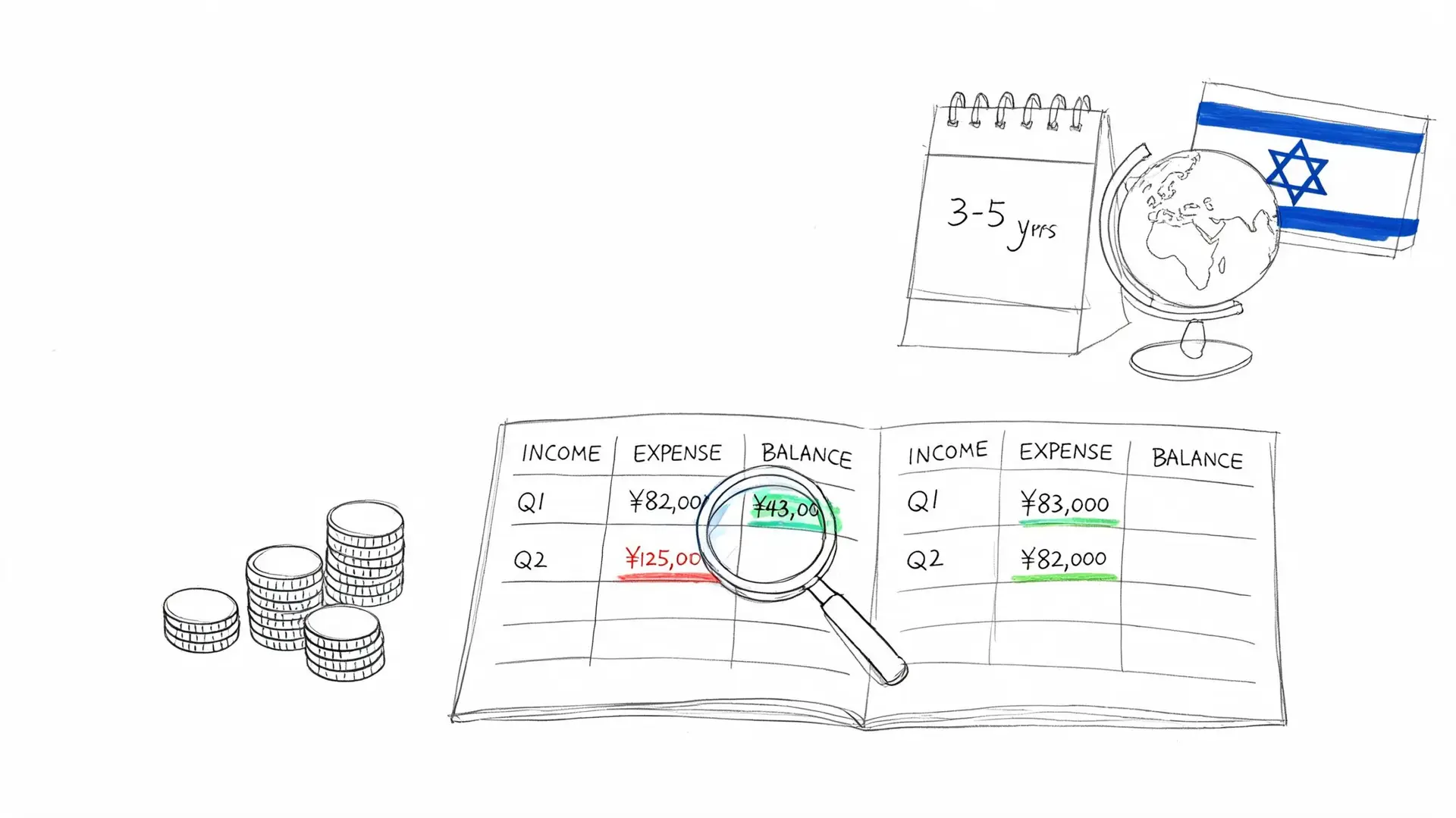
Polished summaries are not enough. Source documents matter. QuickBooks exports, ERP extracts, bank statements, VAT reports, payroll journals, and correspondence with accountants or tax authorities show whether reported earnings rest on real collections, aggressive cut-off practices, or owner-specific adjustments that will disappear after closing. A seller that delays source access is usually protecting a weakness, not managing an administrative burden.
Cross-border buyers miss the same issue repeatedly. The Israeli operating business often sits inside a structure where one company invoices customers, another employs staff, and another holds IP or real estate. That split can be legitimate. It also creates immediate execution risk if the acquisition perimeter does not match the revenue stream, tax profile, and asset base the buyer believes it is purchasing.
Normalization requires judgment. Seller adjustments can be reasonable, especially in founder-run businesses where personal expenses run through the company or compensation is below market. Some adjustments are attempts to reprice weak performance. The review should isolate one-off items, owner benefits, unusual accruals, and intercompany entries before any valuation discussion hardens into a locked price or earn-out formula.
Practical rule: If cash receipts, VAT filings, and ledger entries do not align, the buyer should assume either a control failure or a tax problem until the seller proves otherwise.
A disciplined file request should include:
- Ledger and reconciliation support: General ledger detail, trial balances, account reconciliations, aged receivables, aged payables, and monthly management accounts for each review period.
- Tax return matching: Reconcile the financial statements to filed corporate tax returns and ongoing correspondence with the Israeli Tax Authority, including audits, assessments, payment plans, and open objections.
- VAT testing: Confirm how the target treated domestic sales, exports, imports, exempt supplies, and input VAT recovery. Cross-border mistakes here often survive closing.
- Related-party and shareholder account review: Test loans, management fees, transfer pricing support, and undocumented balances between affiliates or founders. These items often distort working capital and create post-close collection problems.
- Banking continuity risk: Review payment flows, account restrictions, and any history that could interfere with post-closing operations. Banking friction can quickly become an operational crisis, especially where the business depends on uninterrupted collections. A useful factual reference appears in bank account blockages in Israel.
- Format control: Clean comparison starts with consistent reporting categories and statement structure. Standardized inputs such as Mintline’s financial statement templates help expose classification errors before they distort valuation.
For non-Israeli buyers, the objective is straightforward. Confirm that the company being acquired earned the revenue it claims, paid the taxes it was required to pay, and can transfer its economics without leaving unresolved exposures behind. If that cannot be shown on the file, the buyer should cut price, impose specific indemnity protection, or stop the deal.
2. Legal and Regulatory Compliance
Compliance failures don’t stay compartmentalized. They move directly into valuation, indemnities, and closing conditions.
A proper legal review checks licenses, permits, registrations, regulatory correspondence, and internal compliance protocols in every relevant jurisdiction. The challenge for Israel-facing deals is that generic checklists often treat compliance as a single line item, while cross-border transactions require jurisdiction-specific analysis of tax treaties, withholding, labor law, environmental obligations, and governance differences.
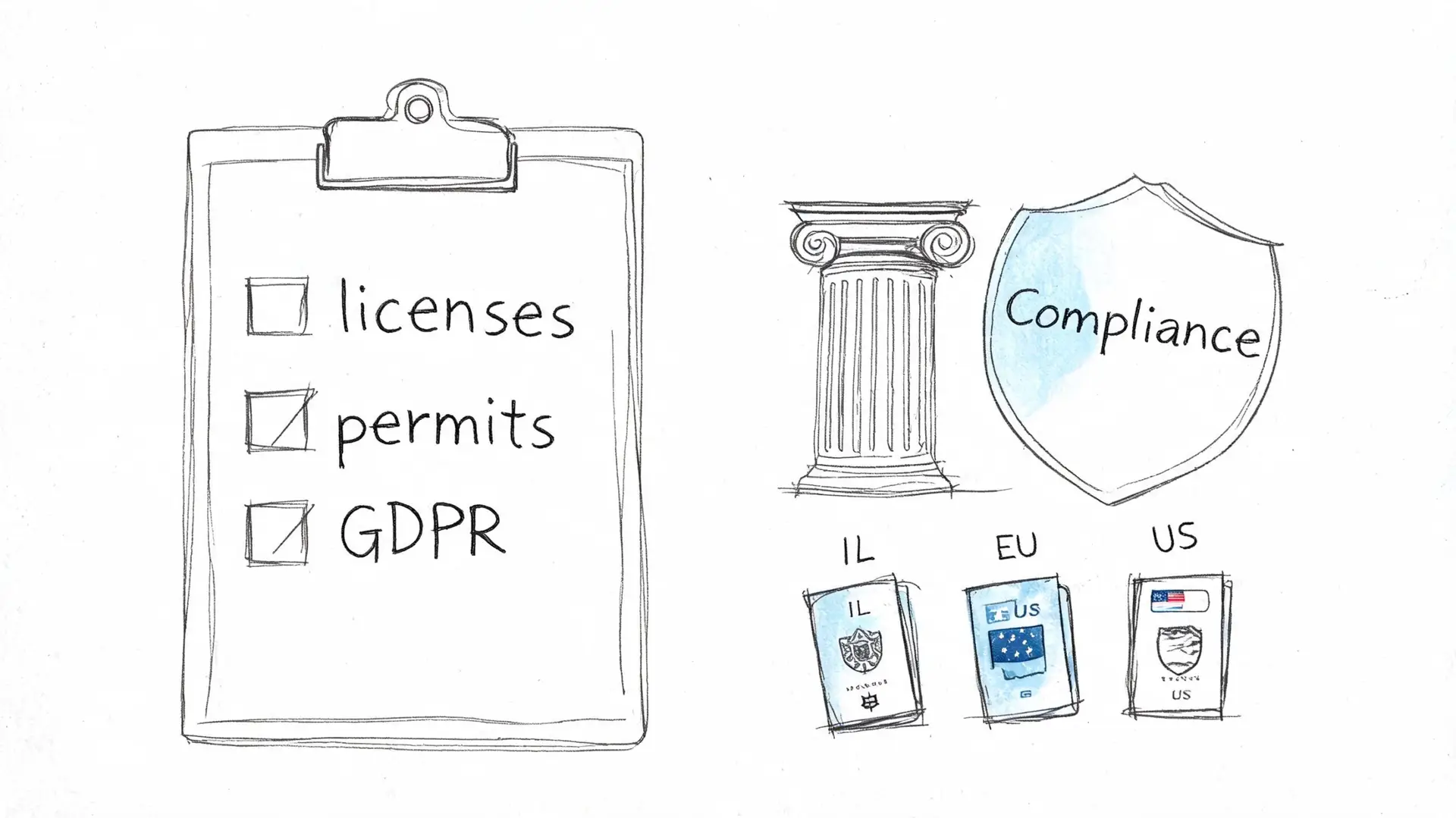
The verified record is clear on the gap. Existing guidance rarely addresses the cross-border legal and regulatory complications that matter most when an Israeli company acquires abroad, or when a foreign buyer acquires in Israel. That blind spot includes treaty effects on valuation, transfer pricing exposure, withholding obligations, and jurisdiction-specific labor liabilities, as noted in the cross-border diligence gap identified by Xero’s buying-a-business guide.
Israel-specific compliance pressure points
Israeli companies often operate across legal systems that use different disclosure norms and different enforcement cultures. A target may look compliant under one framework and still carry hidden risk under another. Buyers should therefore verify, not assume, that local permits, privacy obligations, sector approvals, and import or export controls map cleanly across the group.
This becomes acute in regulated sectors, franchise structures, and businesses with consumer data. If the target collects personal data in Israel and serves customers in Europe or North America, the buyer needs a regulator-by-regulator matrix. A single legal memo won’t do the job.
A clean compliance certificate doesn’t replace direct confirmation with the issuing authority.
Use a jurisdictional checklist that names the authority, the document, the filing status, and the consequence of non-compliance. That approach is slower. It’s also how buyers avoid inheriting a business that can operate only until the next regulator inquiry.
3. Contracts and Material Agreements Analysis
Contracts decide whether the buyer is acquiring enforceable revenue or a forecast built on assumptions. In Israeli small business deals, that distinction often turns on translation gaps, consent mechanics, and informal side arrangements that never made it into the data room.
The review has to go beyond collecting signed PDFs. Test whether the target can transfer each material agreement at closing, whether key counterparties can terminate on notice, whether pricing can be reset unilaterally, and whether the Hebrew version controls if the English text says something different. Foreign buyers miss this point too often. Israeli counterparties and local counsel usually work from the Hebrew document if the contract gives it priority.
Revenue concentration belongs in the same workstream as contract analysis. Review the top customer files across multiple periods, map billed revenue to executed agreements, and identify renewals, expirations, rebates, credits, and disputed invoices. Buyers should also ask a harder question. Which revenue survives the transaction without fresh consent from the customer, distributor, landlord, or lender?
The contract terms that change value fast
Three problem areas drive post-signing surprises.
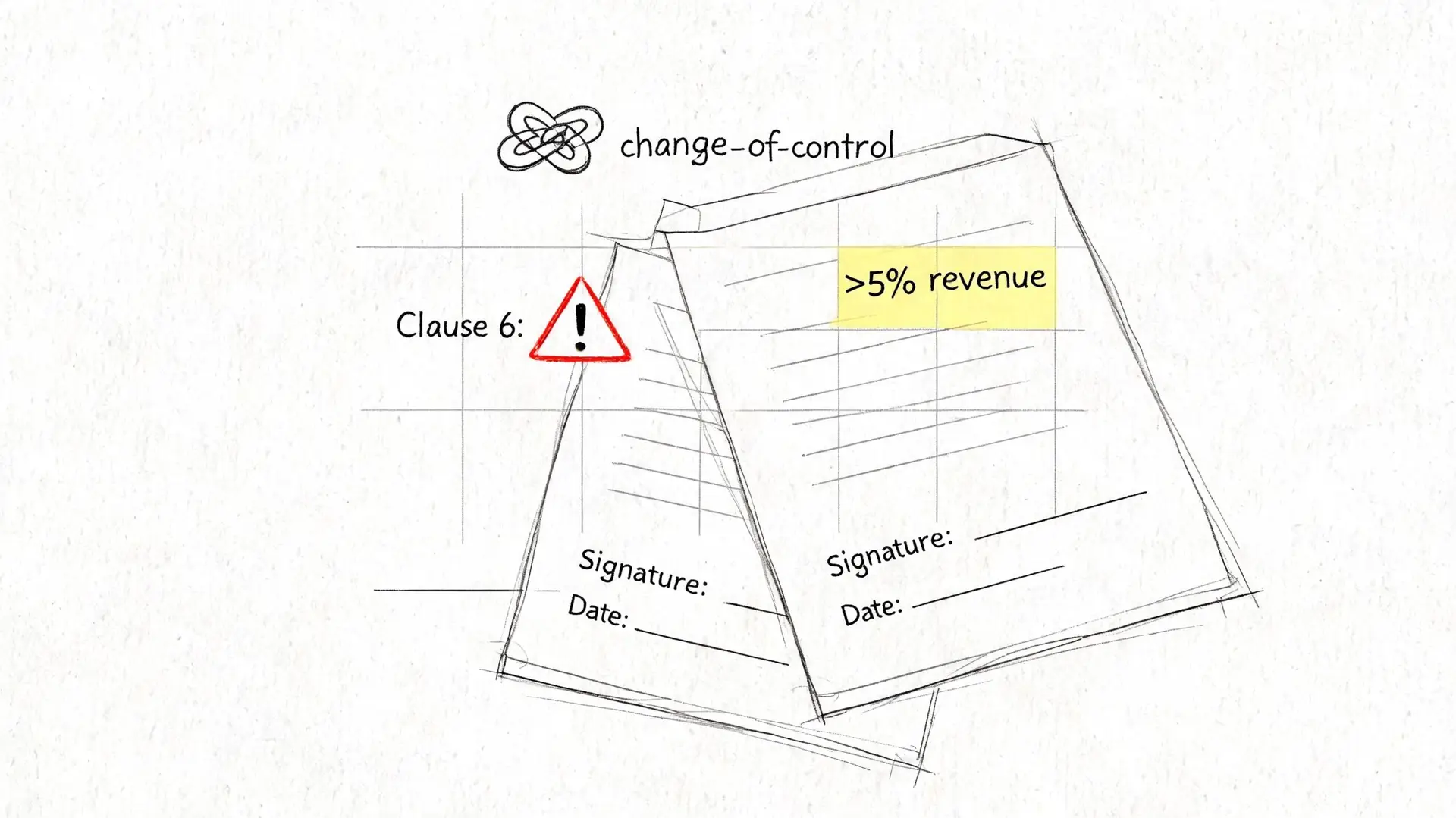
First, change-of-control and assignment clauses can create an advantage for the counterparty at the worst possible moment. A consent right may look procedural until a major customer uses it to demand a price reduction, revised service levels, or a shorter term.
Second, termination rights can wipe out projected earnings immediately after signing or closing. Termination for convenience, short notice periods, trial-phase language, and volume commitments that the customer can scale down without penalty all undermine headline recurring revenue.
Third, the formal contract may not be the full contract. In founder-led Israeli businesses, I often see commercial terms modified by email threads, unsigned addenda, purchase orders, WhatsApp confirmations, or side letters held only by the sales team. Those documents can change exclusivity, rebates, service scope, or payment timing. They can also defeat the seller’s summary of the relationship.
A useful contract matrix should capture counterparty, term, renewal mechanics, assignment rights, consent requirements, termination rights, exclusivity, governing law, dispute forum, language priority, and the revenue or operational dependency tied to each agreement. Add one more column. State whether the buyer has seen the full amendment chain or only the latest signature version.
Use targeted review for agreements that carry core operating risk:
- Customer dependency contracts: Match actual invoicing and collections against the signed terms. Check renewal notice periods, service credits, refund exposure, and any customer right to reduce volume without breach.
- Leases and occupancy rights: Confirm transfer rights, landlord consent requirements, restoration obligations, security arrangements, and default remedies. For Israeli premises, local lease practice can shift more repair, insurance, and reinstatement cost to the tenant than foreign buyers expect, especially under commercial lease agreements in Israel.
- Founder and partner arrangements: Check revenue shares, consulting retainers, distribution understandings, reseller rights, and advisory arrangements that survive departure or sale.
- Supplier lock-ins: Review minimum purchase obligations, sole-source dependencies, annual price adjustment mechanisms, currency exposure, and supply continuity protections.
- Financing and security documents: Identify negative pledges, cross-default clauses, personal guarantees, floating charges, and lender consent requirements that can block closing or restrict post-closing integration.
Israeli execution practice creates another risk for non-Israeli acquirers. The target may operate for years under an expired contract because the parties kept performing, or under a purchase order process that never aligned with the master agreement. That does not mean the arrangement is unenforceable. It does mean legal rights may be less predictable than the seller claims, especially once ownership changes and the commercial relationship loses its personal element.
Red flag: A contract register assembled for the transaction usually excludes expired agreements that still govern performance, side correspondence that changes economics, and Hebrew originals that control the legal outcome.
Buyers should insist on a reconciliation between the contract list, the general ledger, major invoices, and bank receipts. If the revenue appears in the accounts but the underlying agreement is missing, unsigned, expired, or non-transferable, the purchase price should reflect that risk.
4. Intellectual Property and Proprietary Assets Review
In many Israeli targets, the asset isn’t equipment or inventory. It’s code, data, know-how, or a trademark position that the founders treat as obvious ownership. Obvious ownership is not legal ownership.
This review should verify registrations, assignments, licenses, development history, open-source use, confidentiality controls, and restrictions tied to grants or public support. Buyers should also test whether the target’s key IP can move across borders without third-party consent, royalty obligations, or registration updates.
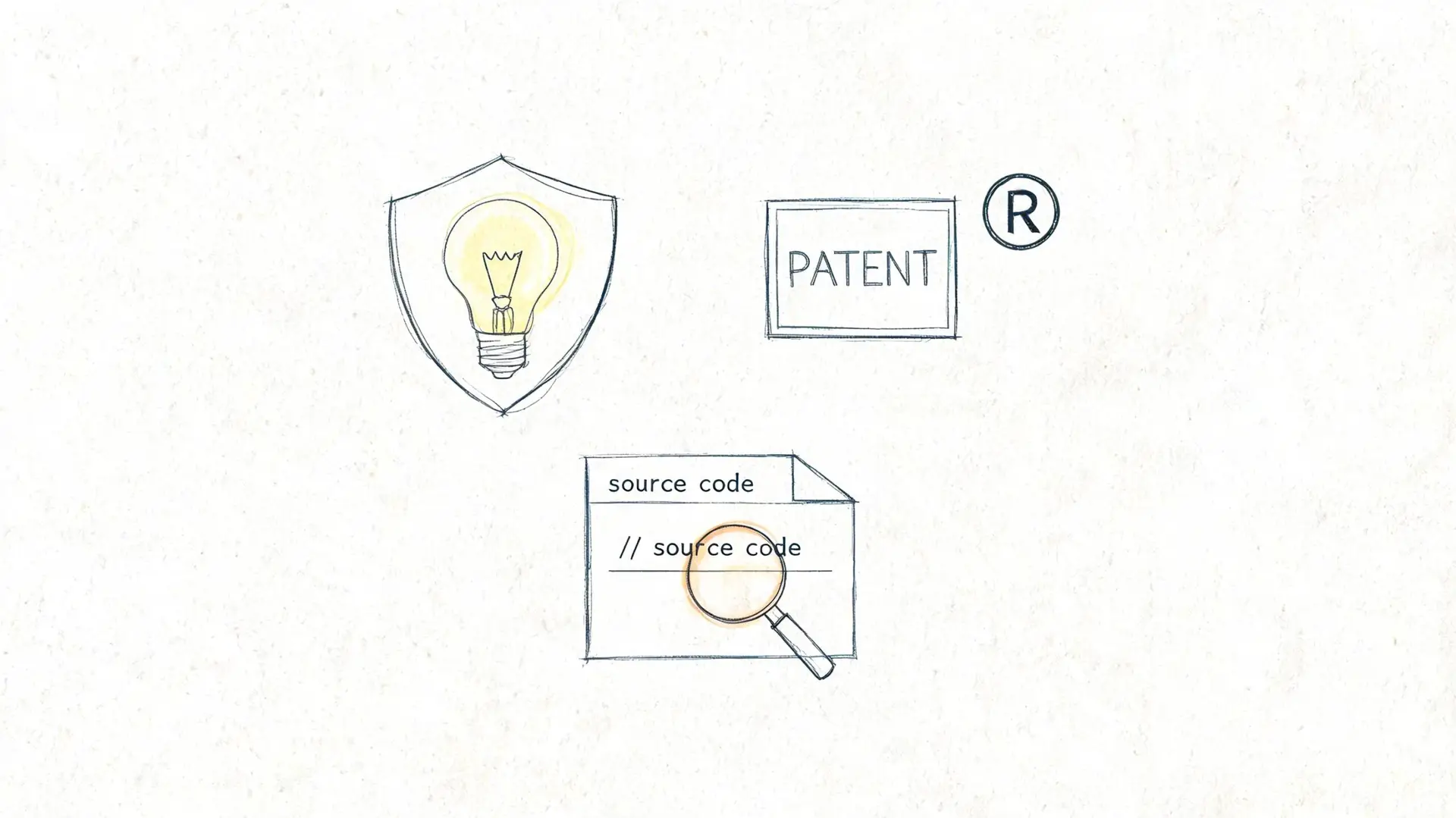
The Israeli angle is sharper than many foreign buyers expect. Startups and growth companies often rely on contractor-built code, university-linked research, founder-developed software, and unregistered know-how. If assignment language is missing, or if a founder registered key rights personally, the buyer may be acquiring a business that uses IP it doesn’t own.
What must be verified directly
The file should include trademark, patent, design, and domain records, plus signed assignments from every founder, employee, and contractor who contributed to the asset base. For software businesses, source code review and open-source compliance checks are not optional. A target that can’t map its repositories, contributor history, and outbound licenses hasn’t preserved a clean chain of title.
For Israel-related transactions, buyers should verify filings with the Israeli Patent Office and cross-check foreign filings where protection is claimed in other jurisdictions. The same review should examine secrecy measures. Trade secrets remain valuable only if the company treated them as secrets.
A practical review sequence works best:
- Registry verification: Confirm ownership and status with ILPO, WIPO, and any foreign registries the seller cites.
- Assignment chain review: Match each core asset to a signed assignment or employment invention clause.
- License mapping: Test whether inbound and outbound licenses survive a change in control.
- Trade secret controls: Review access restrictions, confidentiality agreements, and internal handling procedures.
When disputes arise later, buyers often discover that the target’s most valuable asset depends on weak paperwork and optimistic assumptions. That isn’t an IP issue alone. It often becomes a commercial dispute, a shareholder dispute, or a post-closing fraud claim.
5. Litigation, Disputes, and Contingent Liabilities
Litigation review isn’t a box-ticking exercise. It is a forecast of where management credibility, cash flow, and operational continuity may break down after closing.
The verified checklist for small business acquisitions requires legal checks that confirm no outstanding litigation or UCC filings, alongside broader review of disputes and claims. That sounds simple. In practice, buyers need more than a litigation schedule. They need pleadings, legal opinions, settlement correspondence, insurance notices, and board-level discussion of claims that never matured into filed proceedings.
The hidden file is usually the real file
Management tends to disclose filed cases and minimize threatened claims. Yet contingent liabilities often arise from demand letters, dismissed matters likely to return, employment accusations, regulator interviews, distributor disputes, and customer credits granted to suppress escalation. In cross-border acquisitions, the buyer should also identify proceedings outside Israel that could still affect the Israeli business or parent group.
Insurance matters belong inside the same review. If a claim exists but notice was never given to the insurer, the business may hold a theoretical policy with no practical coverage. That changes reserve analysis and purchase agreement drafting.
The right question isn’t whether the company has litigation. It’s whether the company has learned to live with unresolved legal exposure.
A disciplined dispute review should cover:
- Filed proceedings: Gather pleadings, motions, settlement status, and reserve treatment.
- Threatened claims: Request demand letters, lawyer correspondence, and internal incident reports.
- Regulatory matters: Ask for warnings, inspections, notices, and informal authority contact.
- Crisis posture: Assess whether management escalates early or reacts late. That difference often determines whether a dispute remains commercial or turns existential, which is why buyers should understand the principles reflected in crisis management law and response strategy.
Strong purchase agreements can shift part of this risk through specific indemnities, escrows, and disclosure schedules. Weak fact gathering can’t.
6. Ownership Structure, Capitalization, and Shareholder Matters
Buyers sometimes reach signing before they understand who controls the company. That is avoidable.
The ownership review should include incorporation documents, shareholder registers, board and shareholder resolutions, option and warrant documents, voting arrangements, liens, pledges, and any side letters that affect transfer rights or economics. In founder-led Israeli companies, informal understandings can sit beside formal records for years without being corrected.
Title to shares must be tested, not presumed
The issue is not only dilution. It is authority. A purchase agreement signed by the wrong combination of shareholders or directors can trigger immediate challenge, especially where pre-emption rights, tag rights, drag rights, or approval thresholds were never cleaned up before launch of the sale process.
This matters even more where a group includes foreign subsidiaries or nominee arrangements. A buyer should map legal ownership, beneficial ownership, and signing authority across the structure, then reconcile that map against constitutional documents and board approvals.
Key files should include:
- Cap table support: Match every issued security to approvals and issuance documents.
- Share transfer history: Confirm that past transfers complied with applicable restrictions.
- Encumbrance review: Check for pledges, liens, negative covenants, or creditor consent requirements.
- Deadlock and veto rights: Identify any shareholder provision that could block closing or post-close governance.
The legal work here is not glamorous. It is decisive. If title to shares or authority to sell remains uncertain, every other diligence finding becomes secondary because the buyer may not receive uncontested control at closing.
7. Employee, Labor, Benefits and HR Compliance
Employment risk closes deals slowly and reopens them after signing. In Israeli acquisitions, it also surfaces in forms many foreign buyers underestimate. Statutory severance, pension funding gaps, vacation accrual errors, contractor misclassification, and weak post-termination restrictions can convert an apparently manageable integration into immediate cash exposure and key-person instability.
A non-Israeli buyer should test the target’s workforce position against Israeli legal mechanics, not management summaries. That means checking compliance with mandatory pension contributions, severance arrangements under section 14 where relevant, notice obligations, wage-and-hour practices, and the actual treatment of consultants who function like employees. It also means reviewing whether employee inventions were assigned properly and whether restrictive covenants have any realistic chance of enforcement under Israeli law.
The highest-risk files are often ordinary ones. Payroll settings. Offer letters. Bonus emails. Missing signatures. Unapproved title changes. An HR file that looks tidy at first pass can still conceal accrued obligations that were never booked correctly.
Retention and liability sit in the same file
Small Israeli businesses often depend on a narrow band of employees who control code, customer relationships, regulatory know-how, or supplier execution. If those people lack signed confidentiality undertakings, invention assignment language, or clear compensation terms, the buyer inherits two problems at once. The target may struggle to retain them, and its legal position may weaken the moment one of them resigns.
I look for the gap between paper compliance and operational reality. Ask who approves compensation changes, how commissions are calculated, whether bonuses became fixed by custom, who has admin access to systems, and whether any “contractor” has worked like an employee for years. Those answers usually matter more than the org chart.
A disciplined review should cover:
- Workforce mapping: Reconcile the employee roster to payroll, contracts, contractor agreements, and actual reporting lines.
- Statutory payment testing: Check pension, severance, vacation, sick leave, recuperation pay, and notice entitlements against Israeli requirements and company practice.
- Classification analysis: Examine whether consultants, freelancers, or service-company personnel could assert employee status after closing.
- Restrictive covenant and IP review: Confirm confidentiality, non-solicit, and invention assignment protections for founders, developers, sales staff, and other key personnel.
- Records controls: Verify that personnel files, payroll approvals, and policy acknowledgments are complete and retrievable. Companies with weak file discipline often reduce execution risk by implementing a solution for HR data management.
Israeli regulatory touchpoints also matter here. Tax treatment should be checked against payroll reporting to the Israeli Tax Authority. Equity-linked compensation should be reviewed with the same care given to the cap table, especially where option grants, trustee arrangements, or withholding were handled informally. If the target employs foreign nationals, visa status and work authorization need separate confirmation.
A buyer that treats HR diligence as an administrative exercise usually pays for that mistake twice. First in claims and underfunded obligations. Then in post-closing disruption, when the people who run the business discover that management never put their terms, protections, or accrued rights in order.
8. Customer and Supplier Strategic Relationship Assessment
Customer and supplier diligence decides whether the revenue base survives closing.
For a non-Israeli buyer, this work is not limited to ranking accounts by size or listing key vendors. A key question is whether the target’s commercial relationships remain stable after ownership changes, regulatory scrutiny, currency pressure, or a dispute that must be enforced in Israel. A customer that renews informally, pays late, and resists assignment is not a stable asset. A supplier that controls a critical component without a viable substitute can reset your margin in one quarter.
The first pass should isolate concentration on both sides of the business. Heavy dependence on a small number of customers, distributors, manufacturers, or logistics providers changes valuation, financing terms, and integration planning. It also changes legal drafting. If retention risk is real, buyers should not rely on headline revenue. They should price that risk through earn-outs, holdbacks, deferred consideration, or a closing condition tied to specific relationship consents.
Relationships must be tested beyond the spreadsheet
Test the top customer relationships against the documents and the conduct. Review signed agreements, purchase orders, actual invoicing patterns, payment delays, discounting history, renewal mechanics, service levels, complaint logs, and any side arrangements known only to management. In many small businesses, the official contract says one thing and the commercial reality says another. The second version matters more.
Israeli targets present a few recurring pressure points. Some customer arrangements are governed by short-form purchase orders with weak assignment language or no clear term. Some rely on personal founder relationships rather than enforceable commitments. Some export or distribution relationships raise issues under local agency, exclusivity, or competition rules that a foreign buyer underestimates at signing. If revenue depends on public-sector customers or regulated industries, confirm tender compliance, registration status, and whether a change in control could trigger review or informal resistance.
Supplier diligence requires the same discipline. Map critical inputs, lead times, sole-source dependencies, substitute availability, price-adjustment rights, minimum purchase obligations, and the operational cost of switching. Then test cross-border friction. Customs exposure, sanctions screening, shipping concentration, and foreign exchange risk can turn a seemingly profitable supply chain into a post-closing problem. If a key supplier is outside Israel while the target’s delivery commitments are governed by Israeli law, enforcement and interim relief need to be considered early, not after a disruption.
Buyers acquire future performance under changed ownership, not historical invoices.
A disciplined review usually includes:
- Customer concentration testing: Identify the accounts that drive revenue, margin, and credibility in the market. Then verify how secure those relationships really are after closing.
- Contract-to-conduct verification: Match reported sales to signed agreements, purchase orders, correspondence, and collection history. This exposes revenue that depends on custom rather than legal commitment.
- Retention risk interviews: Question sales leadership, operations, and founders separately. Inconsistent answers about renewal timing, pricing pressure, or customer dissatisfaction are a warning sign.
- Supplier dependency mapping: Identify single-source inputs, exclusive distributors, and vendors with unusual bargaining power. Confirm whether substitutes exist in practice, not just on paper.
- Israel-specific legal checks: Review assignment clauses, governing law, dispute forums, import terms, and any exposure involving the Israeli Tax Authority, sector regulators, or local licensing tied to continued supply.
This area often changes deal structure faster than any customer pipeline presentation will admit. The business may still justify the acquisition. But if the commercial relationships are fragile, the legal response should be immediate and specific. Reprice the deal, require consents, condition closing on retention, or reserve cash for the disruption that management has not modeled.
8-Area Small Business Due Diligence Comparison
| Due Diligence Area | Implementation Complexity 🔄 | Resource Intensity ⚡ | Expected Outcomes ⭐📊 | Ideal Use Cases 💡 | Key Advantages ⭐ |
|---|---|---|---|---|---|
| Financial Records, Accounting and Tax Review | High, detailed multi-year, multi-jurisdictional analysis 🔄 | High, forensic accountants, tax specialists, GL access ⚡ | ⭐ Accurate valuation; 📊 uncovers hidden liabilities and tax exposure | Cross-border M&A, tax-sensitive targets, complex group structures 💡 | ⭐ Reveals true financial health; prevents inheriting tax disputes |
| Legal and Regulatory Compliance | High, jurisdictional and sectoral rules; evolving interpretations 🔄 | Medium‑High, local counsel and regulator verifications ⚡ | ⭐ Mitigates regulatory fines; 📊 ensures operational continuity post-close | Entry to regulated markets or heavily regulated industries (banking, pharma) 💡 | ⭐ Prevents regulatory liabilities; enables remediation planning |
| Contracts and Material Agreements Analysis | Medium‑High, large volume and nuanced clauses (change‑of‑control) 🔄 | Medium, experienced transactional attorneys and contract registry review ⚡ | ⭐ Identifies termination/consent risks; 📊 clarifies revenue continuity impact | Targets with many customer/supplier contracts or revenue concentration 💡 | ⭐ Exposes contractual continuity and margin risks before closing |
| Intellectual Property and Proprietary Assets Review | Medium‑High, ownership, assignments, FTO and local nuances (ILPO) 🔄 | High, IP counsel, technical/code review, registry searches ⚡ | ⭐ Confirms ownership and defensibility; 📊 validates intangible asset value | Tech acquisitions, Israeli startups with funded IP or complex licensing 💡 | ⭐ Secures freedom to operate and uncovers encumbrances |
| Litigation, Disputes, and Contingent Liabilities | High, uncertain outcomes and cross-border proceedings 🔄 | Medium‑High, litigation counsel, claims file review ⚡ | ⭐ Quantifies exposure; 📊 informs reserves and pricing adjustments | Targets with litigation history, regulatory investigations, or product risk 💡 | ⭐ Identifies material contingent liabilities and insurance gaps |
| Ownership Structure, Capitalization, and Shareholder Matters | Medium, cap table complexity and governance review 🔄 | Medium, corporate counsel, cap table modeling and document verification ⚡ | ⭐ Ensures clear title and required consents; 📊 clarifies dilution and preferences | Deals with multiple share classes, preferred stock, or founder equity issues 💡 | ⭐ Reveals hidden equity interests and governance constraints |
| Employee, Labor, Benefits and HR Compliance | Medium, jurisdictional labor rules (notably Israeli severance) 🔄 | Medium, HR, employment counsel, payroll data review ⚡ | ⭐ Identifies severance/benefit liabilities; 📊 assesses retention risk | Labor‑intensive targets, Israeli entities, or unionized workforces 💡 | ⭐ Reveals employment liabilities and helps design retention plans |
| Customer and Supplier Strategic Relationship Assessment | Medium, requires data, interviews and credit checks 🔄 | Low‑Medium, commercial due diligence, reference calls, analytics ⚡ | ⭐ Assesses revenue stability; 📊 exposes concentration and supply risks | Businesses with few large customers or single‑source suppliers 💡 | ⭐ Highlights concentration and supply‑chain vulnerabilities |
From Checklist to Closing Your Strategic Next Steps
A due diligence checklist small business process determines whether the buyer controls the deal or inherits avoidable exposure. In Israel-related transactions, that question turns quickly on local legal mechanics, tax enforcement practice, Hebrew-language records, and filing gaps that a standard domestic checklist will miss.
Strong buyers use diligence to change documents, price, and risk allocation before signing. A mismatch between reported revenue and Israeli Tax Authority filings can support a purchase price adjustment or a holdback. A defect in share issuance history or transfer approvals can require a pre-closing cure. An unrecorded IP assignment at the ILPO can force a specific indemnity, escrow, or deferred closing. If employment liabilities under Israeli law are understated, the structure itself may need to change.
Speed matters, but sequence matters more.
A disciplined team starts with the issues that can stop the transaction, delay closing, or impair enforcement after closing. For a non-Israeli acquirer, that usually means confirming who owns the shares, which contracts require consent, whether tax and payroll filings match management accounts, whether core IP was validly assigned, and whether any regulatory breach has an identified cure path. Buyers lose their advantage when they leave those points until the purchase agreement is already in circulation.
The closing phase should convert findings into documents. That includes revised definitions of material adverse effect and indebtedness, targeted representations, disclosure schedules that provide substance, escrow mechanics tied to identified risk, and post-closing covenants with dates, responsibility, and consequences for breach. General warranty language does not solve a known Israeli compliance problem. Specific drafting does.
Counsel with Israeli and cross-border transaction experience adds value by identifying which issue is cosmetic and which issue can impair title, tax treatment, remittance, or enforcement. RNC Group coordinates that analysis across Israeli commercial law, multilingual deal documents, disputes risk, and transaction pressure points where a seller starts resisting cure measures or document production.
If the file is incomplete, inconsistent, or overly dependent on management assurances, act before signing. Buyers that wait for certainty usually sign first and discover the gap later. Businesses that need a fact-specific assessment can contact the firm now before the purchase agreement fixes a risk allocation they should have challenged earlier.
Disclaimer: This article provides general information for informational purposes only and does not constitute legal advice. The information is not a substitute for professional legal advice from a qualified attorney licensed in the appropriate jurisdiction. Reliance on any information provided in this article is solely at your own risk.
RNC Group advises on Israeli and cross-border commercial risk, including acquisitions, disputes, contracts, and diligence strategy. Businesses that want to avoid preventable deal mistakes should open a fact-specific review before signing, not after exposure appears.