
A frozen Israeli bank account can shut down a multinational faster than many CEOs expect. The first failed check often looks local and technical. In reality, it can trigger a cross-border commercial crisis that affects payroll, counterparties, lenders, and board reporting at the same time.
That gap matters in 2026. Most executives ask which law applies. The harder question is which legal and operational controls keep the business moving when an Israeli banking restriction hits without warning.
When an Israeli Bank Account Freezes Your Global Operations
The crisis usually starts with one rejected payment. An Israeli subsidiary issues a check to a supplier, landlord, or service provider. The bank returns it, and the local team treats it as an accounting problem for a few hours too long.
By the time headquarters understands the issue, the damage has already spread. A supplier stops dispatching goods. A payroll provider asks for pre-funding. A regional finance team starts asking whether the Israeli entity can still support shared obligations under group arrangements.
For a multinational, this isn’t a minor banking inconvenience. It is a control failure with legal and commercial consequences. If the Israeli operating account becomes restricted, the company can lose practical access to a core payment rail inside one of its active markets.
Why generic advice fails
Domestic advice often looks only at the account. International business law requires a wider view. Modern cross-border commerce is heavily treaty-based, and the World Trade Organization was created on January 1, 1995, replacing GATT as the central multilateral institution for trade rules. It now has 166 members, covering the vast majority of global trade, which underscores that international business law is a framework of treaties, customs, and general principles rather than a single code (EBSCO on international business law).
That matters here because the bank issue is only one layer. The same event can affect import timing, distributor performance, licensing obligations, and dispute positioning across several jurisdictions. A CEO needs a crisis map, not a narrow memo.
Practical rule: Treat the first returned check as an enterprise risk event, not as a bookkeeping error.
The immediate task is control. Management must stabilize payments, preserve evidence, assess exposure, and decide whether the restriction is legally attackable. Delay usually makes every later step harder.
Understanding the Israeli Returned Checks Law
What happens when a local Israeli banking rule turns a payment problem into a legal status that can shut down part of your business?
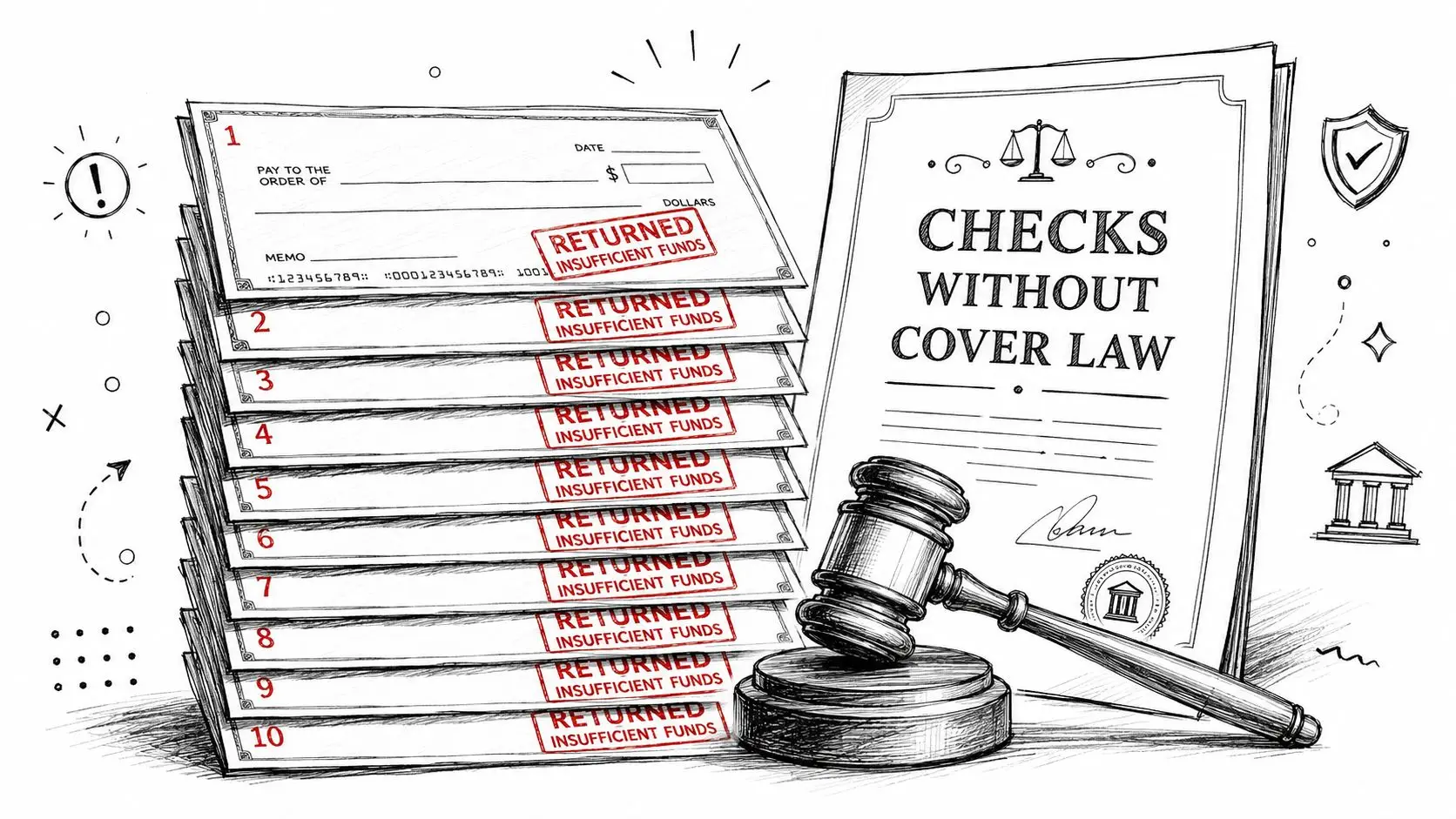
Foreign executives often discover this law after the bank has already acted. By then, the company is no longer dealing with an isolated treasury error. It is dealing with a formal restriction under Israeli law, with operational, evidentiary, and strategic consequences.
The trigger that changes the dispute
Under the framework described in the brief for this article, the practical trigger is ten returned checks within a twelve-month period. Once that threshold is crossed, the account becomes restricted. For a multinational, the point to understand is simple. This is not just a bank’s internal risk decision. It is a statutory event with downstream effects the business cannot dismiss through ordinary relationship management.
That shift matters because the conflict changes character. What started as a failed payment can become a legal obstacle to routine commercial activity. In practice, management must treat the restriction as the opening phase of a broader business dispute involving the bank, counterparties, auditors, and sometimes regulators.
Two tiers of exposure
The law is usually understood in two practical levels:
- Restricted account: The account has crossed the statutory threshold and is subject to direct limits tied to returned checks.
- Severely restricted account: The consequences widen and may affect the ability to open new current accounts or continue ordinary banking activity.
That distinction has real consequences. A foreign parent may assume it can shift payments to another Israeli account and keep trading. Sometimes it can. Sometimes the second-tier consequences make that response too slow, too narrow, or legally ineffective.
In a crisis, this is the wrong place for assumptions.
A returned-check event rarely stays inside the banking file. It can collide with board reporting, delegated signing authority, supplier defaults, intercompany funding mechanics, and compliance controls across more than one jurisdiction. That is why this issue belongs in an international business law analysis even though the immediate trigger is local. The bank restriction is only one front in a wider commercial conflict.
What executives need to understand early
Three points usually decide whether the company regains control quickly or loses valuable time:
- The process is mechanical before it becomes contested. Once enough checks are returned, the legal status can change fast.
- Good faith is not a defense by itself. A company can have liquidity elsewhere, intend to cure the issue, and still face restriction.
- Cross-border treasury logic does not always match Israeli banking practice. A group-level workaround may exist in theory and still fail in real time inside the local system.
I have seen executives waste critical days arguing that the bank should understand the commercial context. That argument may matter later. First, build the record.
The immediate task is to reconstruct each returned item, confirm dates and grounds for return, secure account statements, preserve bank communications, and identify any factual basis to challenge the count or the classification. In this phase, precision beats indignation. A CEO needs a case file, not a complaint.
The Immediate Business Impact for Multinationals
The business effect is rarely linear. It moves in waves. First, payments fail. Then people react. After that, contracts start to strain under the pressure.
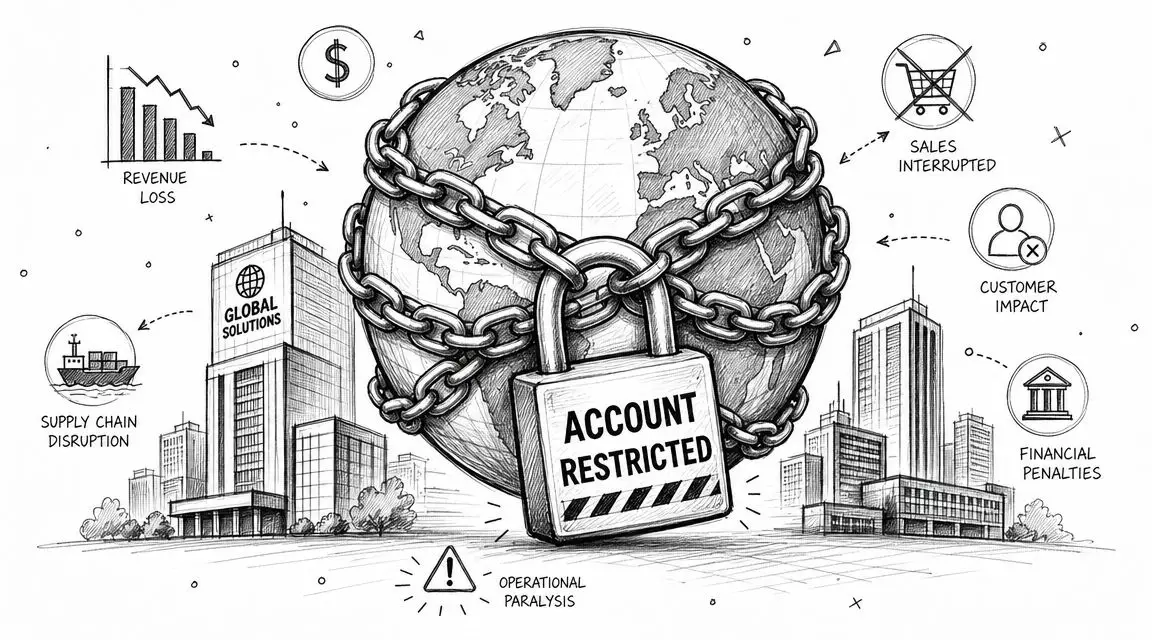
Operations stop before strategy catches up
An Israeli subsidiary with a restricted account may struggle to pay staff, vendors, landlords, and local service providers through expected channels. Even if the parent company has liquidity, moving money into the right place at the right time can become a legal and operational exercise rather than a routine transfer.
That creates friction across the supply chain. Local counterparties don’t care that treasury is preparing a group-level workaround. They care whether today’s payment clears.
A CEO should expect pressure in at least four directions:
- Payroll risk: Employees judge solvency by whether wages arrive on time.
- Vendor pressure: Suppliers shorten patience quickly once a payment instrument fails.
- Lease and facility exposure: Landlords may treat non-payment as a default signal.
- Audit and governance escalation: Boards and lenders want immediate explanations.
Reputation deteriorates fast
Returned checks also change how counterparties view the business. Trust falls before formal default occurs. The market response is practical, not philosophical. People ask for advance payment, extra security, or reduced exposure.
That is why account restrictions often belong inside a broader commercial crisis management framework. The legal issue and the communications issue arrive together. If management addresses only one, the other keeps weakening the company.
The first commercial loss is usually confidence, not cash.
The secondary pressure from outside Israel
International business law isn’t only about trade rules and jurisdiction. It also covers the way disputes and cross-border performance are managed before they explode. Practitioner guidance increasingly treats dispute planning as part of transaction design, including forum selection, interim relief, evidence rules, and enforcement pathways across jurisdictions (IE Law School on international business law specialization).
For multinationals, that means an Israeli banking event can spill into offshore disputes. A financing document may require notice. A distributor may invoke insecurity. A parent guarantee may come under scrutiny. The local restriction becomes a global negotiation problem.
A Strategic Playbook for Crisis Control
The first objective is not to win an argument with the bank. The first objective is to keep the company functioning while legal options are assessed. That requires a phased response.
Phase one requires immediate triage
Start with payment continuity. Identify which obligations must be paid now, which can be deferred briefly, and which counterparties need controlled communication before they react.
Most commentary on international business law stops at jurisdiction and broad deal structure. The harder question is operational safety across borders, including payment routing and contract architecture that can survive regulatory change. That execution-risk focus has become more important as compliance burdens intensified, including the phased implementation of the EU AI Act in 2025 (APU on the daily reality of international business law).
A practical triage list should include:
- Critical payments first: Payroll, tax-sensitive items, essential vendors, and premises costs.
- Authority check: Confirm who can approve emergency payment alternatives at group and local level.
- Document hold: Preserve bank notices, account statements, check images, internal approvals, and treasury emails.
- Stakeholder map: Identify lenders, directors, auditors, insurers, and major counterparties who may require notice.
Phase two requires strategic assessment
The company then needs a factual audit. Each returned check must be tested individually. Dates, balances, sequence, bank conduct, and internal approvals all matter. Weak records destroy otherwise reasonable arguments.
Finance and legal teams often need outside technical support for disputed payment chains. A disciplined review in these situations often benefits from understanding forensic accounting because timing, ledger treatment, and documentary sequence can determine whether a legal challenge is credible.
| Phase | Objective | Key Actions |
|---|---|---|
| Immediate triage | Keep the business operating | Stabilize payments, preserve records, assign decision makers |
| Strategic assessment | Identify viable legal and factual grounds | Review each returned check, reconstruct timeline, test bank conduct |
| Resolution | Reverse or contain the restriction | File appeal, negotiate with bank, manage counterparties and communications |
Phase three requires coordinated execution
Once the facts are clear, the company can choose its route. That may include court action, direct engagement with the bank, controlled settlement with affected counterparties, or a combined approach. Timing matters because legal rights and business negotiating power rarely move at the same speed.
One practical option for companies facing this problem in Israel is to review detailed guidance on bank account blockages and restrictions. The key value in any provider is not rhetoric. It is whether the team can run banking, evidence, court, and communications tracks in parallel.
Command principle: Don’t let the litigation calendar dictate the business calendar.
A multinational that waits for a full legal answer before restoring payment functionality usually loses bargaining power. The safer path is to stabilize operations first, then press the strongest legal arguments with a clean record.
The Legal Appeal Process in Israel
A successful appeal is usually evidence-driven. General complaints about unfairness, commercial hardship, or long-standing customer status rarely carry enough force on their own. The court will focus on what happened with specific checks and whether the legal grounds justify excluding them from the count or attacking the restriction itself.
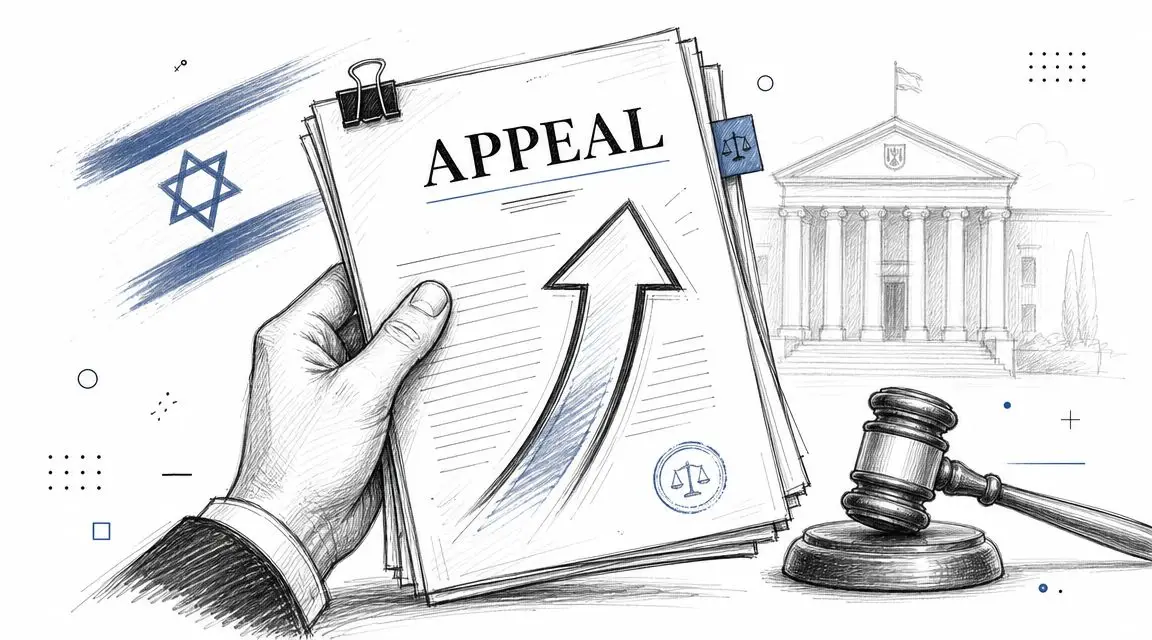
Strong arguments usually have documents behind them
The stronger appeal theories are concrete. They connect a returned item to a provable event and show why the return should not produce the legal consequence now imposed.
Examples of stronger positions often include:
- Bank error: The company can show the bank processed the item incorrectly, ignored available funds, or mishandled instructions.
- Reasonable mistake of fact: The evidence shows a real misunderstanding, supported by internal records and banking history.
- External event with proof: A force majeure-type disruption or comparable exceptional event can matter if the company can tie it directly to the payment failure.
By contrast, weak appeals often sound like business explanations rather than legal ones. Cash-flow stress, internal miscommunication, or a general statement that management intended to cover the checks may explain the problem. They usually do not cure it.
Process discipline matters as much as legal theory
The appeal file should be assembled with the same care used in high-stakes litigation. That means a clean chronology, a document index, and tightly controlled exhibits. In cross-border matters, document handling is often overlooked. If the file includes sensitive banking records, board materials, or customer information, secure redaction and handling protocols matter. Teams dealing with sensitive submissions may find practical value in guidance on secure PDF infrastructure by OkraPDF.
A disciplined appeal package usually includes:
- A check-by-check schedule with dates, sums, account position, and reason for return.
- Bank correspondence showing what the bank said, when, and to whom.
- Internal approvals and treasury records that support the company narrative.
- Affidavits or witness statements from the right operational people, not just senior executives.
- A remedy strategy that addresses both the court outcome and interim business continuity.
Courts respond better to precise records than to broad frustration.
What a realistic outcome looks like
Executives should expect a contested process, not an administrative correction. The appeal may remove some returned checks from consideration, reduce the practical effect of the restriction, or fail if the factual record is weak. The legal standard is one issue. The quality of proof is the other.
That is why timing and preparation matter so much. Once a company chooses to appeal, every inconsistency in its internal story becomes part of the risk. The legal team must know the finance file as well as the finance team does.
Proactive Defense Through International Contract Design
What happens if your Israeli operating account is restricted on a Monday, and by Tuesday your suppliers, distributors, and lenders are all reading the same payment failure differently? That is not a drafting inconvenience. It is a contract-control problem, and the companies that contain it best usually made those decisions before the first transfer failed.
International business law matters here at the design stage, not only once the dispute starts. If the Israeli account is part of a larger payment chain, the contract should assume interruption, competing legal positions, and pressure from counterparties who will move quickly to protect themselves.
Payment architecture should anticipate banking friction
Many cross-border agreements still treat payment mechanics as routine boilerplate. That is a mistake. In a banking freeze, the payment clause becomes an operating manual for the first 72 hours.
For Israeli-linked transactions, the drafting should cover:
- Backup payment channels: Name substitute accounts, alternative instruments, or offshore routing options if the primary Israeli channel is blocked.
- Currency and routing rules: State whether payment can be redirected, converted, or split if local banking rails are impaired.
- Immediate notice obligations: Require prompt written notice of any restriction, returned instrument, or bank refusal.
- Short cure periods: Give enough time to replace the payment method without handing the other side an open-ended excuse to suspend performance.
- Cost allocation: Decide in advance who absorbs bank fees, FX loss, delay costs, and compliance-related transaction friction.
The trade-off is straightforward. More detailed payment clauses take longer to negotiate and sometimes meet resistance from counterparties who prefer flexibility. In a crisis, that extra drafting time is far cheaper than arguing over whether non-payment was a breach, a force majeure event, or a temporary banking malfunction.
Dispute clauses should be operational, not decorative
Dispute resolution works best when treated as a design choice with commercial consequences. The clause should tell the parties where they fight, what interim relief is available, and how fast an order can be enforced against assets, cash flow, or security.
That question becomes urgent when an Israeli banking restriction interrupts performance. A foreign supplier may stop shipments. A lender may claim default. A joint venture partner may freeze distributions or demand additional protections. If the contract is vague, each counterparty writes its own version of the crisis. If the contract is precise, management has a framework for containment.
Good drafting usually addresses three pressure points. First, forum selection must match the asset map. Second, interim relief must be available in a jurisdiction that can act fast enough to matter. Third, notice, suspension, and termination rights must line up with the actual payment chain rather than abstract legal theory.
Prevention is cheaper than emergency improvisation
The strongest contracts do not promise that banking friction will disappear. They assign decision rights before the conflict hardens. That can preserve supply, reduce opportunistic defaults, and stop a temporary Israeli bank restriction from turning into a wider cross-border dispute.
For companies negotiating Israeli-linked agreements, commercial contract structuring in cross-border settings should be reviewed with the same seriousness as tax, pricing, and collateral. The contract should answer the questions that surface in week one of a freeze: who can redirect payment, who must keep performing, what evidence must be given, and what happens if the restriction lasts longer than expected.
Avoid costly mistakes and contact RNC Group now through the firm’s contact page if an Israeli bank restriction is threatening your operations, contracts, or dispute position.
Disclaimer: The articles and information provided in this publication are for informational and educational purposes only and do not constitute legal advice. Reading this article does not create an attorney-client relationship. Readers should consult a qualified attorney for advice on any specific legal matter.