
A foreign supplier usually asks the wrong opening question. It asks whether an international distribution agreement template is good enough for Israel. The better question is whether that template will still protect pricing, control, evidence, and enforcement when the relationship turns hostile in 2026.
That difference decides whether the contract works as an operating system or collapses into a bundle of vague promises. In Israeli practice, the contract must do more than describe sales channels. It must allocate control before the first shipment, before the first missed target, and before the first claim that the distributor “owns” the market it helped build.
Is Your 2026 Distribution Agreement a Shield or a Liability

A template has value. That is why the ICC Model International Distributorship Contract has sold over 15,000 copies worldwide, with usage concentrated in Europe at 45%, Asia-Pacific at 30%, and the Americas at 20%. It is a serious starting point, not a serious final product.
The risk begins when management treats the model as self-executing. It isn’t. Israel is an advanced market with strong commercial expectations, close scrutiny of performance conduct, and practical enforcement consequences that many foreign companies underestimate.
Why standard language breaks under pressure
A generic form usually defines appointment, territory, products, price, and termination. However, most disputes don’t arise because those topics were omitted. They arise because the drafting left too much room between the words and the business model.
Three recurring failures appear in template-driven deals:
- Overbroad exclusivity: The supplier grants exclusivity before the distributor proves channel access, compliance quality, or reporting discipline.
- Thin definitions: “Products,” “territory,” and “customers” remain loose, so each side later argues for a different commercial map.
- Weak evidence architecture: The contract requires performance, but it doesn’t require the data needed to prove non-performance.
An Israeli market entry contract should operate like a control instrument. It should tell the supplier what it may change, what the distributor must prove, and what happens if reality moves faster than the assumptions in the schedule.
Practical rule: If a clause looks balanced but doesn’t shift leverage when the relationship deteriorates, it is drafting theater.
The Israeli angle foreign CEOs often miss
Foreign businesses often focus on market access first and legal enforceability second. That order is dangerous. In Israel, the pressure points usually appear around channel conflict, trademark use, customer ownership, and post-termination conduct.
A competent contract therefore does four jobs at once:
- It opens the market.
- It preserves optionality.
- It structures evidence.
- It anticipates enforcement.
That is the difference between a shield and a liability. A template can help you begin. It can’t decide your commercial priorities for you, and it certainly can’t reconcile your global channel strategy with local Israeli realities.
Deconstructing Your International Distribution Agreement
The first pages of the agreement decide who controls the route to market. Many executives skip them because they look definitional. That is a mistake. Scope, territory, and exclusivity are not introductory clauses. They are the contract’s power grid.
Scope of appointment decides what the distributor is
The clause should state whether the distributor acts as a buyer-reseller, a market developer, a tender participant, a service coordinator, or a combination. If that role stays vague, later arguments follow quickly. The distributor will claim broader authority. The supplier will insist the role was narrow. Both positions become harder to prove.
A useful scope clause answers five practical questions:
- Which products are covered: State exact product lines, versions, accessories, updates, and replacements.
- Which activities are permitted: Marketing, resale, tender submissions, demonstrations, after-sales service, or local warehousing.
- Which activities are prohibited: Sub-distribution, online marketplace sales, modification of labels, or independent warranty promises.
- Who controls branding: Specify approval rights for packaging, translated materials, and local campaigns.
- What remains reserved: Direct sales, key accounts, e-commerce, government channels, and strategic customers.
The wrong version says the distributor may “promote and sell the products in the territory.” That language invites conflict. The better version reserves channels with precision and identifies any authority that requires prior written approval.
The most expensive ambiguity in distribution contracts is not price. It is unauthorized authority presented to the market as official authority.
Territory is a commercial map, not a slogan
Foreign suppliers often define territory by country name alone. That shortcut causes immediate problems in Israel-related distribution structures. A territory clause must address not only geography, but also channel boundaries and customer classes.
For example, a territory may include Israel but exclude:
- direct sales to multinational accounts,
- online sales into Israel from outside Israel,
- sales to defense-related or regulated sectors unless separately approved,
- resale into neighboring markets,
- free trade zone transactions,
- duty-free and travel retail channels.
That level of detail matters because a distributor rarely views “territory” the way a supplier does. The distributor thinks in terms of customers and market effort. The supplier thinks in terms of legal borders and supply rights. The contract must bridge that gap.
Many executives benefit from reading broader commentary on global product expansion before negotiating territory language. The strategic lesson is simple. Expansion plans fail when channel design and contractual geography drift apart.
Exclusivity must be earned, not gifted
Exclusivity is often treated as a prestige concession. In practice, it is a financing decision. Once exclusivity is granted, the supplier has fewer corrective tools. That means exclusivity should usually be conditional, staged, and reversible.
A disciplined exclusivity clause should deal with:
| Issue | Weak drafting | Strong drafting |
|---|---|---|
| Trigger | Immediate exclusivity on signature | Exclusivity begins only after launch milestones |
| Duration | Open-ended | Fixed initial period with review rights |
| Product coverage | All current and future products | Only listed products |
| Customer scope | All customers | Excludes reserved accounts and channels |
| Remedies | General breach language | Automatic downgrade to non-exclusive status on defined failures |
This structure changes negotiation dynamics. The distributor still receives upside, but only after proving execution. That approach also reduces the emotional intensity of later disputes because the contract already describes how exclusivity can narrow without ending the entire relationship.
Define what success looks like before money moves
Scope, territory, and exclusivity must align. If they don’t, the distributor can argue that weak performance resulted from an unclear mandate, restricted channels, or uncompetitive product allocation.
A practical drafting sequence works better:
- Define the products with precision.
- Define the channels and customer classes.
- Define the territory in operational terms.
- Grant exclusivity only against measurable obligations.
- Reserve supplier rights expressly.
An international distribution agreement template often contains these clauses. It rarely calibrates them to your actual channel conflict, tender strategy, or future acquisition plans. That calibration is where legal drafting turns into market control.
Structuring Performance Pricing and Payment Terms

What usually breaks first in an Israel distribution deal. The commercial model or the legal drafting around it?
In my experience, the answer is usually the drafting. The business team agrees on growth, margin, and rollout speed. The contract then adds wide discretion on pricing, supply timing, credit, and performance resets. Once those variables move, the distributor argues that the targets were never objectively achievable. In an Israeli dispute, that point can matter more than foreign suppliers expect, because enforceability often turns on whether the obligation was framed with enough clarity and commercial fairness to survive scrutiny.
A useful benchmark appears in the international distribution contract template example. For the competition-law point, the safer course is to refer directly to the European Commission’s Vertical Block Exemption Regulation framework, which sets the market-share threshold and the rules affecting exclusive distribution structures in the EU. For target reviews, many modern templates do require periodic reassessment of minimum sales obligations, but unless you can cite a reliable published dataset in the article, it is better to state the practice qualitatively than to attach an unsupported percentage.
Performance terms should direct conduct and allocate blame accurately
Many templates rely on annual minimum purchase obligations alone. For Israel, that is often too crude. Sales velocity may depend on import approvals, Hebrew labeling, channel training, service capability, local tender timing, or stocking commitments that sit partly with the supplier and partly with the distributor.
The stronger structure breaks performance into separate obligations so that failure can be traced to the right cause.
- Launch milestones: regulatory filings, labeling approval, warehouse setup, service readiness, and approved local marketing materials.
- Sales execution metrics: purchase volumes, active customer count, tenders submitted, reorder rate, and account penetration.
- Operational discipline: forecast accuracy, reporting quality, complaint handling, and pipeline transparency.
That drafting does more than improve reporting. It changes remedies. If the distributor misses volume because the supplier shipped late or failed to clear localized materials, the agreement should not treat that as the same breach as poor field execution. If you want to enforce downgrade rights, pricing changes, or cure plans in Israel, the contract should separate those scenarios in advance.
Annual reviews are often too slow
A once-a-year review sounds tidy. It also gives underperformance twelve months to harden into a dispute about lost opportunity, stranded inventory, and who caused the miss.
A better approach ties review rights to defined operating events and objective data.
| Clause area | What weak wording does | What effective wording does |
|---|---|---|
| Forecasts | Treats them as informal | Makes them contractual planning inputs with update deadlines |
| Target review | Limits review to year-end | Permits reset after supply disruption, regulatory delay, or major currency movement |
| Price changes | Leaves broad discretion | Sets notice periods, trigger events, and treatment of stock in channel |
| Credit terms | Grants open account too early | Links credit to payment history, reporting compliance, and order pattern |
| Currency risk | Ignores exchange movement | States the invoicing currency, adjustment mechanism, and review trigger |
Foreign suppliers often create their own enforcement problem. They reserve the right to change lead times, transfer prices, marketing support, and credit exposure while holding the distributor to fixed annual numbers. Israeli counsel for the distributor will attack that structure immediately. The argument is simple: the supplier controlled the inputs, so the supplier cannot rely on the output failure as a clean termination ground.
A sales target is easier to enforce when the supplier’s own obligations are fixed with similar precision.
Pricing clauses need antitrust discipline and local practicality
Pricing language is one of the fastest ways to turn a usable distribution contract into a liability. The supplier wants channel order and margin protection. The document must still avoid sliding into resale price maintenance or other restrictions that attract competition-law scrutiny.
The agreement should distinguish clearly between:
- recommended resale prices,
- the supplier’s transfer price to the distributor,
- volume rebates,
- launch support,
- promotional contributions,
- stock protection after a price drop.
Those categories do different work. A rebate tied to verified sell-out data can be defensible. A clause that reads like an instruction to maintain resale pricing creates a different risk profile. If the relationship later ends in arbitration, or if the distributor raises competition-law defenses against enforcement, that drafting detail stops being academic.
For Israel, pricing clauses also need to address practical friction points that templates often miss. Imported goods may face cost shifts from freight, customs treatment, standards compliance, packaging changes, or exchange-rate movement. If the supplier can revise transfer prices freely but the distributor is tied to fixed resale assumptions in the market, the margin model can collapse long before the legal relationship does.
Payment terms decide who carries Israeli market risk
Executives often spend negotiation time on headline margin and too little on payment structure. That is a mistake. Payment architecture determines who finances inventory, launch costs, channel credit, and delays in collection.
The agreement should answer five points with precision:
- Payment trigger. Shipment, delivery, customs release, invoice date, or another defined event.
- Credit support. Advance payment, letter of credit, bank guarantee, parent guarantee, or deposit.
- Set-off. Whether the distributor may withhold payment for alleged counterclaims.
- Default sequence. Interest, suspension rights, cure periods, and order holds before termination.
- Title and risk. When risk passes and whether title remains with the supplier until full payment.
These clauses are enforceability tools. A broad set-off right lets the distributor convert ordinary complaints into cash-flow pressure. Weak title retention may leave the supplier with fewer recovery options once stock is mixed, resold, or tied up in local insolvency pressure. Open account terms given too early can also weaken the supplier’s position in the first six months, which is usually the period when the supplier still has the best chance to correct bad habits.
A template can suggest a structure. It cannot tell you how much credit exposure to accept in Israel, how aggressively to tie price support to verified performance, or which variables must be fixed before you can safely enforce the distributor’s obligations. Those choices belong in the contract, because once the relationship deteriorates, each clause becomes either a shield or a weapon.
Protecting Assets and Ensuring Local Compliance
The most undervalued clauses in a distribution agreement are often the ones that protect assets you can’t easily rebuild. A failed shipment can be replaced. A damaged trademark, leaked pricing structure, or uncontrolled customer narrative can linger long after the contract ends.
Intellectual property is an operating asset
Foreign suppliers sometimes treat IP language as routine because they already own the marks, manuals, and product materials. Ownership alone doesn’t solve market misuse. The agreement must define exactly how the distributor may use those rights in Israel.
That means the contract should specify:
- permitted trademark use,
- approval of Hebrew translations and local marketing copy,
- ownership of localized materials,
- treatment of domain names, handles, and marketplace listings,
- prohibition on registrations that resemble the supplier’s marks,
- immediate cessation obligations after termination.
A weak clause says all IP remains the supplier’s property. A strong clause states what the distributor may do, what it may never do, who approves every public-facing adaptation, and how the supplier regains control at exit.
Confidentiality must survive stress, not just cooperation
Confidentiality drafting often assumes a cooperative relationship. Real risk begins when the parties stop trusting each other. That is why confidentiality provisions should focus on use restrictions, document return, deletion obligations, evidentiary access, and ongoing survival after termination.
The contract should also define confidential information broadly enough to cover commercial mechanics, not only technical data. Pricing formulas, channel strategy, customer segmentation, tender playbooks, and margin architecture often matter more than product specifications.
The distributor rarely competes with your patent. It competes with your commercial intelligence.
Local compliance cannot sit in the background
Israel-facing distribution structures often require contract language that allocates compliance responsibilities with unusual care. Product labeling, sector-specific approvals, advertising rules, import processes, data handling, and service representations should not live in side emails or sales decks.
A practical compliance schedule should identify:
| Compliance area | Supplier responsibility | Distributor responsibility |
|---|---|---|
| Product specifications | Accuracy and updates | No unauthorized modifications |
| Marketing claims | Approval and master messaging | Local use only as approved |
| Regulatory filings | Technical support and source documents | Local submission and follow-up where agreed |
| Customer-facing promises | Master warranty terms | No extra promises without written approval |
This allocation protects both sides. It prevents the distributor from improvising. It also prevents the supplier from assuming compliance happened because the products reached the port.
Customer goodwill belongs in the contract, not in assumptions
One recurring dispute concerns who “owns” the market contacts created during the relationship. Foreign suppliers often assume the answer is obvious. It isn’t. The agreement should state that customer data, market feedback, translated materials, and business records generated in the distributorship belong to the party designated in the contract, subject to any mandatory local limits.
That issue matters even more where the distributor invests heavily in relationship building. If the contract doesn’t address post-termination handover, the supplier may recover the brand but lose practical access to the market narrative that supports it.
Legal drafting acts as a defensive perimeter. Boilerplate won’t do that job. Only specific operational restrictions, approval pathways, and handover rights can do it.
Navigating Exit Strategies and Disputes in Israel
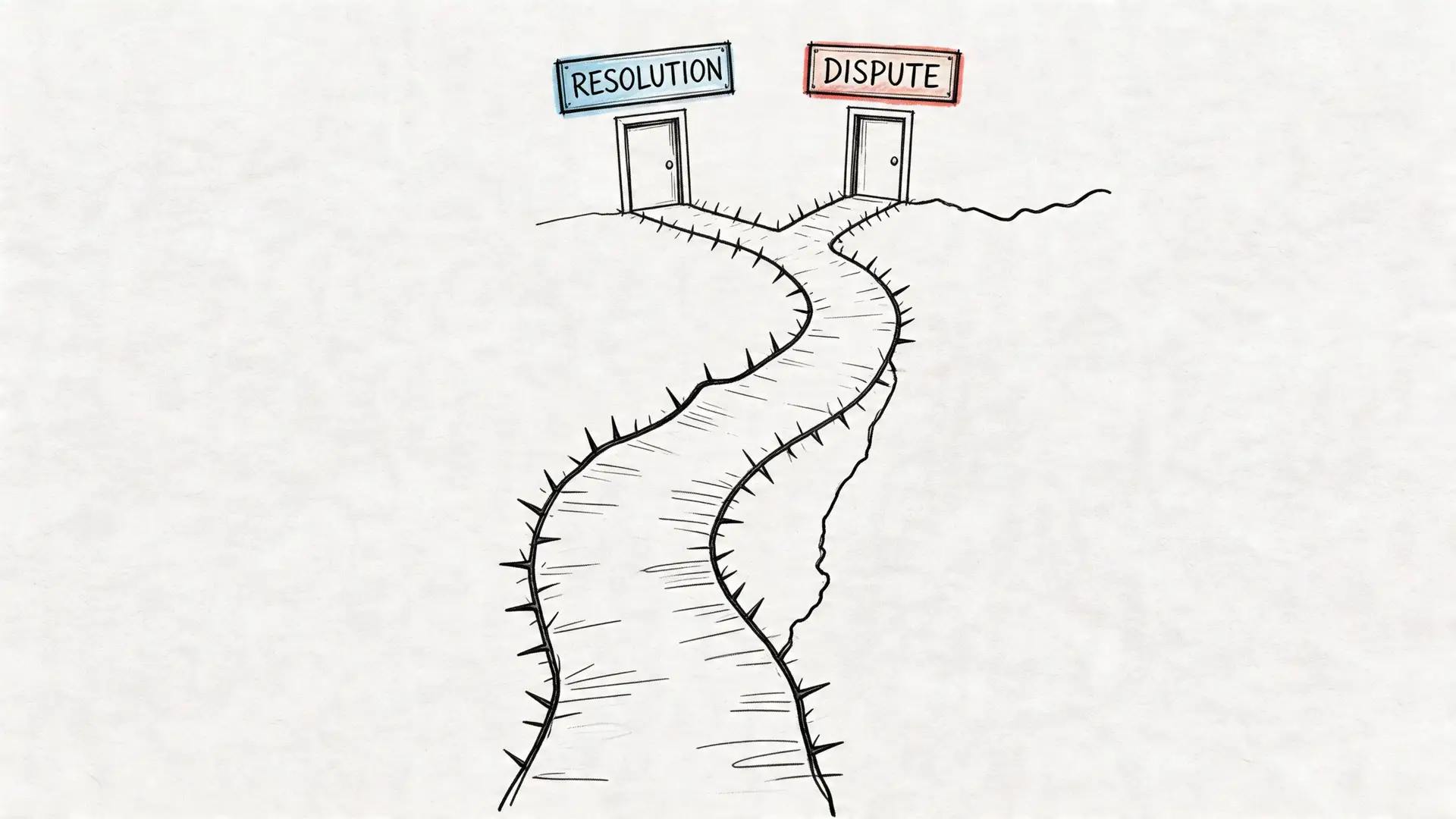
What happens if your Israeli distributor misses targets, keeps customer data, and refuses to stop selling after termination?
That question should shape the contract before signature. In Israel, exit clauses are not housekeeping language. They determine who controls the pressure points once the relationship deteriorates. I regularly see foreign suppliers spend weeks negotiating exclusivity and discounts, then accept a generic termination and dispute clause taken from an online template. That is usually where the primary exposure sits.
The warning is practical, not theoretical. Publicly filed distribution agreements, including this SEC-filed agreement material, show how often parties invest serious drafting effort in appointment, pricing, and sales obligations while leaving the failure mechanics underdeveloped. Once the Israeli market turns difficult, that drafting gap gives the local distributor room to delay, reframe the dispute, and raise the cost of enforcement. I have removed several unsupported statistics that are often repeated in this context because they were not properly sourced in the prior draft.
Termination rights should create a record, not just a threat
A one-line right to terminate for breach looks decisive. It often performs poorly in a live dispute. If the supplier cancels too abruptly, the distributor may argue bad faith, contest the factual basis, or use the ambiguity to hold inventory, customer files, or marketing channels hostage while the parties fight over process.
A better structure uses a staged sequence tied to evidence:
- notice identifying the specific failure
- a defined cure period
- temporary loss of exclusivity, channel rights, or product scope
- suspension of credit, rebates, or marketing support
- final termination on stated grounds
- controlled sell-off, if allowed
- return of materials, data, and unsold regulated stock where applicable
That sequence does more than look fair. It improves enforceability. If the matter reaches an Israeli court or arbitral tribunal, a supplier with a documented escalation path usually stands in a better position than one relying on broad discretionary wording.
Performance disputes should be drafted for volatility
Static annual targets create avoidable fights. A target that was realistic at signing can become commercially meaningless after a currency swing, supply disruption, regulatory delay, or regional security event. If the contract says only “failure to meet minimum targets is material breach,” the parties will argue about blame instead of dealing with the market change.
The stronger approach is procedural. Set review dates, define the data each side must produce, identify trigger events that permit reconsideration, and require written amendments for any adjustment. That preserves control while reducing room for after-the-fact storytelling. It also helps distinguish genuine underperformance from conditions outside the distributor’s control.
Commercial teams looking for non-legal negotiation tactics sometimes compare this kind of clause design with Market Edge’s guide to B2B negotiations. The legal objective is narrower. Build a target mechanism that can survive scrutiny once money, inventory, and market access are in dispute.
Choose the forum by enforcement reality in Israel
The usual question is Israeli courts or arbitration. The better question is which forum will let you get useful relief fast.
Distribution disputes in Israel rarely concern damages alone. The immediate problem may be parallel sales, trademark misuse, refusal to transfer customer records, non-return of stock, or misleading communications to the market after termination. The dispute clause should therefore address the mechanics that matter in practice:
| Issue | Why it matters in Israel |
|---|---|
| Interim relief | Urgent orders may be needed before final judgment or award |
| Forum | Convenience matters less than access to evidence, witnesses, and enforceable interim measures |
| Governing law | A mismatch between law and forum increases cost and procedural friction |
| Language | Translation obligations affect timing, witness preparation, and expense |
| Service provisions | Poor notice mechanics create avoidable delay in cross-border disputes |
I usually advise foreign principals to test the clause against a hard scenario: the distributor still holds inventory, controls local customer messaging, and has assets in Israel. If the clause does not give a clear route to restrain conduct quickly, it is underbuilt.
Enforcement pressure should be planned in the contract
A favorable ruling is only part of the job. The central question is whether the agreement gives you the documents, handover duties, audit trail, and post-termination obligations needed to turn legal rights into compliance pressure.
In Israel, that can include pressure on receivables, stock movements, account activity, and third parties involved in the local sales chain. For that reason, contracts should identify what records the distributor must keep, how quickly they must be produced, what happens to pending orders, who controls customer notices after termination, and which assets or materials must be returned immediately. Without that architecture, even a strong merits case becomes slower and more expensive to enforce.
Businesses dealing with an active fallout scenario often also review strategic material on commercial crisis management and the practical consequences of bank account blockages before taking the first formal step. Those issues are not side points. They affect settlement pressure from day one.
The strongest exit and dispute clauses do not merely describe rights. They organize evidence, control timing, and improve the odds that those rights can be enforced in Israel when the distributor decides to resist.
Your Negotiation Checklist and Red Flag Guide
A serious negotiation doesn’t begin with markup. It begins with prioritization. The CEO should know which clauses protect margin, which preserve control, and which only create the illusion of security.
Negotiation checklist
Bring this checklist to any review of an international distribution agreement template:
- Confirm the business model first: Is the distributor a reseller, market maker, service provider, or hybrid?
- Map the territory operationally: List channels, customer classes, online sales, and reserved accounts.
- Condition exclusivity: Tie it to proof, not promises.
- Define data rights: Require reports, source records, and audit access tied to performance.
- Stress-test pricing mechanics: Ask how rebates, promotions, and currency shifts affect margin and enforceability.
- Control brand use: Approve local language materials and digital assets before publication.
- Build the exit file in advance: Make sure the contract already dictates handover, sell-off, and customer communication rules.
- Check the forum against enforcement reality: A “neutral” forum may be useless if urgent relief or asset pressure is needed in Israel.
For negotiation tactics from the commercial side, some executives also review Market Edge’s guide to B2B negotiations. It is useful as a commercial counterpart to legal risk allocation.
Red flags that signal a one-sided draft
Some warning signs appear before any detailed legal analysis:
- Exclusive rights with no measurable milestones
- Broad distributor authority with no approval controls
- Open-ended territory descriptions
- Payment set-off rights that invite cash-flow disputes
- Termination language that is broad for one party and restrictive for the other
- Silence on customer data, translated content, or digital accounts
- No mechanism to adjust targets when market assumptions materially change
Clause alternatives for different risk profiles
| Clause | Supplier-Favorable Position | Distributor-Favorable Position |
|---|---|---|
| Exclusivity | Non-exclusive unless milestones are met and maintained | Exclusive appointment from launch, subject only to material breach |
| Territory | Narrow territory with reserved key accounts and channels | Broad territory including all channels and customer classes |
| Performance | Detailed KPIs with downgrade rights before termination | General annual targets with broad cure rights |
| Pricing | Supplier may revise transfer prices on notice with limited remedies | Price stability period and stock protection for existing inventory |
| Payment | Advance payment or short credit tied to compliance history | Longer credit and broader offset rights for claims |
| IP use | Strict approval rights and immediate cessation on exit | Wider local adaptation rights for marketing materials |
| Termination | Multi-trigger termination, including control change and repeated underperformance | Termination only for material breach after extended cure |
| Post-termination sell-off | Supplier controls remaining inventory and customer notice | Distributor receives sell-off period and fulfillment rights |
A balanced contract is not the midpoint between these columns. It is the version that matches your dependency on the distributor, your enforcement posture, and the cost of replacing the channel.
Conclusion From Template to Strategic Advantage
An international distribution agreement template is useful because it gives structure. It is dangerous when management mistakes structure for strategy. In the Israeli market, the decisive clauses are the ones that control authority, evidence, targets, branding, exit, and enforcement.
The recommended strategic path is to treat the template as a draft of issues, not a final allocation of risk. A customized agreement doesn’t just reduce disputes. It improves negotiation position before the dispute begins.
Contact Our Firm
A distribution contract should protect market entry, maintain advantage, and support enforcement in Israel. If it doesn’t, it can magnify risk at the exact moment the business needs control. To avoid costly mistakes and convert your next agreement into a commercial advantage, contact our firm now.
Disclaimer
This article provides general information only. It does not constitute legal advice, and it should not replace advice designed for a specific transaction, dispute, industry, or jurisdiction. Readers should not act or refrain from acting based on this material alone. Cross-border distribution arrangements often involve mandatory local law, enforcement variables, and industry-specific regulations that require individual review. Legal outcomes depend on facts, documents, counterpart conduct, and forum selection. Qualified counsel should review any proposed agreement or dispute strategy before action is taken.