
A cross-border claim can look strong on paper and still fail in practice if the defendant moves assets before judgment. That risk becomes sharper in 2026, when capital moves fast, counterparties operate through several jurisdictions, and digital assets complicate tracing and enforcement.
For a non-Israeli company facing a dispute linked to Israel, mareva injunctions matter because they shift the fight from abstract liability to immediate control. The central question isn’t only whether the claimant will win. The question is whether anything will remain to enforce against when the court finally rules.
The 2026 Threat of Pre-Judgment Asset Flight
A foreign distributor stops responding. A joint venture partner changes banking channels without a clear explanation. A borrower begins transferring business activity to related entities. In each situation, the legal claim may remain intact while the practical value of that claim erodes.
That is why strategic claimants treat asset preservation as an early priority, not a late enforcement issue. In cross-border disputes, delay often benefits the party holding the money.

A Mareva injunction is the classic response. It restrains a defendant from dealing with assets before judgment, so the defendant can’t make itself judgment-proof during the life of the case. Used well, it protects strategic advantage, preserves settlement pressure, and stops a crisis from turning into an empty victory.
Why companies underestimate the threat
Many boards still separate operational fraud risk from litigation risk. That split is dangerous because asset flight often starts with the same weak controls that create payment fraud, account misuse, or authority abuse in the first place. Practical prevention often begins before the first court filing, which is why many in-house teams review external resources such as account security playbooks by Digital Footprint Check when they tighten incident response around account access and payment controls.
The legal danger appears when the commercial warning signs are already visible. Those signs usually include abrupt changes in payment timing, unexplained intercompany transfers, resistance to document disclosure, or new claims that key assets sit with affiliates rather than the contracting entity.
Practical rule: If the defendant’s conduct suggests it is reorganizing faster than it is negotiating, asset preservation should move to the top of the case strategy.
What works in real disputes
The strongest applications don’t rely on outrage. They rely on sequence, timing, and documents. Courts respond better to bank records, corporate registry changes, transfer instructions, and contradictory correspondence than to broad accusations about bad faith.
A claimant also needs commercial discipline. Internal teams should preserve records, centralize facts, and limit loose allegations in emails or letters before the application. Mareva injunctions can be powerful, but they are not forgiving of sloppy preparation.
Understanding The Mareva Injunction
A Mareva injunction acts like a court-imposed financial restraint on the defendant. It doesn’t transfer ownership of assets to the claimant. It stops the defendant from disposing of assets in a way that would defeat enforcement.
The order is directed at the person, not at the property itself. That point matters because many business clients assume the injunction gives them a direct claim to a bank account, a receivable, or shares. It doesn’t. It preserves the field until the merits are decided.
Where the remedy came from
The remedy began in England in 1975, in Mareva Compania Naviera S.A. v International Bulkcarriers Ltd., and then spread quickly across common law systems, including Canada by 1985, as described in Lerners on the origin and development of the Mareva injunction. Its historical importance lies in a simple commercial reality. Courts needed a way to stop defendants from moving assets before a judgment could be enforced.
That origin still explains the remedy’s modern use. Mareva injunctions respond to mobility. Money moves. Corporate structures change. Assets cross borders quickly. Litigation takes time.
What the order does and does not do
A well-drafted freezing order usually restrains dealing with assets except in defined ways. It often allows ordinary business activity and reasonable living or operating expenses, subject to the court’s wording. That structure is not a loophole. It is part of what makes the order defensible.
A Mareva injunction also doesn’t replace the underlying claim. It is an interim remedy. The claimant still needs to prove the case.
The remedy matters because a strong judgment without reachable assets is often only a paper result.
Why this matters in Israeli-linked disputes
For non-Israeli companies, the commercial problem is rarely confined to one country. The counterparty may trade through Israel, hold funds elsewhere, invoice from another entity, and route assets through affiliates or nominees. In that environment, mareva injunctions become less of a technical litigation device and more of a control mechanism.
They are especially relevant where the dispute touches distribution rights, founder fallouts, M&A earn-outs, unpaid receivables, or allegations of diverted company funds. In those cases, preserving assets early may matter more than winning procedural skirmishes later.
The Legal Test Securing a Freezing Order
Courts don’t grant mareva injunctions because a claim feels urgent. They grant them when the applicant presents a disciplined evidentiary record. The legal test is demanding because the remedy is intrusive.
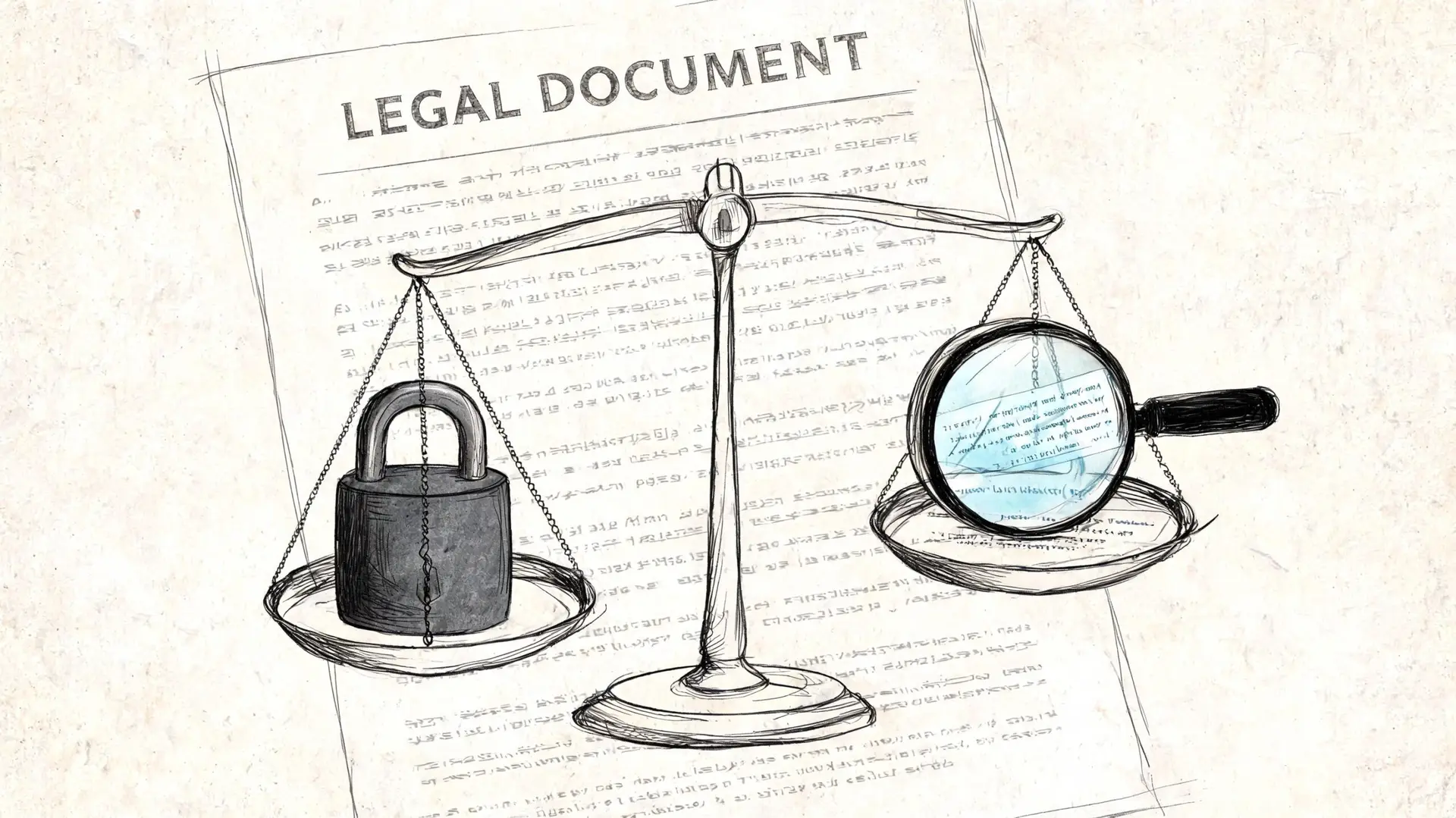
The core elements are established. The claimant must show a good arguable case, assets within the jurisdiction, and a real risk of dissipation. Because the application is often made without notice, the claimant must also give full and frank disclosure, as explained in Fordham Law Review’s discussion of the legal test for Mareva relief.
Good arguable case
This element doesn’t require final proof. Still, it demands more than a complaint dressed as a theory. The judge needs to see a coherent legal claim tied to contemporaneous documents.
That usually means the application should put the contract, payment trail, board approvals, side correspondence, and post-breach conduct into one clear chronology. When teams build that chronology from recorded interviews or multilingual meetings, tools such as Vatis Tech transcription for legal firms can help organize source material quickly, although the legal analysis must still come from counsel.
Real risk of dissipation
Many applications succeed or fail at this critical stage. Courts look for evidence that the defendant may remove, conceal, or dispose of assets to frustrate judgment. The strongest indicators often include dishonesty, diversion through related parties, false explanations, or conduct showing low commercial morality.
A claimant should avoid overstatement here. Not every breach of contract proves dissipation risk. A late payer is not automatically an asset flight risk. The evidence must connect conduct to the danger that enforcement will be defeated.
Commercial view: Judges freeze assets to prevent frustration of justice, not to punish aggressive business behavior.
Balance of convenience and ex parte discipline
Even where the first two elements are strong, the court still weighs fairness. The order must go no further than necessary. If the defendant needs access to funds for payroll, legal costs, or routine operations, the draft should address that openly.
The ex parte setting makes candor essential. The applicant must disclose bad facts, possible defenses, and procedural complications. Omitting them can damage the entire application.
A practical escalation path often includes:
- Immediate evidence lock-down: preserve banking records, message traffic, and corporate filings before the defendant adapts.
- Narrow drafting first: target the risk precisely rather than ask for a needlessly broad restraint.
- Parallel crisis planning: align the injunction strategy with broader effective crisis management strategies for companies so that litigation, communications, and banking consequences don’t collide.
- Return-date preparation: assume the defendant will challenge the order fast and prepare the second-round evidence before filing the first-round motion.
Global Reach and Jurisdictional Divides
For international businesses, the central issue is not whether mareva injunctions exist in theory. It is where they can be deployed, how far they can reach, and what limits the court will impose.
Most major common law jurisdictions accept some form of pre-judgment freezing relief. The major exception is the United States federal system. In Grupo Mexicano de Desarrollo, S.A. v. Alliance Bond Fund, Inc. (1999), the U.S. Supreme Court held that federal courts lack equitable power to impose pre-judgment asset freezes in the ordinary case, which created a major divide from other common law systems. That divergence is noted in the earlier cited Lerners discussion, and it changes forum strategy immediately.
Mareva injunction availability a jurisdictional snapshot
| Jurisdiction | Pre-Judgment Freezing Order (Mareva-type) | Worldwide Scope | Key Consideration |
|---|---|---|---|
| England | Yes | Can be available in appropriate cases | Courts scrutinize dissipation evidence and comity concerns closely |
| Canada | Yes | Can be available in appropriate cases | Province-specific practice matters |
| Australia | Yes | Can extend broadly in suitable cases | Courts can address assets under defendant control |
| Israel | Yes, in practice through common law influenced interim relief strategy | Case-specific | Cross-border coordination and fast evidence handling are critical |
| United States federal courts | No general Mareva-style power after Grupo Mexicano | Not generally available on that basis | Claimants often need different provisional remedies or a different forum |
Why worldwide scope changes leverage
A Worldwide Freezing Order can restrain dealings with assets outside the issuing court’s home territory, subject to safeguards and limits. That possibility matters in disputes involving holding companies, nominee arrangements, or funds spread across several banking systems.
The remedy is powerful, but it is not casual. Courts worry about comity, overreach, and prejudice to third parties. They often expect careful drafting, realistic carve-outs, and proof that the defendant controls the offshore assets in question.
The wider the requested order, the more disciplined the evidence and drafting must be.
What this means for Israeli-linked disputes
A non-Israeli claimant often faces a hybrid problem. The dispute may touch Israeli operations, yet the bank accounts, receivables, or beneficial ownership chain may sit elsewhere. That is where networked execution becomes decisive.
The practical advantage of counsel connected across jurisdictions is not branding. It is timing. Local filing rules, service mechanics, bank notice issues, and third-party compliance questions can decide whether a freezing strategy works. In matters that cross several systems, firms with coordinated international capability, such as those operating through the ADVOC network described by the publisher, can implement a more coherent response than a siloed local-only approach.
Strategic Drafting and Common Pitfalls
A Mareva injunction can fail after it is granted. Most collapses do not happen because the legal theory was impossible. They happen because the application was rushed, overbroad, incomplete, or procedurally defective.
Courts expect exact compliance with the required form and exact honesty in the ex parte presentation. Standard orders also usually include carve-outs for reasonable living or business expenses, and defects in form or disclosure can lead to discharge on the return date, as outlined in RPC’s note on Mareva injunction substance and form.
Draft the order for survival
The first drafting mistake is asking for too much. A claimant that seeks to immobilize every payment route, without a measured explanation, gives the defendant an easy fairness argument.
The better approach is to draft for credibility. Preserve enough control to stop dissipation, but leave room for legitimate operations where the court is likely to insist on it anyway.
Key drafting points include:
- Asset description: identify what the order covers with enough precision to be enforceable.
- Ordinary course language: define business exceptions carefully so the defendant can’t relabel extraordinary transfers as routine.
- Expense carve-outs: include realistic provision for ordinary costs, legal fees, and necessary operations.
- Cross-undertaking awareness: treat the undertaking in damages as a real exposure, not boilerplate.
Full and frank disclosure is not optional
Ex parte advocacy tempts applicants to simplify. That instinct is dangerous. The court must hear the bad facts too. That includes known defenses, competing interpretations of the contract, delays by the claimant, and practical burdens the order may impose on third parties.
A court may forgive an arguable legal point. It is less likely to forgive selective disclosure.
Board-level lesson: The affidavit should read like a complete risk memorandum, not a sales document.
The banking overlap
In practice, freezing orders often interact with blocked accounts, payment holds, compliance reviews, or internal fraud alerts. That overlap can either support the application or undermine it, depending on how the facts are presented.
Where the dispute already affects banking access, decision-makers should align the injunction record with the operational response to managing bank account blockages and restrictions. Mixed messages create avoidable problems. If one team tells the bank the issue is temporary confusion while another tells the court the defendant is engaged in deliberate dissipation, credibility suffers.
Advanced Challenges Digital Assets and Defenses
Traditional mareva injunctions were built around bank accounts, shares, receivables, and real estate. Digital assets do not behave the same way. Wallet control can be opaque, transfers can happen quickly, and tracing may depend on technical evidence that courts still evaluate cautiously.

That challenge now sits at the edge of mainstream commercial litigation. According to Withers on freestanding Mareva injunctions in cross-border disputes, Chainalysis reported $2.2B in illicit crypto flows in 2025, but only an estimated 12% were frozen through Mareva-like orders because wallet anonymity frustrates enforcement. The same source notes recent Hong Kong litigation involving freezes of up to RMB 1.6B, including crypto.
Why crypto changes the analysis
Crypto does not remove the classic test, but it strains each part of it. The claimant still needs a good arguable case. The harder question is often control. Who controls the wallet, the exchange account, the private keys, or the beneficial path of the transfer?
The dissipation argument also becomes more technical. A court may accept that digital assets can move quickly, yet it still wants evidence tied to this defendant, this wallet, and this transaction pattern. Generic alarm about blockchain volatility won’t carry the day.
Defenses defendants use
Defendants usually attack a crypto-focused freezing strategy on three fronts:
- Control denial: they say the wallet is not theirs, or they hold it for someone else.
- Ordinary course argument: they claim the transfers were routine treasury movements or legitimate creditor payments.
- Jurisdiction challenge: they argue the relevant asset, custodian, or controlling actor sits outside the court’s effective reach.
These defenses can work if the claimant relies on slogans rather than evidence. They weaken when the record includes exchange notices, wallet tracing, related-party links, admissions in messages, and a clear explanation of why the transfer pattern suggests evasion.
In digital asset cases, speed matters, but technical precision matters more.
Your Strategic Path Forward
A company should consider mareva injunctions when the dispute shows more than non-payment. Warning signs include evasive conduct, unexplained transfers, pressure to renegotiate while assets shift, sudden use of affiliates, or intelligence that money is moving beyond the ordinary course.
The best path is usually phased, not impulsive. Preserve evidence first. Map the defendant’s asset picture second. Decide forum, scope, and timing third. Then file only when the record is strong enough to survive the return date.
A disciplined response plan
- Secure the facts early. Pull contracts, invoices, board records, payment trails, and communications into one controlled file.
- Assess asset topology. Identify banks, group entities, receivables, nominees, and digital asset exposure.
- Choose the forum strategically. The right jurisdiction can determine whether pre-judgment freezing relief is even available.
- Prepare for the challenge hearing. Assume the defendant will attack disclosure, scope, and fairness.
- Coordinate legal and operational strategy. Banking, reputation, compliance, and settlement pressure must work together.
Businesses dealing with tokenized assets or structures linked to digital ownership should also understand how asset form affects enforcement planning. Commercial teams often study materials such as RWA tokenization solutions to understand how real-world value may be represented and moved in digital form. Legal teams then need to translate that commercial architecture into a freezing strategy the court can enforce.
A Mareva injunction is not a default move. It is a precision instrument. Used too late, it may do little. Used too broadly, it may collapse. Used with discipline, it can preserve the only outcome that matters in a serious dispute: a judgment that can be enforced.
To avoid costly mistakes and secure your position in any potential dispute, the recommended strategic path is to seek specialized counsel immediately. You can contact our firm now to design a proactive strategy specific to your unique cross-border challenges.
Disclaimer: The information provided in this article is for general informational purposes only and does not constitute legal advice. No attorney-client relationship is formed by reading or using the information contained herein. You should consult with a qualified legal professional for advice regarding your individual situation.
RNC Group handles complex cross-border commercial disputes, crisis management, and enforcement strategy involving Israel and foreign jurisdictions. To avoid costly errors in time-sensitive asset preservation matters, the recommended next step is to contact RNC Group.