
Most foreign companies don’t fail in Israel because the business case was weak. They fail because they treated legal architecture as paperwork, just as 2026 regulatory pressure makes that mistake more expensive.
That gap starts with a basic question. What is international commercial law, and why does it decide whether a cross-border venture scales, stalls, or turns into a recovery exercise?
International commercial law isn’t an academic label. It’s the operating system for cross-border private business. It allocates risk, sets default rules, and determines how contracts, payments, deliveries, disputes, and enforcement work when more than one legal system touches the same deal.
Your 2026 Guide to International Commercial Law
What happens when a profitable cross-border deal meets the wrong court, the wrong governing law, or a payment freeze tied to Israeli exposure?
That is the board-level question behind international commercial law in 2026. For foreign companies dealing with Israel, the answer now carries sharper consequences. A supply agreement, software license, distribution model, acquisition, or banking relationship can shift from revenue driver to risk event fast if the legal structure was drafted for speed rather than control. Recent Israeli scrutiny around sanctions compliance, beneficial ownership transparency, digital services, and cross-border financial reporting has made that gap more expensive to fix after signing.
At a practical level, international commercial law governs private cross-border business transactions. It determines which rules apply, which court or tribunal can act, which remedies are available, and whether a judgment or award will matter outside the country where it was issued. The WTO’s Global Trade Outlook and Statistics continues to show the scale and sensitivity of global trade flows. UNCITRAL explains in its work on harmonized commercial rules why common legal standards reduce friction that would otherwise distort pricing, delay performance, and deter investment. The OECD has also warned in its trade policy analysis that regulatory shocks and trade restrictions can materially cut trade volumes, in some cases by 20 to 30%.
For boards, the point is simple. If a deal crosses borders, legal uncertainty belongs in the financial model.
What the definition means in practice
International commercial law affects three decisions that boards cannot delegate blindly:
- Gap-filling: If the contract is silent, default rules may decide delivery standards, notice requirements, title transfer, limitation periods, or damages.
- Forum selection: The place of dispute can change cost, speed, interim relief options, confidentiality, and settlement pressure.
- Enforcement value: A paper victory has little value if assets, banks, or counterparties sit in jurisdictions that will not recognize the result.
That matters more for foreign firms with Israeli exposure because local regulatory and crisis conditions can change the commercial timeline overnight. A delayed customs release, payment review, licensing issue, or emergency business disruption can turn a routine contract clause into the difference between containment and loss escalation.
Operational discipline also matters. Structured international legal support can help companies organize records, preserve communications, and keep cross-border processes aligned before a dispute hardens into litigation or arbitration.
What boards still get wrong
I see the same three mistakes in stressed cross-border files:
- Using templates as if they were strategy.
- Treating Israeli legal and regulatory exposure as a local implementation issue instead of a transaction risk.
- Waiting to test enforcement until after default, asset movement, or a public crisis.
Those mistakes are expensive because they compound under pressure. By the time a counterparty misses delivery, a regulator asks for records, or a sanctions-related review slows payment, the company is no longer negotiating from strength.
The Sources Shaping Global Business Rules
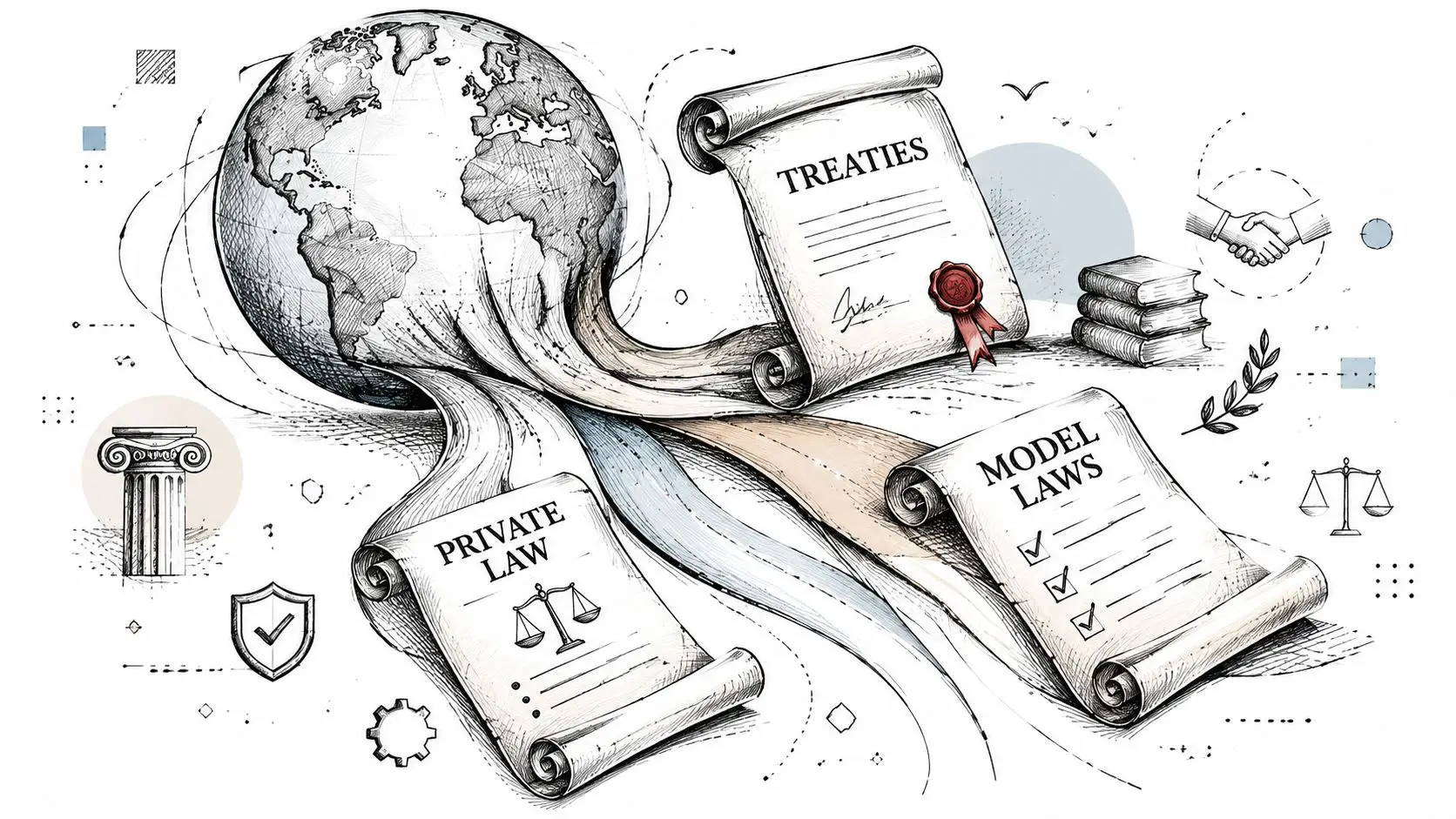
International commercial law comes from several rule-making layers. Boards that understand those layers make better decisions faster. Boards that don’t often sign contracts whose legal consequences they haven’t mapped.
Public instruments that shape private deals
The first layer is the treaty and convention system. The most important institutional actor is UNCITRAL, established in 1966. It has produced foundational commercial law texts, including the 1980 Convention on the International Sale of Goods, or CISG, which has been adopted by over 95 countries and governs approximately 60% of global international trade transactions, as summarized in this UNCITRAL and CISG discussion.
That matters because many companies never consciously choose the CISG. It can apply by default unless the parties exclude it. Therefore, a sales contract that looks familiar to a domestic team may operate under a different legal logic once it becomes international.
The second layer is harmonizing institutions outside the treaty system. UNIDROIT, established in 1926, has contributed influential private law instruments, including the 1995 UNIDROIT Convention on International Financial Leasing. These tools often shape contract drafting, interpretation, and negotiations, even where they don’t apply automatically.
Private standardization that quietly controls outcomes
The third layer is private commercial standardization. The International Chamber of Commerce, founded in 1919, developed Incoterms® 2020, which define 11 standard trade rules used in over 80% of international shipping contracts. Those terms decide practical questions that trigger real losses, including delivery points, risk transfer, transport allocation, and customs responsibilities.
Standardization doesn’t remove negotiation. It removes avoidable ambiguity.
The board’s mental map
A useful way to assess any cross-border transaction is this:
| Source of rules | What it usually controls | Why it matters |
|---|---|---|
| Treaties and conventions | Default sales or enforcement rules | They may apply even if management never discussed them |
| Model laws and harmonized principles | Arbitration and procedural coherence | They reduce friction between legal systems |
| Contract terms | Commercial allocation of risk | They control the deal only if drafted with precision |
A company that asks only, “What does our contract say?” asks too little. The better question is, “What other rules will apply if the contract is silent, inconsistent, or badly drafted?”
Navigating Cross-Border Contracts and Jurisdiction
A cross-border contract doesn’t just record the deal. It decides who has the power when the deal stops working.
Foreign companies often focus on price, exclusivity, supply commitments, and termination rights. Those terms matter. However, the decisive clauses usually sit deeper in the document: governing law, jurisdiction, arbitration, notice mechanics, payment triggers, language priority, and interim relief.
Boilerplate that isn’t boilerplate
Choice-of-law clauses decide which legal system interprets the agreement. Jurisdiction clauses decide where a court case may be filed. If the contract uses arbitration, the seat of arbitration performs a similar structural function. Each choice affects cost, speed, evidence, interim remedies, and settlement pressure.
A bad clause rarely looks dramatic at signing. It becomes dangerous when the parties disagree on delivery, quality, authority, data use, debt, or termination.
For example, a foreign company may sign an Israeli-facing distribution, lease, or services agreement without aligning forum, governing law, and language hierarchy. Then a dispute starts. One side files locally. The other argues the clause is unclear or split. Costs rise immediately, and business continuity suffers before the merits are even tested. That’s one reason experienced parties scrutinize adjacent agreements, including Commercial Lease Agreements, with the same discipline they apply to headline transaction documents.
What strong drafting usually includes
The recommended strategic path is to force clarity on the issues most likely to break under stress:
- Governing law: State it expressly. Don’t leave it to implication.
- Forum selection: Choose court litigation or arbitration, then align the clause with enforcement goals.
- Language control: If contracts exist in more than one language, identify the prevailing text.
- Escalation mechanics: Require operational negotiation before formal proceedings begin, but don’t make the clause unworkable.
- Interim relief rights: Preserve the ability to seek urgent orders when assets, data, inventory, or confidential information are at risk.
Where automation helps and where it doesn’t
Tools can accelerate first drafts. They can also multiply hidden mistakes. Used carefully, AI contract generation can improve drafting speed and issue spotting at the early stage. It won’t replace legal judgment on jurisdictional design, enforceability, or Israeli regulatory friction.
A contract should answer the dispute before the dispute exists.
The board-level test is simple. If litigation starts tomorrow, can management identify the governing law, the forum, the language that controls, the notice path, and the fastest route to interim protection? If not, the contract isn’t finished.
Choosing Your Battlefield Dispute Resolution Methods
Once a cross-border dispute becomes real, process choice stops being theoretical. It becomes a strategic decision about speed, confidentiality, control, and collectability.

Litigation and arbitration serve different business objectives
Court litigation can work when urgent public remedies are needed, when a party wants appellate review, or when the dispute is tightly anchored to a specific local legal regime. Yet international litigation often creates obvious pain points. Jurisdiction fights start early. Proceedings can become public. Enforcing a judgment abroad may trigger a second battle.
Arbitration usually offers stronger structural advantages for private cross-border disputes. Parties can choose decision-makers with commercial experience. Proceedings are commonly more confidential. The process can also reduce uncertainty where counterparties, assets, and performance sit in several countries.
The practical comparison looks like this:
| Issue | Court litigation | International arbitration |
|---|---|---|
| Public exposure | Often public | Often more confidential |
| Control over decision-maker | Limited | Greater party input |
| Cross-border enforceability | Can be difficult | Usually stronger |
| Procedural flexibility | Lower | Higher |
Why Israel matters more after 2024
Israel changed its framework in a way foreign companies should notice. Israel enacted the International Commercial Arbitration Law on February 12, 2024, based on the UNCITRAL Model Law, limiting court intervention in international commercial disputes and emphasizing enforceability under global standards, as detailed in this analysis of Israel’s International Commercial Arbitration Law.
That shift matters for three reasons.
First, it improves predictability for parties considering Israel as a seat or as part of a wider dispute architecture. Second, it aligns Israeli arbitration practice more closely with international expectations. Third, it narrows the space for tactical court interference that can destabilize a private dispute process.
How boards should choose
A board shouldn’t ask which method is “better” in the abstract. It should ask which method fits the risk profile of the deal.
Consider these decision points:
- Asset location: If assets are spread internationally, enforceability should dominate the analysis.
- Sensitivity of the dispute: If trade secrets, pricing structures, or reputational issues matter, confidentiality weighs heavily.
- Need for speed: Some disputes need interim measures immediately. The clause should anticipate that.
- Relationship value: Arbitration can preserve commercial relationships better in some settings, though not always.
The wrong forum can convert a winnable claim into a delayed write-off.
For foreign companies with Israeli exposure, the old assumption that local process uncertainty must be tolerated is weaker than it used to be. The legal terrain has changed. Contracts should reflect that change before the next dispute tests them.
Strategic Analysis A Core Risk for Foreign Firms in Israel
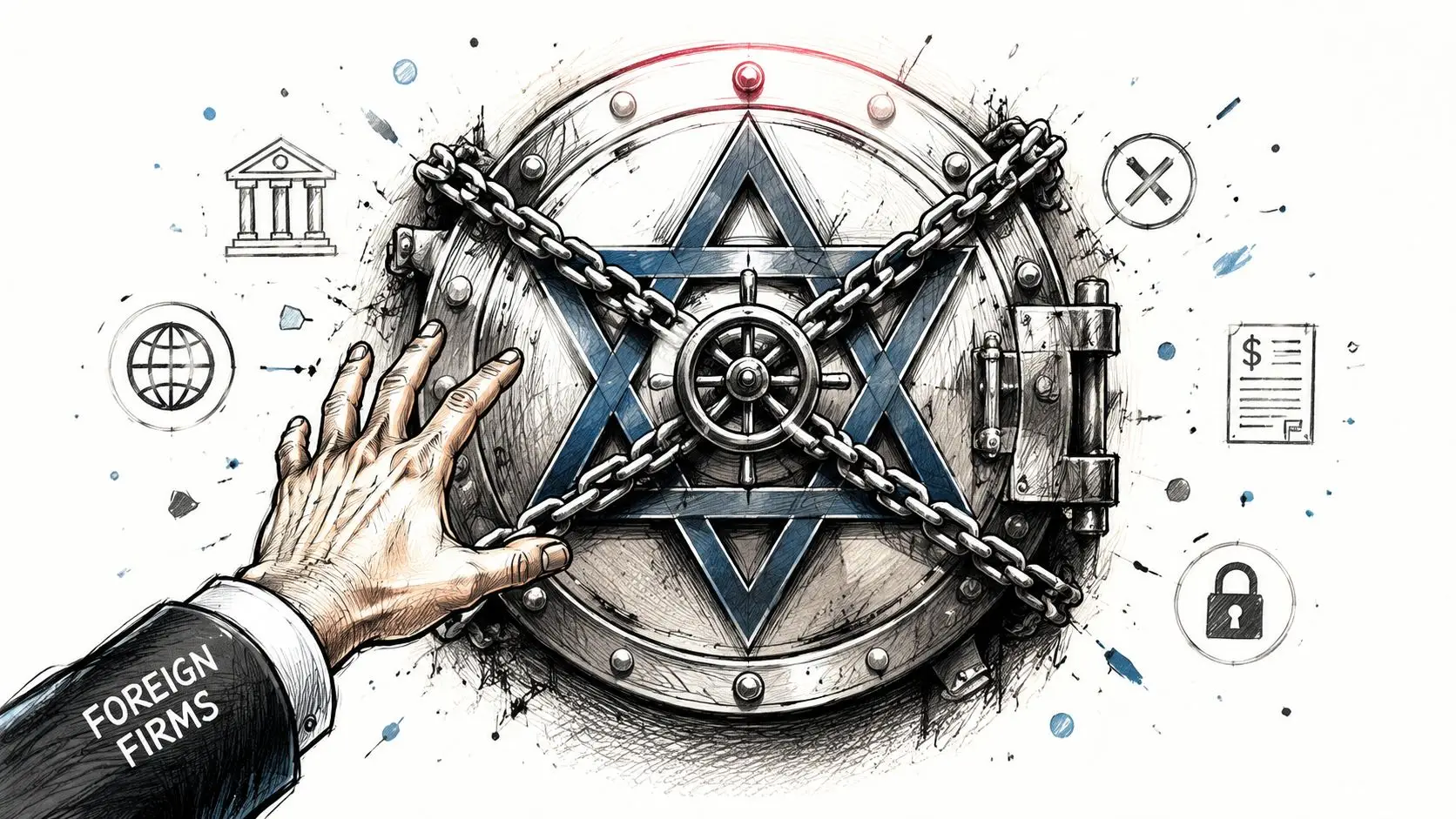
Foreign companies usually expect legal risk in contracts, tax, employment, or regulation. They often underestimate banking friction until an Israeli account restriction interrupts payroll, supplier payments, or routine collections.
Why bank restrictions become operational emergencies
A restricted account can freeze ordinary business activity with very little warning. For a foreign firm, problems escalate rapidly. Local counterparties may assume distress. Vendors may tighten terms. Internal teams lose confidence in cash visibility. Management then discovers that a “banking issue” is a legal, evidentiary, and reputational problem at the same time.
Returned checks remain one of the most dangerous triggers because they signal control failures to both banks and counterparties. In Israel, those events can lead to account restrictions with consequences that extend beyond the original payment issue. A company may still have viable operations, solvent ownership, and recoverable invoices. None of that guarantees continuity once banking access tightens.
What foreign management often gets wrong
The recurring mistakes are predictable:
- They react too late: By the time headquarters asks for a legal memo, the bank’s posture may already be hardened.
- They treat the matter as purely administrative: It isn’t. Documentation, narrative control, and timing matter.
- They separate the bank problem from the underlying commercial dispute: That division usually fails in practice.
A returned-check event may start with a single customer, a delayed remittance, or a treasury misalignment between jurisdictions. However, the bank will assess a wider picture. It will look at conduct, explanations, account patterns, and supporting records. Foreign entities that can’t produce a disciplined chronology often lose ground quickly.
The recommended strategic path
The objective response isn’t panic. It’s structured escalation.
- Stabilize facts immediately. Collect account records, payment instructions, customer communications, internal approvals, and cash forecasts.
- Separate root cause from symptoms. Was the trigger a disputed invoice, internal authorization failure, cross-border delay, or broader liquidity issue?
- Control communications. Contradictory explanations to the bank, suppliers, and owners create avoidable credibility damage.
- Review parallel contracts. Distribution, lease, financing, and management agreements may contain clauses triggered by banking distress.
- Prepare a recovery route. That may include objection procedures, negotiated remedial steps, or litigation strategy, depending on the facts.
A deeper treatment of these issues appears in this discussion of Bank Account Blockages.
Foreign firms rarely fail because one payment went wrong. They fail because they lacked a legal response plan for the first sign of banking distress.
Generic international guidance falls short. Israeli commercial exposure isn’t only about the contract you sign. It’s also about how local institutions react when the transaction starts to wobble.
Enforcing Rulings and Managing Global Crises
What is a win worth if the counterparty’s assets sit in another jurisdiction, the operating company is empty, and the value sits with an affiliate you never sued?
Enforcement decides whether a dispute result has business value. In cross-border matters, that analysis starts before filing, often before the contract is signed. Boards that treat enforcement as a post-judgment task usually discover the problem too late.
Enforcement is the commercial endpoint
The New York Convention remains the main legal framework for cross-border enforcement of arbitral awards. Its practical value is reach. A well-drafted arbitration clause often gives a claimant a better route to pressure, attachment, settlement, or recovery than a court judgment limited by local recognition rules.
That does not make arbitration the automatic answer. I have seen arbitration clauses produce expensive awards against thinly capitalized entities while the substantial assets remained outside the case. The legal result looked strong. The recovery case was weak.
For foreign companies with Israeli exposure, the question is narrower and harder. If the dispute turns live, where are the receivables, inventory, shares, bank accounts, and decision-makers, and which court or tribunal can affect them fast?
Enforcement strategy starts before the dispute
A serious enforcement plan tests four points early:
- Asset location. Identify where cash, stock, equipment, IP, and intercompany receivables sit.
- Entity mismatch. Check whether the contracting party holds value or whether value sits with a parent, distributor, or sister company.
- Interim relief. Assess whether freezing orders, disclosure orders, or other urgent measures may matter before final relief.
- Recognition risk. Compare how easily the likely outcome can be recognized and enforced where the assets are.
These are not drafting details. They shape forum selection, claim structure, settlement timing, and whether emergency relief is worth seeking.
Global crises change enforcement risk overnight
Commercial disputes rarely stay isolated. A payment default can become a sanctions issue. A delivery failure can become an export control issue. A cyber incident can trigger disclosure duties, banking friction, insurance disputes, and parallel claims across several jurisdictions.
That pressure is sharper for companies with Israeli ties because local regulatory shifts can alter the risk profile during the life of the contract. On March 21, 2026, Israel repealed the 1974 Encryption Order and changed how encryption products are treated for export control purposes. The updated framework removed some consumer products from control, expanded oversight for commercial products, and introduced a Catch-All mechanism for certain non-listed items linked to weapons of mass destruction or sanctions evasion, according to Israel’s Defense Export Controls Agency guidance at DECA.
The board-level consequence is immediate. A dispute over shipment, non-payment, or termination may no longer be only a contract problem. It may also involve licensing exposure, customs delay, bank scrutiny, or a reporting issue that affects group operations beyond Israel.
Crisis response and dispute strategy need one command structure. Legal, treasury, compliance, and operations should work from the same facts, the same chronology, and the same decision log. A broader discussion of integrated legal response appears in these Crisis Management Examples.
Your 2026 Action Plan for Cross-Border Operations
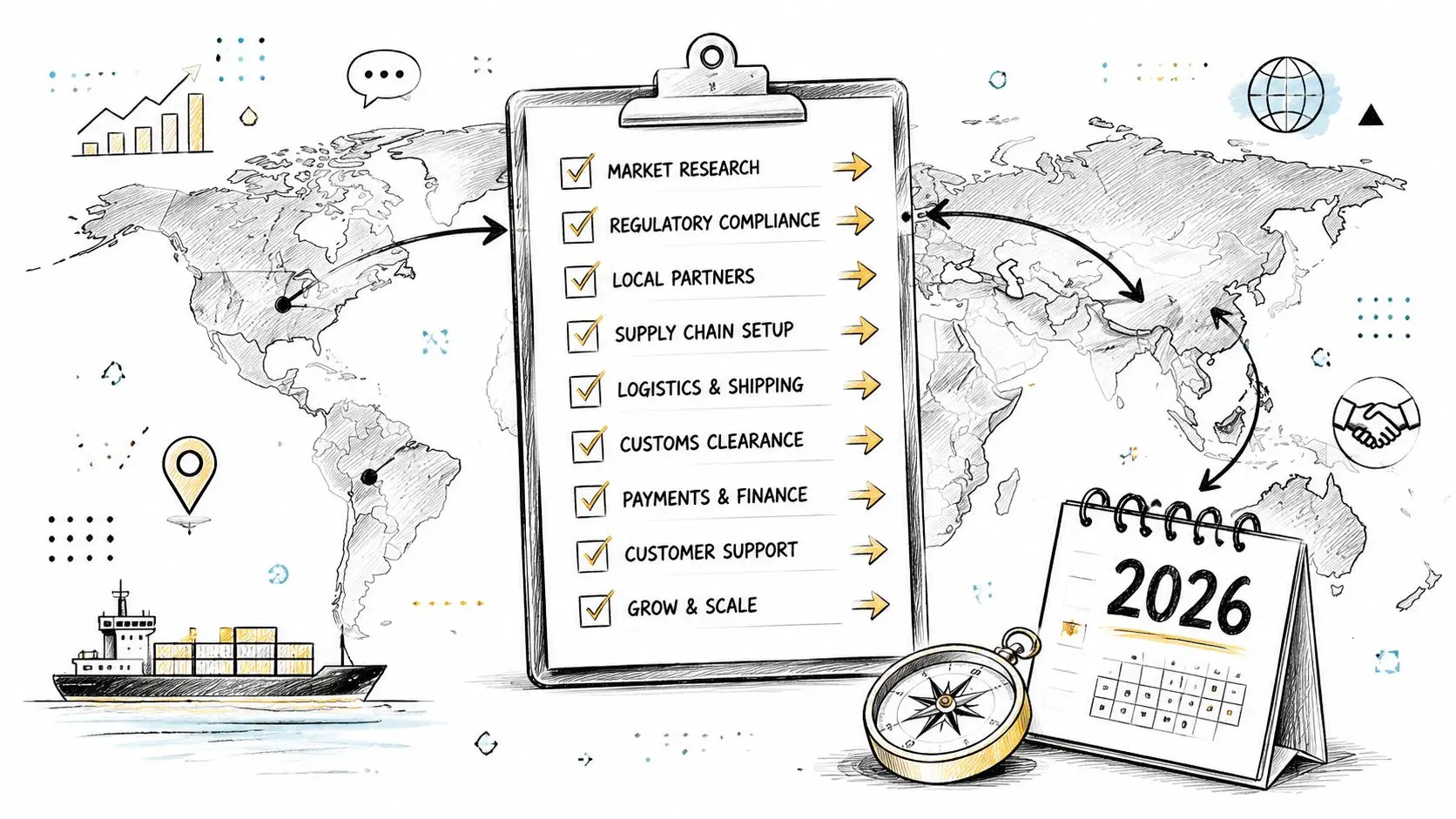
Most cross-border losses don’t come from exotic legal doctrine. They come from unmanaged basics. A company entered Israel, signed fast, relied on assumptions, and discovered too late that the local risk map looked different.
The board checklist
The recommended strategic path for 2026 includes the following steps:
- Review all cross-border contracts now. Confirm governing law, forum, notice mechanics, payment structure, language priority, and interim relief options.
- Map Israeli operational friction points. Don’t isolate legal review from banking, collections, supply, customs, and local counterpart behavior.
- Stress-test enforcement before signing. Ask where assets sit and how a judgment or award would be collected.
- Run counterparty diligence beyond credit. Examine ownership, authority, dispute history, compliance posture, and execution discipline.
- Prepare a banking incident protocol. Treasury, finance, and legal teams should know who documents what, who speaks to the bank, and when escalation begins.
- Update regulatory monitoring. Israel’s legal environment is moving in areas that affect foreign businesses directly.
The 2026 data point many acquirers can’t ignore
Under Israel’s 2026 Data Protection reform proposal, buyers in M&A transactions assume full controller liability for past database violations, requiring enhanced privacy due diligence and contractual indemnities to mitigate statutory exposure, according to this Israel data protection reform guide.
That rule changes transaction behavior. Privacy diligence can’t sit at the back of the diligence pack. It belongs near the front, especially where customer databases, employee records, platform data, or marketing systems drive value.
Good international commercial law strategy doesn’t wait for a dispute. It narrows the number of ways a dispute can damage the business.
Foreign companies with Israeli exposure should avoid costly assumptions and contact our firm now before a preventable issue becomes a crisis.
This article provides general information only. It does not constitute legal advice, does not create an attorney-client relationship, and should not replace case-specific legal analysis of any transaction, dispute, regulatory issue, or banking event.
RNC Group handles high-stakes Israeli and cross-border commercial matters with a disciplined crisis-management approach. Businesses that want to avoid costly mistakes, protect enforceability, and act before a dispute hardens should contact RNC Group through its contact page.