
Will your Israeli operation still function if a bank, regulator, or counterparty asks a harder question in 2026 than it asked in 2024? Many foreign companies treat sanctions screening as a narrow onboarding task. That assumption fails when a payment stalls, an account comes under review, or a commercial dispute pulls compliance records into the open.
For businesses with Israeli exposure, what is sanctions screening isn’t a theoretical compliance question. It’s a business continuity question. A weak control can disrupt payments, strain banking relationships, complicate contract performance, and expose directors and managers to uncomfortable scrutiny across several jurisdictions.
Your 2026 Guide to Sanctions Screening
What happens when an ordinary payment dispute in Israel turns into a bank inquiry about your counterparty, your ownership chain, or the route a wire took through multiple jurisdictions?
Sanctions screening is the process of checking customers, transactions, and counterparties against official sanctions lists before a relationship starts, a payment is processed, or a transaction proceeds. The definition is simple. The operational consequence is not, particularly for foreign companies doing business in Israel, where a bank account restriction can interrupt payroll, freeze receivables, or give a commercial opponent an advantage in a broader dispute.
According to LSEG’s explanation of sanctions screening, screening compares customer, transaction, and vendor data against authoritative lists such as the OFAC SDN list, the UN Sanctions List, the EU Consolidated List, and the UK HMT list. The standard process includes data collection, comparison, alert generation, investigation, and final reporting.
Many companies still treat screening as a front-end onboarding check. That is too narrow. In practice, screening affects whether an Israeli bank will open or maintain an account, whether a distributor can be appointed without delay, whether a shareholder payment is released, and whether a distressed transaction survives diligence without a late-stage compliance objection.
Why the issue has sharpened
Pressure now comes from several directions at once. Banks are asking harder questions. Counterparties want written assurances. Regulators expect an audit trail that shows what was screened, when it was screened, and how alerts were resolved.
Post-2026, the practical risk for foreign entities in Israel is not limited to a regulator imposing penalties. A sanctions concern can surface first in a private commercial setting. A bank may restrict account activity pending review. A customer may refuse to settle an invoice until ownership details are clarified. A joint venture partner may use a compliance concern to delay closing or renegotiate terms.
Practical rule: Treat sanctions screening as a business continuity control with legal consequences.
This distinction is critical: sanctions failures can lead to fines, licensing problems, criminal exposure in some cases, and immediate banking friction. Even where no breach is ultimately found, a poor screening record can make it harder to defend account closures, payment holds, or allegations that a company ignored obvious red flags.
What non-Israeli clients often miss
Foreign companies usually focus on the named customer or supplier. Exposure often sits elsewhere. It may sit with the beneficial owner behind a local entity, the intermediary introducing the deal, the correspondent bank moving the funds, or the sanctioned nexus that only appears in supporting documents once a dispute begins.
I have seen this become decisive in matters that did not start as sanctions cases at all. An account restriction, a receivables fight, or a petition for interim relief can force the company to produce its compliance record under pressure. If screening was inconsistent, undocumented, or limited to the wrong party, a manageable commercial problem becomes a legal and operational problem at the same time.
The sound approach is to build screening into onboarding, treasury, contract drafting, and dispute preparation from day one. That is how businesses reduce the risk that a routine disagreement in Israel escalates into frozen funds, delayed performance, and scrutiny from multiple institutions at once.
How Sanctions Screening Actually Works
How does a routine customer check turn into a payment delay, a bank query, or a dispute over who bears the loss when funds are frozen? The answer usually sits in the screening process itself. Sanctions screening is a matching exercise, but in practice it is a risk triage system that determines whether a business can contract, pay, ship, or defend its position when a counterparty later comes under scrutiny.

The five-stage process
Well-run programs usually follow five steps, even if the software and approval lines differ across businesses.
- Data collection. The business collects names, addresses, dates of birth, registration numbers, passport details, and ownership information.
- Comparison. The system checks that data against relevant sanctions lists and internal watchlists.
- Alert generation. Possible matches are flagged for review.
- Investigation. Compliance or legal staff test whether the hit is a true match, a false positive, or a broader red flag requiring escalation.
- Final reporting. The business records the decision, blocks or clears the activity, and reports where the applicable rules require it.
The process sounds linear. It rarely is. A payment may clear onboarding and still fail at execution because an intermediary bank, vessel, beneficial owner, or supporting document introduces a sanctions nexus that was not visible at the start. For foreign companies operating in Israel, that matters well beyond sanctions enforcement. The same unresolved alert can trigger account restrictions, delayed incoming funds, refused outbound transfers, and a much weaker position in a later commercial dispute over non-payment or termination.
The pressure point is usually the investigation stage.
Names are transliterated differently. Corporate groups use aliases. Identity fields are missing or inconsistent. A screening tool that relies on exact matches will miss real risk in some cases and flood the team with noise in others. Neither outcome is acceptable if the company later needs to explain to an Israeli bank, regulator, or court why it released funds, accepted a customer, or continued performance after a warning sign appeared.
Where legacy systems fail
Weak systems fail in two directions. They miss a relevant party because the data was incomplete or the matching rules were too narrow. Or they generate so many poor alerts that reviewers start clearing them too quickly.
The UK Financial Conduct Authority’s review of sanctions systems and controls found that, in 2024-25, 70% of firms making REP-CRIM returns said they used automated screening, and 81% performed repeat customer screening, according to the FCA’s review of sanctions systems and controls. The same review notes that false positives in older systems are often extremely high, especially where common names, multiple alphabets, and weak data quality are involved.
That finding has direct commercial consequences. If a foreign parent cannot show disciplined review and escalation, an Israeli bank dealing with a suspicious transfer may respond conservatively. The result may be a temporary hold today and a broader restriction tomorrow. Once that happens, the business is no longer dealing only with compliance. It is dealing with liquidity, contract performance, customer relations, and evidence preservation for a possible dispute.
What modern systems do better
Better systems do not rely on name matching alone. They assess additional identifiers such as date of birth, address, country links, ownership data, and transaction context. That improves the quality of alerts and gives legal and compliance teams a record they can defend.
A system worth using should do four things well:
| Screening capability | Why it matters legally | Why it matters commercially |
|---|---|---|
| Fuzzy matching | Reduces the risk of missing aliases, transliterations, and spelling variants | Lowers wasted review time and missed escalations |
| Frequent list updates | Keeps decisions aligned with current restrictions | Reduces failed payments based on stale data |
| Multi-list coverage | Reflects exposure across several sanctions regimes | Supports cross-border banking and contracting |
| Context-based review | Helps distinguish a true hit from an innocent similarity | Cuts avoidable friction with legitimate customers and suppliers |
The objective is not zero alerts. The objective is a system that identifies the alerts worth stopping for, records why a decision was made, and allows the business to justify that decision later under pressure.
That is why screening should be designed with disputes in mind, not only onboarding. Post-2026, foreign entities in Israel are facing closer scrutiny from banks, counterparties, and courts when sanctions issues appear in the background of ordinary commercial conflicts. A screening record that is incomplete, inconsistent, or impossible to reconstruct can become the document trail that decides who absorbs the loss.
Key Screening Types Your Business Must Know
Which screening failure is more likely to disrupt your Israeli business. A missed name at onboarding, a blocked payment mid-transaction, or a risk signal around ownership that the bank treats as grounds to freeze activity?
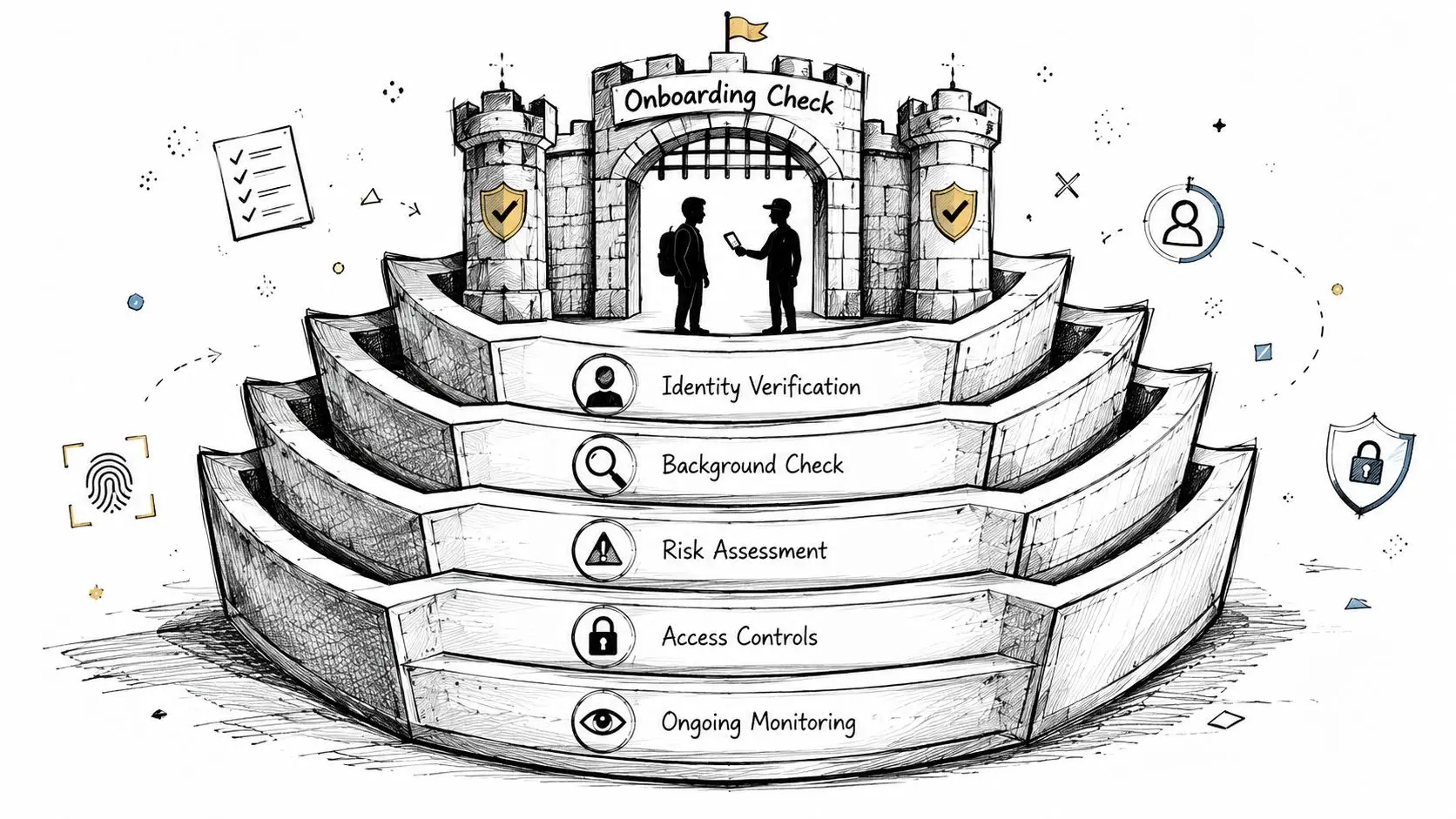
In practice, all three can trigger the same result. Delayed settlements, account restrictions, contract disputes, and pressure from Israeli banks that want a clear record before they release funds or maintain ordinary account access. That is why screening should be divided into functions, with each function tied to a specific business risk.
Name screening at onboarding
Name screening at onboarding determines whether the relationship should start at all. It works like a border passport check. The business compares the proposed customer, supplier, shareholder, agent, or distributor against sanctions lists and related risk data before any contract is signed or any payment path is opened.
This stage sets the quality of everything that follows. If legal names, aliases, ownership details, registration numbers, and jurisdictional links are captured badly at the start, later reviews become slower, more expensive, and harder to defend. For foreign companies operating in Israel, that weakness often surfaces only after a bank asks for supporting documents during a routine transfer review or after a commercial counterparty refuses performance pending clarification.
Transaction screening before execution
Transaction screening asks a narrower question. Should this payment, shipment, or trade movement proceed now, in this form, through these parties and routes?
This works like baggage screening before departure. The relationship may already be approved, but the specific transfer still needs review because the risk can change from one transaction to the next. A new intermediary bank, an unfamiliar port, a revised end user, or a beneficiary added late in the process can create exposure that was absent at onboarding.
That distinction matters in disputes. I have seen otherwise ordinary payment disagreements become far more difficult once an Israeli bank restricts an account or holds a transfer because the transaction record does not match the original onboarding file. At that point, the issue is no longer just compliance. It becomes a liquidity problem and, in some cases, a litigation problem.
PEP and related risk screening
PEP screening serves a different purpose. While a politically exposed person is distinct from a sanctioned person, the presence of a PEP can indicate increased corruption, bribery, influence, or source-of-funds risk that pushes a relationship into a higher review category.
For that reason, screening tools often check sanctions data alongside PEP databases and adverse media, using identifiers such as names, dates of birth, addresses, and contextual information to reduce false matches. The legal value is clear. A file that records why a PEP match was reviewed and cleared is easier to defend than a file that shows no review at all. The commercial value is just as clear. Banks and counterparties are less likely to impose broad restrictions when the company can produce a coherent risk analysis instead of scrambling to explain why a sensitive relationship passed unchecked.
A practical comparison
- Onboarding screening decides whether the business relationship should begin.
- Transaction screening decides whether a particular payment, shipment, or trade should proceed.
- PEP screening decides whether the relationship requires enhanced review because the sanctions issue may sit beside corruption or influence risk.
A mature program uses all three at different points in the relationship. Companies that rely on onboarding checks alone often discover the gap only when money is held, an account is limited, or a routine Israeli commercial dispute turns into a broader argument about compliance controls.
The 2026 Regulatory Landscape for Israeli Operations
The 2026 environment raises the stakes for foreign companies with Israeli ties because list coverage, update speed, and auditability are moving to the center of compliance review.

The Israeli 2026 watchlist audit expectation
A reported 2026 Israeli framework states that organizations must complete a watchlist coverage audit within 30 days, confirming ingestion of OFAC SDN, the EU Consolidated List, UK OFSI, the UN Security Council list, and Israel’s Defence Export Control Agency designations, with audit-latency targets of under 24 hours. That requirement appears in this discussion of sanctions compliance in Israel for 2026.
Even where a foreign company isn’t directly supervised in the same way as a local financial institution, that benchmark matters. Banks, investors, acquirers, and commercial counterparties often borrow their expectations from stricter frameworks. As a result, a foreign parent may face Israeli market pressure before it faces formal Israeli enforcement.
The UK list change matters too
The United Kingdom also reshaped the practical list environment. As of January 28, 2026, the UK consolidated sanctions information into a single authoritative UK Sanctions List, replacing the discontinued OFSI Consolidated List, according to this trade regulation update covering the UK sanctions list change.
That change sounds administrative. It isn’t. If your screening logic still points to outdated list architecture, your controls may look current on paper but fail in operation. Regulators and banks tend to judge the control by what it ingests, not by what the policy says.
Why geolocation now matters
Many screening programs still focus on names alone. That leaves a blind spot when a transaction moves through a restricted jurisdiction without a listed counterparty name. Neterium’s analysis of OFAC enforcement notes that, in 2023, OFAC fined multiple entities that failed to implement effective geolocation checks despite holding the relevant data. See its note on the critical role of location in sanctions screening.
For Israeli operations, that issue is commercially serious because cross-border supply chains, software services, logistics routing, and payment pathways often involve several jurisdictions. A company that screens names but ignores origin, destination, IP-related location indicators, or country fields may miss the very factor that triggers enforcement.
The strategic implication
The recommended path isn’t to collect more data without discipline. It’s to build an auditable control set that aligns list coverage, update timing, geolocation review, and escalation. Companies facing acute exposure often also need a broader incident response structure, especially when a bank, regulator, or counterparty escalates quickly. In that context, a formal commercial crisis management strategy becomes part of sanctions resilience, not a separate discipline.
Strategic Analysis Sanctions Nexus and Commercial Disputes
What turns a routine Israeli payment dispute into an account restriction that threatens payroll, supplier continuity, and board confidence? In many cases, the answer is not the dispute itself. It is the bank’s concern that the dispute has exposed a sanctions and controls problem the company cannot explain quickly.
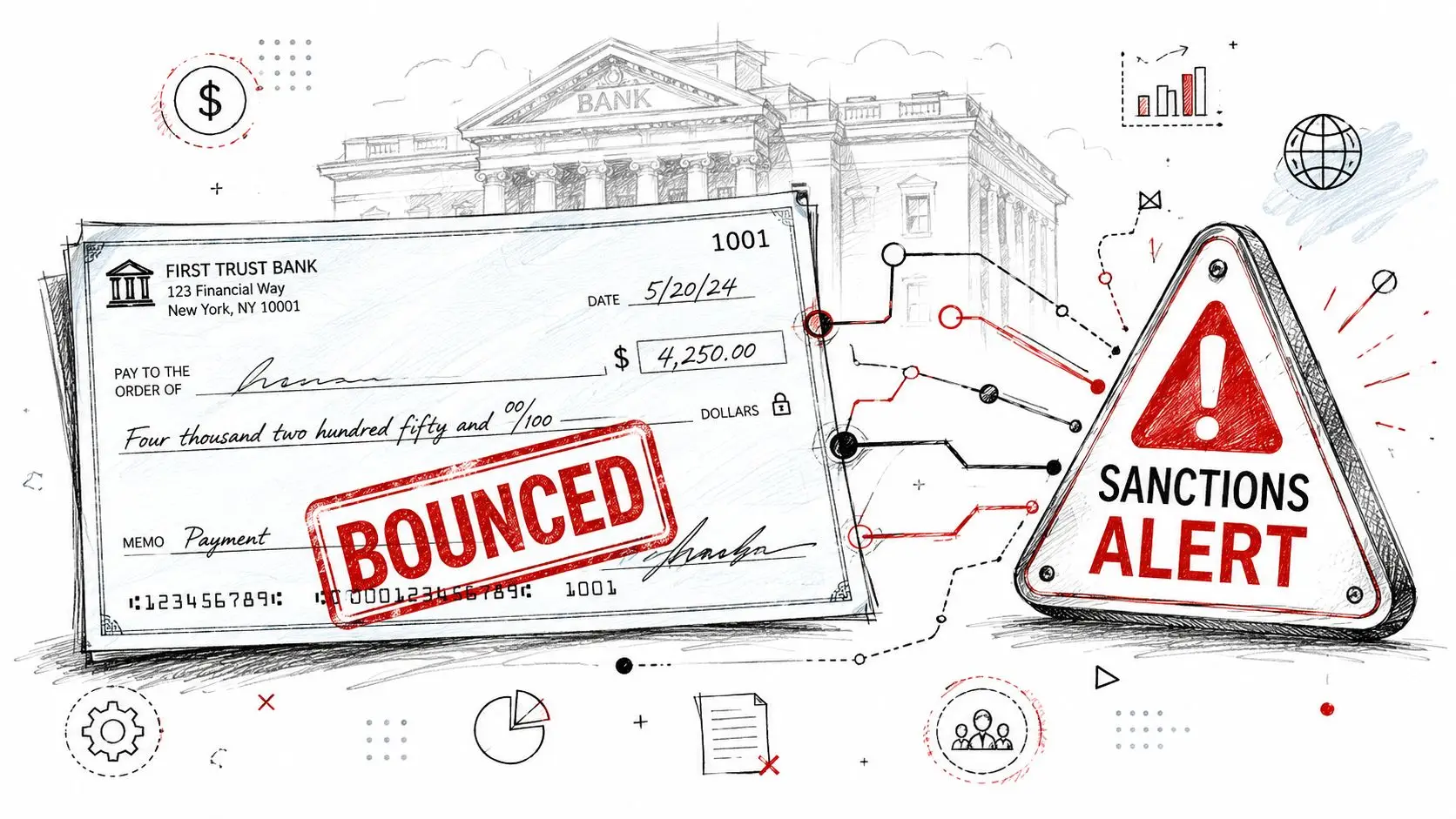
Why banks connect unrelated issues
Israeli banks do not review risk in isolation. A bounced check, a distributor disagreement, inconsistent invoice support, or an unusual payment route can lead the bank to reassess the entire relationship.
That review often moves fast. The bank may request constitutional documents, beneficial ownership charts, contracts, invoices, shipping records, source-of-funds support, and internal compliance policies. If the file shows weak screening discipline or unclear governance, the commercial dispute stops being the main issue. The bank’s primary concern becomes whether it is being asked to process transactions for a customer it does not fully understand.
For foreign companies, that shift is expensive. Management may still be negotiating a receivables problem while the finance team is dealing with delayed wires, frozen balances, or pressure from local employees and suppliers.
The real exposure for foreign businesses in Israel
The legal and commercial risk sits at the intersection of sanctions screening, KYC expectations, and private banking discretion. Post-2026, foreign entities operating in Israel should expect banks and payment counterparties to ask a broader question than “Is this party listed?” They ask whether the company can show control over ownership, counterparties, territories, and transaction purpose under pressure.
A foreign tech company provides a useful example. Its Israeli distributor withholds payment and disputes performance. The company tries to reroute collections through another affiliated entity while it negotiates. The bank sees foreign ownership, changed payment instructions, delayed invoices, and cross-border transfers that no longer match the original account pattern. The result may be a temporary account restriction pending a full review. At that point, the contract dispute is secondary. The immediate crisis is operational. Salaries, VAT payments, and vendor settlements may all be delayed while the company scrambles to prove that the transaction chain is legitimate and properly screened.
This expectation extends beyond any one regulator. As noted earlier, regulators and banks increasingly expect clear ownership of sanctions controls, documented escalation, and evidence that the system works in practice rather than on paper.
How the dispute spiral develops
The pattern is usually predictable:
| Trigger | Immediate commercial issue | Secondary compliance consequence |
|---|---|---|
| Returned checks | Cash flow pressure and payment default allegations | Review of account activity, counterparties, and source-of-funds support |
| Distributor dispute | Delayed receivables and contract friction | Scrutiny of territorial restrictions, end users, and onboarding records |
| Supply interruption | Urgent replacement vendor sourcing | Higher risk of incomplete screening and weak approval records |
| Shareholder conflict | Unclear control over management decisions | Uncertain authority for sanctions escalation, certifications, and bank responses |
Companies usually prepare for the first column. The third column is where the main damage occurs.
I have seen banks treat a mundane commercial disagreement as a warning sign that the customer file is no longer reliable. Once that happens, every missing document becomes more serious than it would have been a week earlier.
Why this issue is sharper in Israel
Israel’s banking system is highly sensitive to foreign ownership structures, offshore elements, politically exposed relationships, and payment paths that do not fit the stated business model. A company may view the matter as a private contractual disagreement. The bank may view the same facts as a reason to pause activity until it receives comfort on sanctions exposure, beneficial ownership, and transaction legitimacy.
That is why sanctions screening should be treated as part of business resilience, not only as a compliance check at onboarding. The companies that recover fastest are usually the ones that can produce a clean ownership narrative, transaction evidence, and alert-handling record within days, not weeks. Businesses facing this pressure often need a coordinated response informed by the practical issues that arise in bank account blockages and restrictions in Israel.
Objective steps for risk mitigation
- Assign authority before a dispute starts: Name the executive who owns sanctions decisions, bank responses, and documentation sign-off.
- Preserve the transaction story: Maintain contracts, invoices, shipment records, payment instructions, and beneficial ownership materials in a form the bank can review immediately.
- Treat payment friction as a warning sign: Returned checks, rejected wires, and repeated compliance queries should trigger an internal review, not only a treasury fix.
- Test pressure scenarios: Run a tabletop exercise for distributor disputes, urgent vendor replacement, and changed payment instructions involving foreign affiliates.
- Use systems that support evidence, not just alerts: Good compliance automation solutions help teams retain records, map counterparties, and show why a transaction was approved or stopped.
- Bring counsel in early: Once the bank is considering restrictions, the timeline shortens and informal explanations rarely resolve the issue.
A sanctions framework proves its value when a commercial dispute puts the account relationship under stress. In Israel, especially for foreign entities after 2026, that is often the moment when screening stops being a compliance topic and becomes a business continuity issue.
Building Your Sanctions Compliance Framework
A workable framework doesn’t begin with software. It begins with responsibility, policy, and decision rights. Technology then supports those decisions.
The written architecture
The first requirement is a clear sanctions policy. It should define scope, list coverage, screening points, escalation thresholds, and approval authority. It should also identify how the company treats subsidiaries, distributors, agents, payment intermediaries, and beneficial owners.
A weak policy usually fails in one of two ways. Either it is too abstract to guide urgent decisions, or it copies a template that doesn’t match the company’s transaction flow.
The escalation chain
A true alert needs a documented route from detection to resolution. Sanctions Lawyers’ OFAC screening guide states that sanctions screening requires checking customers, transactions, and counterparties against the OFAC SDN List and other sanctions lists before processing payments or establishing business relationships, and positive matches must be blocked and reported within 10 business days.
That rule makes escalation design essential. The business must know who freezes the activity, who investigates, who decides, and who documents the outcome.
Boardroom question: If a true match appears at 4:30 p.m. before a payment cutoff, who has authority to stop the transaction immediately?
Choosing technology that actually reduces burden
Vendor selection is a legal and operational decision. The system must cover relevant lists, update fast enough for the company’s risk profile, and manage transliteration and near-matches with discipline. It should also generate audit logs that a bank, regulator, or buyer can understand.
Benchmark data discussed by Alessa states that firms using intelligent matching with fuzzy logic and automated risk scoring reduced manual review time by 40-60% and improved detection rates of sanctioned entities by 25% compared with legacy exact-match systems. See Alessa’s discussion of a sanctions screening checklist for finance companies.
Teams comparing vendors often benefit from reviewing broader compliance automation solutions alongside the legal requirements. The key is fit. Automation helps only when the data inputs, escalation logic, and contractual responsibilities are properly structured.
The commercial contract behind the tool
The screening vendor agreement deserves legal scrutiny. Service levels, update obligations, error handling, audit support, data access, and liability allocation can become critical during an investigation or banking review. Those issues sit squarely within the discipline of commercial contracts and agreements in Israel.
A practical build sequence
- Map exposure first. Identify jurisdictions, customer types, payment routes, and high-risk products.
- Assign responsibility next. Name senior ownership and operational owners.
- Draft the policy. Reflect actual workflows, not generic aspirations.
- Choose the system carefully. Test transliteration, list updates, and alert quality.
- Train staff repeatedly. Front-line teams, finance staff, and legal personnel need role-specific instruction.
- Validate and retest. A system that worked at onboarding may fail during urgent transactions or disputes.
Conclusion Your Strategic Path Forward
What happens when an ordinary payment dispute in Israel triggers a bank review and your screening record cannot withstand scrutiny? For foreign companies operating in Israel after 2026, that is a critical test. Sanctions screening affects far more than onboarding. It can influence whether a bank freezes account activity, whether a counterparty questions performance, and whether a commercial disagreement stays contained or expands into a regulatory and reputational problem.
The practical answer is to treat screening as part of business resilience, not a back-office filter. Boards, legal teams, finance, and local managers should know who owns screening decisions, how exceptions are escalated, and what evidence can be produced quickly if a bank, regulator, or litigation opponent asks questions. In my experience, companies are in a much stronger position when their controls are documented before the first account restriction, delayed transfer, or contractual dispute.
To protect your investment and secure Israeli operations, seek legal advice specific to your structure, counterparties, payment flows, and banking relationships.
Contact RNC Group now through its contact page to assess sanctions exposure, banking risk, and the legal safeguards needed for Israeli operations.
The information in this article is provided for general informational purposes only and doesn’t constitute legal advice. Any reliance on it is at the reader’s own risk, and specific legal advice should be obtained for the relevant facts and jurisdictions.