
What happens when your global crisis playbook says “manage the message,” but Israeli law says “fix the legal exposure first”? In 2026, that gap stops being theoretical and starts creating immediate liability for foreign companies that sell, contract, bank, or litigate in Israel.
Most executives still treat a crisis management strategy as a communications document. That approach fails fast in Israel. A commercial crisis here usually turns on contract text, banking actions, regulatory triggers, procedural timing, and whether counsel takes control before facts harden against the business.
Is Your 2026 Crisis Strategy Ready for Israeli Law
Foreign companies often assume that a foreign governing law clause will shield them from local friction. That assumption is now dangerous. A draft bill from Israel’s Ministry of Justice remains open for public comment until February 27, 2026, and it will mandate that foreign businesses directing activities to Israeli customers comply with four mandatory laws: the Consumer Protection Law, Privacy Protection Law, Standard Contracts Law, and Payment Services Law, regardless of contractual choice-of-law clauses.
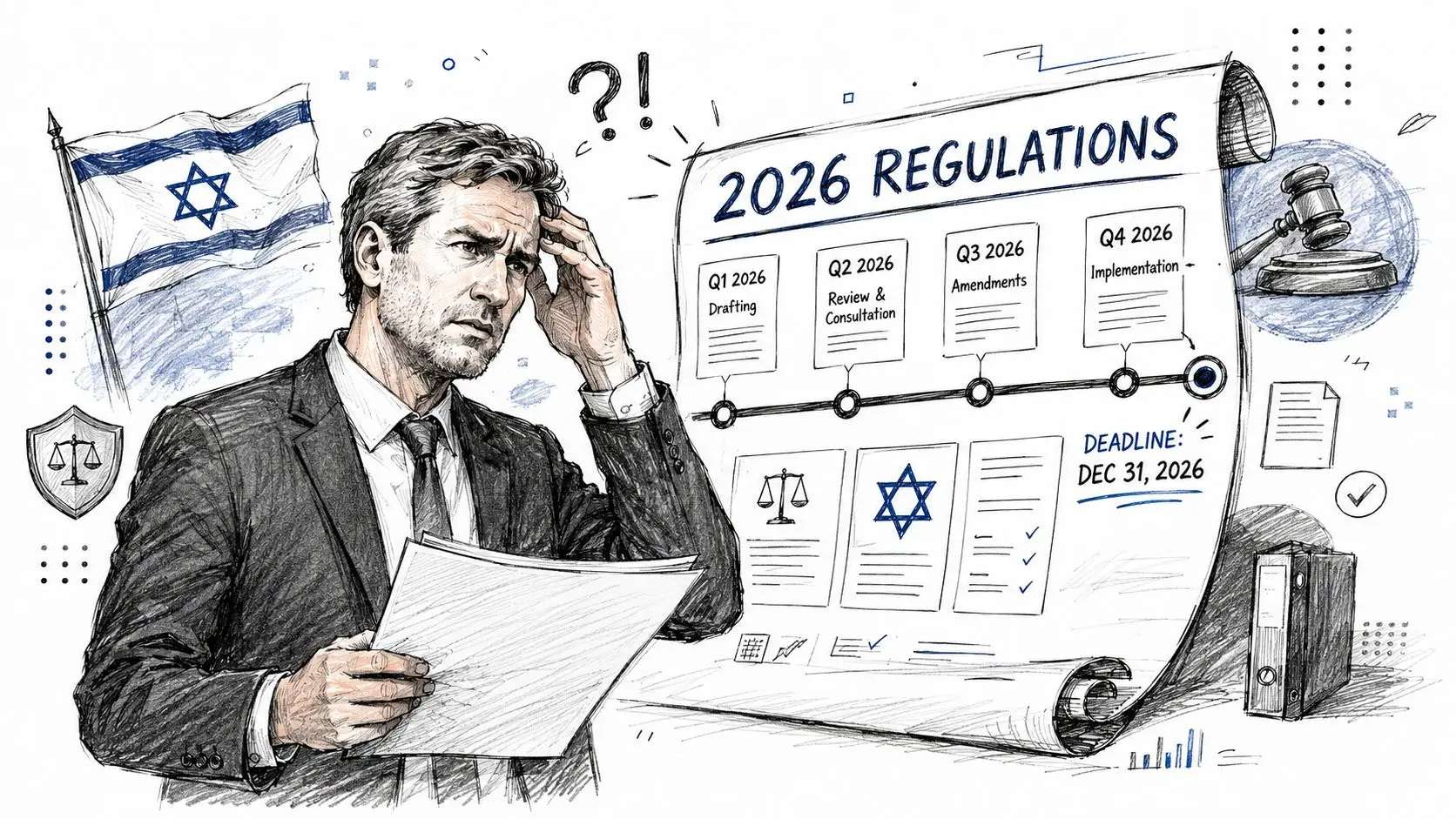
That changes the opening move in any serious dispute. The question is no longer whether the business prefers a foreign-law framework. The question is whether its Israeli touchpoints already trigger mandatory local obligations.
Why the PR playbook breaks down
A crisis involving Israel rarely stays inside one lane. A customer dispute can become a payment services issue. A payment issue can trigger a bank response. A bank response can freeze operations and force urgent legal correspondence before anyone drafts a public statement.
That’s why a real crisis management strategy must sit inside legal operations, not beside them. Businesses in regulated sectors already understand this instinctively. For example, teams reviewing CloudOrbis Inc. for HIPAA security don’t start with branding. They start with mapped obligations, documented controls, and response discipline.
Practical rule: In Israel-facing disputes, legal classification comes before narrative management.
The non-obvious trigger points foreign companies miss
Foreign businesses often trigger Israeli exposure without opening an Israeli subsidiary. Common signals include Hebrew-language marketing, pricing in shekels, Hebrew customer support, and direct targeting of Israeli customers. Once those features exist, a “foreign” problem can become an Israeli legal problem overnight.
The strategic consequence is simple. The first hours of a crisis must answer three questions:
- What law applies: Contract language matters, but mandatory Israeli rules may override expectations.
- Who can act now: Local counsel, signatories, finance staff, and bank-facing personnel must be identified immediately.
- What must be preserved: Payment records, customer communications, contract drafts, and internal approvals often decide the dispute later.
A multinational client doesn’t need another generic checklist. It needs a legally led command structure that can classify the event, stop operational bleed, and control escalation before the other side chooses the battlefield.
The Anatomy of a Cross-Border Crisis in Israel
The standard global model says to calm stakeholders, issue a holding statement, and investigate in parallel. That sounds orderly. In practice, it often gives the opponent a head start.
Existing crisis guidance still overweights communications and underweights legal control. That’s a major blind spot because 68% of global corporate crises now involve litigation or regulatory enforcement actions requiring immediate legal strategy before public messaging, as noted in the Chambers practice guide comparison.
Why generic plans fail
A generic plan treats legal review as a checkpoint. An Israel-ready plan treats legal escalation as a tool. That difference determines who sets the pace.
When the dispute touches Israel, several pressure points converge at once:
| Risk area | What foreign companies often assume | What actually matters |
|---|---|---|
| Contract dispute | Negotiation can wait while messaging stabilizes | Early written positions may define later legal leverage |
| Regulatory issue | Public clarification reduces pressure | Regulatory exposure may expand if facts are misstated |
| Banking friction | Operations can route around the problem | Bank actions can choke payroll, collections, and supplier payments |
| Counterparty aggression | Time favors a reasonable settlement | Delay often strengthens the side already preparing filings |
The Israeli dimension changes sequencing
Israeli commercial disputes tend to move quickly once formal steps begin. That makes hesitation expensive. A business that waits for “full facts” before acting often learns too late that the other side already framed the record through demand letters, complaints, banking notices, or procedural filings.
The first strategic mistake in a cross-border crisis is treating legal escalation as a sign of failure. Often it’s the only way to restore control.
Expert crisis counsel differs from ordinary dispute handling. The goal isn’t to file reflexively. The goal is to decide whether a formal notice, injunction path, preservation demand, or regulator-facing submission will contain the event faster than another round of internal debate.
A better mental model
A cross-border crisis in Israel isn’t one event. It’s a live contest across several fronts:
- Commercial front: Contract rights, payment defaults, delivery failures, exclusivity fights.
- Banking front: Returned checks, restricted activity, delayed transfers, compliance reviews.
- Regulatory front: Consumer, privacy, payments, and local mandatory law exposure.
- Procedural front: Deadlines, notices, evidence preservation, jurisdiction positioning.
That’s why the communications-first model collapses. It assumes one audience. In reality, the company is facing judges, regulators, banks, counterparties, customers, and internal decision-makers at the same time.
The right model is legally orchestrated containment. First classify the exposure. Then lock the facts. Then decide which forum, letter, filing, or negotiation channel puts pressure where it belongs.
Proactive Prevention Through Your Legal Framework
Most crises don’t begin with a headline. They begin with sloppy drafting. If the contract leaves room for argument, the dispute arrives preloaded.
That problem becomes sharper in 2026. The 2026 amendment to Israel’s Contracts Law mandates that written contract text is the primary source of obligation for agreements signed after January 6, 2026. It effectively overturns the Aprofim doctrine and requires courts to prioritize literal interpretation over fairness considerations.
Text now controls outcome
Foreign companies often rely on business context to fill drafting gaps. That habit now creates avoidable exposure in Israeli-facing deals. If the signed text is weak, later appeals to commercial fairness won’t rescue it.
This matters most in franchise agreements, licensing arrangements, partnership documents, management agreements, and cross-border service contracts. A party that assumed a judge would infer business intent now faces a stricter textual standard.
A useful comparison appears in operational compliance environments outside Israel. Teams studying Mexico’s BPO compliance requirements understand that regulators and counterparties both punish ambiguity. Israeli contract management now demands the same discipline.
What must be revised now
Foreign businesses should review every Israel-linked template before they sign under the new standard. The most exposed clauses usually include:
- Termination mechanics: State triggers, cure periods, delivery method, and post-termination duties in exact language.
- Payment architecture: Define due dates, offsets, suspension rights, returned payment consequences, and currency handling.
- Exclusivity and territory: Remove vague commercial language. State scope, duration, carve-outs, and online sales treatment.
- Authority and approvals: Identify who can bind each entity, which approvals are mandatory, and what happens if approvals fail.
- Dispute control: Clarify governing law, forum, notice method, interim relief rights, and document language hierarchy.
Ambiguity used to invite argument. Now it invites loss.
The recommended strategic path
The recommended strategic path is to rewrite critical agreements as if every disputed sentence will be tested in court exactly as written. That means tighter definitions, cleaner schedules, fewer “reasonable efforts” promises, and explicit remedies.
Foreign clients should also align contract text with operations. If finance teams process payments one way, but the contract describes another workflow, the business is drafting its next crisis in advance. The same rule applies to reseller structures, channel management, local agents, and service-level commitments.
For companies handling multiple jurisdictions, a broader commercial agreements practice should function as a crisis-prevention engine, not a document warehouse. Contract review is where serious crisis management strategy starts.
Implementing a Phased Escalation Model
A real crisis response needs timing, ownership, and legal force. Anything less becomes committee theater. The strongest model combines classic crisis discipline with commercial litigation tactics.
The core timing matters. Effective crisis management strategy uses a four-phase methodology: Immediate Stabilization (Weeks 1–2), Root Cause Investigation (Weeks 2–6), Remediation Planning (Weeks 4–8), and Long-Term Rebuild (Months 3–12). Just as important, situation assessment must occur within the first 2–4 hours, as outlined in the Stratrix crisis management framework.
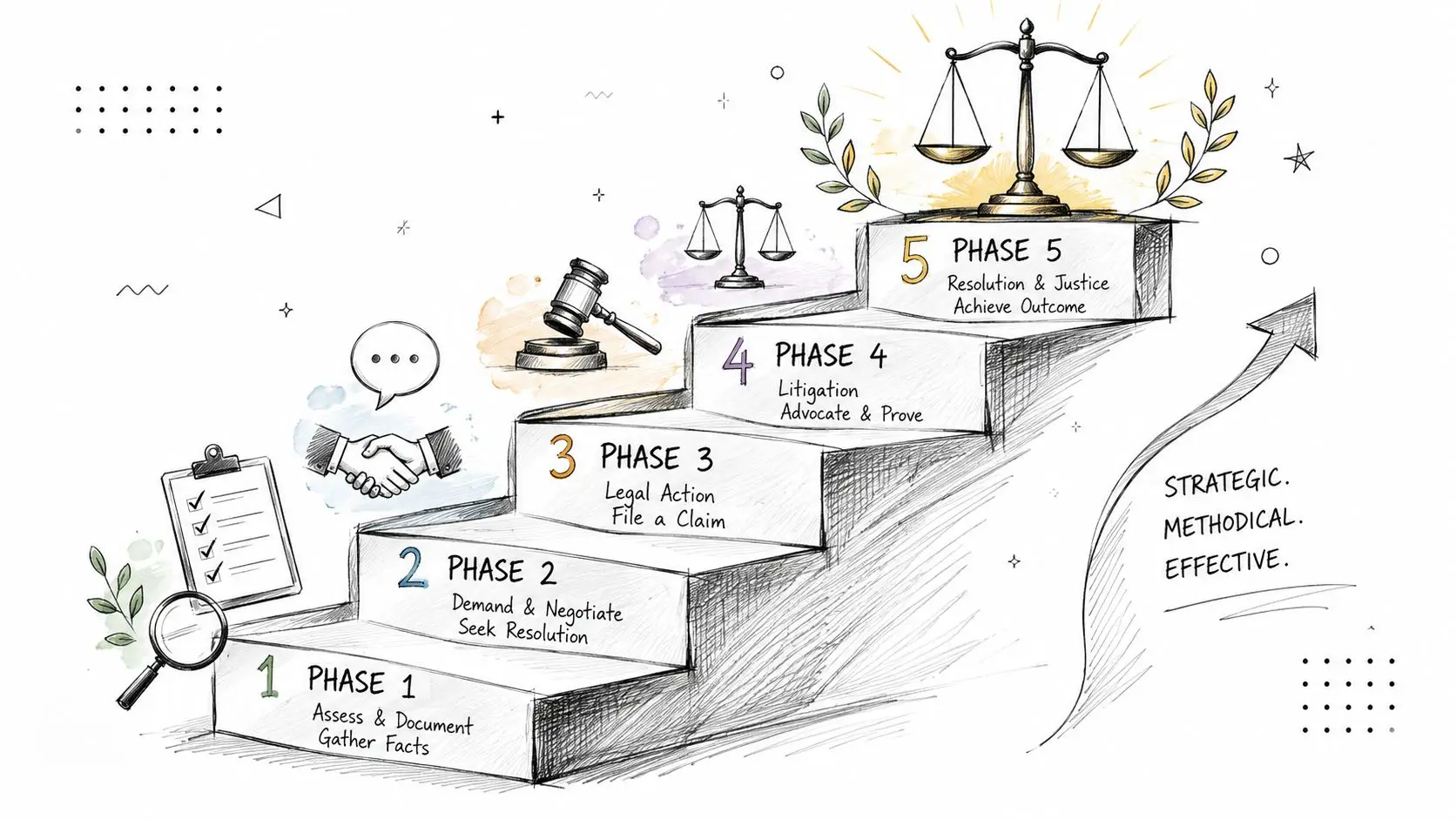
Phase one means legal stabilization
The first phase isn’t about polished messaging. It’s about stopping further harm and preventing the opponent from shaping the record first.
Inside the first hours, decision-makers should complete a short command sequence:
- Establish facts fast. Confirm scope, affected contracts, banking status, counterparties, and any immediate legal deadlines.
- Freeze damaging activity. Stop unauthorized payments, hold destructive communications, preserve records, and suspend non-essential outreach.
- Assign one legal channel. One team must control notices, external statements, and regulator-facing communications.
- Triage stakeholders. Notify only the people who must act now, based on legal obligation and operational impact.
Phase two builds the evidentiary spine
Once the immediate threat is contained, the investigation must become disciplined. This phase is where many companies drift into vague internal reviews and lose their effectiveness.
A proper investigation asks narrow, adversarial questions. Which contract term was breached first. Which payment or representation triggered the current action. Which internal decision created the exposure. Which documents prove or undermine the company’s position.
Facts gathered for management comfort rarely win disputes. Facts gathered for procedural pressure often do.
At this point, legal tools start doing real work. Formal notices can define breach. Demand letters can narrow the issues. Preservation letters can stop evidence loss. In some cases, early court applications change the entire negotiation dynamic.
Phase three turns findings into pressure
Remediation planning isn’t an internal memo. It should assign owners, deadlines, budgets, and measurable outcomes. In cross-border disputes, remediation also needs a forum strategy.
That usually means choosing among several paths:
- Commercial settlement track: Useful when the relationship still has value.
- Aggressive enforcement track: Appropriate when the counterparty responds only to procedural risk.
- Banking challenge track: Necessary when account functionality or payment rails are impaired.
- Regulatory containment track: Critical when disclosure or compliance issues can widen.
A specialized provider may support execution here. For example, RNC Group’s commercial and international crisis management work centers on verified fact development, centralized legal response, and phased escalation in cross-border disputes.
Phase four rebuilds on better architecture
Long-term resolution requires more than settlement or judgment. It requires structural correction. Contracts must be redrafted. Authority lines must be tightened. Banking dependencies must be mapped. Local representative arrangements must be tested before the next emergency.
Many companies also benefit from reviewing commercial litigation examples and strategy patterns when designing internal escalation rules. The point isn’t academic learning. It’s teaching management how disputes unfold once pressure starts.
Case Study Israeli Bank Account Restrictions
An Israeli bank account restriction can turn a manageable dispute into a business emergency within hours. Foreign companies usually discover the problem too late. Suppliers are unpaid, local staff panic, and the bank treats the matter as a compliance issue rather than a customer service problem.
Here, legal crisis management becomes concrete.
The trigger event
The company receives notice that the Israeli bank account is restricted because checks were returned. Management’s first instinct is often operational. Call the branch, explain the background dispute, and ask for time.
That instinct usually wastes precious time. The bank has already acted. The right first move is to demand the legal basis, the factual record relied upon, and the procedural path for review through urgent written correspondence with the bank’s legal function.
Applying the phased model
Immediate legal stabilization starts with document control. The company gathers the bank notice, check data, underlying invoices, account terms, customer disputes, and internal approvals for the disputed payments. At the same time, it stops contradictory outreach from sales staff, finance staff, and local representatives.
Systematic investigation then asks the question management often avoids. Did the returned checks result from a solvency problem, a commercial dispute, an authorization failure, or a process breakdown inside the company itself. The answer determines whether the bank action should be challenged head-on, whether the underlying dispute must be settled first, or whether both tracks must run together.
A practical review often includes:
- The account history: Which items were returned, when, and under what notation.
- The contract layer: Which supplier, distributor, or service agreement produced the payment conflict.
- The procedural layer: Whether notices were served properly and whether the bank followed applicable requirements.
- The business continuity layer: Which payroll, rent, tax, or vendor obligations now face immediate disruption.
In a bank restriction case, speed matters. Precision matters more.
The two-track response
A strong response usually runs on two parallel tracks. One track addresses the bank. The other addresses the commercial cause of the returned checks.
The bank-facing track may include a legal challenge, demand for correction, evidentiary submission, and urgent negotiation over account functionality. The dispute-facing track may include settlement pressure, revised payment arrangements, or formal action against the counterparty whose conduct triggered the breakdown.
Foreign companies often underestimate the reputational effect inside the banking relationship. A weak or emotional explanation makes things worse. A structured legal file, supported by organized facts and a clear requested remedy, gives the bank a basis to reconsider or narrow the restriction.
For businesses confronting this exact scenario, a focused review of Israeli bank account restrictions due to returned checks is often the fastest way to understand both the banking and litigation dimensions. If the matter escalates, legal correspondence and demand letters often become the instrument that reorders the dispute before court action becomes necessary.
Post-Crisis Review and Building Resilience
A company that survives a crisis and learns nothing has only postponed the next one. Recovery isn’t a soft phase. It’s where institutional weakness gets exposed without excuses.
Effective crisis management strategy follows a five-stage process: Prevent, Prepare, Identify, Respond, and Recover, and organizations that run regular drills and post-crisis evaluations achieve faster recovery and stronger stakeholder trust, according to the Everbridge crisis management overview.
The review must be uncomfortable
A serious post-crisis review asks blunt questions. Did the company identify the legal issue early enough. Did the contract help or hurt. Did finance escalate the payment problem before it became a banking event. Did anyone speak externally without legal control.
That review should produce concrete revisions, not general lessons. Contract templates need edits. Signatory controls need tightening. Internal escalation thresholds need rewriting. Local Israeli counterpart maps, banking authorities, and translation workflows need validation.
What resilient companies do next
The best post-crisis work usually includes a short operating table like this:
| Review area | Question | Corrective action |
|---|---|---|
| Contracts | Did the text allocate risk clearly | Rewrite ambiguous clauses and approval schedules |
| Banking | Did anyone know the escalation path | Create a bank crisis protocol and named contacts |
| Governance | Were roles confused | Assign a single crisis lead and legal sign-off path |
| Evidence | Were records easy to collect | Standardize storage, retention, and retrieval rules |
Foreign companies should also run simulations around their real fault lines. Distributor default. returned checks. partner deadlock. regulator complaint. data request. The point isn’t to predict every event. It’s to shorten recognition time and improve execution under pressure.
Recovery becomes a competitive advantage when the company turns one painful event into a better legal operating system.
The firms that handle Israeli exposure well don’t just “bounce back.” They redesign decision-making, tighten documentation, and improve their next response before the next problem starts.
Avoid costly mistakes and contact RNC Group now if a cross-border commercial dispute, banking restriction, or Israeli regulatory issue is already developing. Early legal control often determines whether the matter stays manageable or becomes expensive, public, and structurally damaging.
This article provides general information only and does not constitute legal advice, a legal opinion, or a substitute for case-specific review of facts, contracts, banking records, or regulatory exposure. Reliance on this material without case-specific legal assessment is inappropriate, especially in urgent cross-border matters.