
Which country’s law controls when an international deal falls apart in 2026, the law named in the contract, the law of the court hearing the case, or the law of the place where the money is frozen? Most executives answer that question too quickly, and that mistake often weakens their position before the merits are even argued.
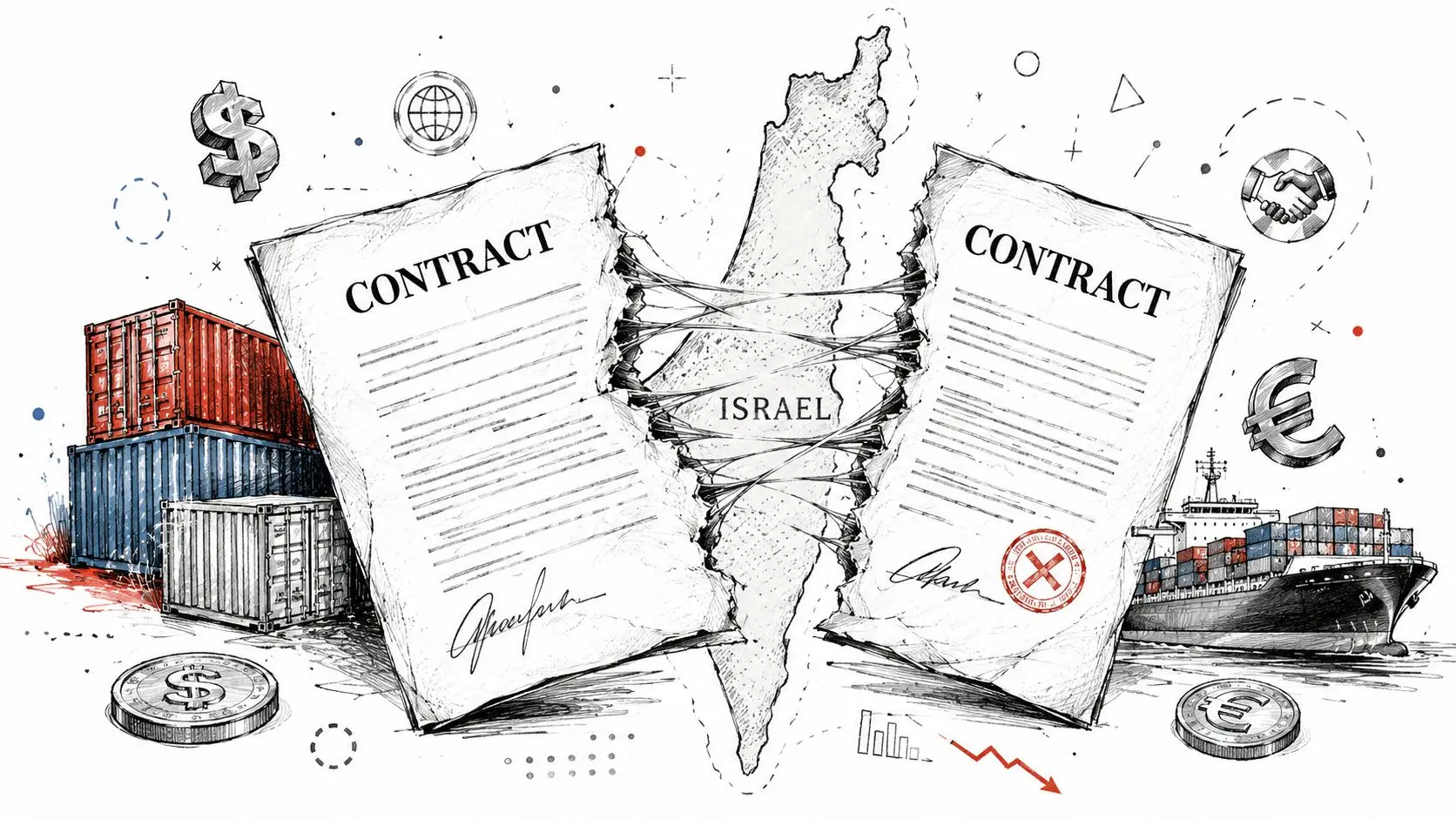
For non-Israeli companies doing business with Israeli counterparties, conflict of laws isn’t a theory seminar. It’s the operating system behind jurisdiction fights, emergency applications, enforcement strategy, bank pressure, and deal failure.
Navigating Global Business Disputes in 2026
Which country decides your rights when a cross-border partnership collapses in 2026? That answer often determines who gains speed, who controls cash flow, and who negotiates from weakness.

What is conflict of laws? It’s the set of rules courts use when more than one legal system could plausibly apply to the same dispute. In practice, it answers three commercial questions. Where can the case be heard, which law will decide liability, and where can the result be enforced.
For international businesses facing Israeli exposure, that framework shapes real business outcomes. A board might assume its contract solves the problem because it names foreign law. Yet an Israeli court may still hear urgent proceedings, apply Israeli procedural rules, and affect local assets, banking relationships, or evidence access.
Why this matters before litigation starts
Conflict of laws becomes critical long before trial. It influences demand letters, document preservation, interim remedies, and how fast a company should escalate. It also affects internal reporting, because legal uncertainty can become a transaction risk, a financing issue, or a compliance problem.
Practical rule: The first fight in a cross-border dispute often isn’t about breach. It’s about control of forum, timing, and pressure points.
That’s why strategic teams map communications and response protocols early. Even basic intake systems matter when management is split across time zones. For firms handling urgent disputes, tools such as an AI receptionist for law firms can reduce missed inbound issues during court hearings or emergency negotiations.
The business lens, not the academic lens
Many companies ask what the contract says and stop there. That approach fails when the counterparty sues elsewhere, when a bank in Israel takes a restrictive position, or when a local subsidiary becomes the anchor for jurisdiction.
A better question is narrower and more useful. Which legal system gives the company the best chance to protect cash, evidence, reputation, and enforceability. That’s where conflict of laws moves from doctrine to strategy.
The Three Pillars of Conflict of Laws
Every serious cross-border dispute forces decision-makers to answer three linked questions. They sound technical, but they operate like the rules of a tournament. First, who hosts the game. Second, which rulebook applies. Third, whether the trophy counts outside the stadium.

Jurisdiction decides where the fight happens
Jurisdiction asks whether a court has authority over the dispute or the parties. For a non-Israeli business, this issue often turns on contract wording, local business activity, asset location, service mechanics, and the factual connection to Israel.
This pillar matters because forum drives pressure. A case in Israel may give one side better access to interim relief, local witnesses, or banking information. A case abroad may offer different disclosure tools or a more familiar judicial environment.
Jurisdiction also shapes settlement timing. The party that secures a favorable forum often defines the pace of the dispute.
Choice of law decides the rulebook
Choice of law asks which legal system governs the substance of the dispute. That usually means the law used to interpret the contract, assess breach, evaluate defenses, and determine available remedies.
Executives often overestimate how much a governing law clause solves. It helps, but only if the clause is broad, relevant to the issues pleaded, and effectively enforced by the deciding tribunal. A clause naming English or New York law doesn’t automatically prevent Israeli proceedings. Nor does it guarantee that every connected claim, such as misrepresentation, fiduciary duties, or statutory issues, will be treated the same way.
A strong governing law clause is useful. A governing law clause without a matching forum strategy is often incomplete.
Recognition and enforcement decide whether victory travels
The third pillar is recognition of judgments, sometimes discussed together with enforcement. This asks whether a judgment or arbitral award issued in one place will be honored elsewhere.
That point becomes decisive when the defendant’s money, shares, receivables, or operational assets sit in another country. A paper victory in one jurisdiction may have little commercial value if the result can’t reach the target assets.
A simple way to test all three
A practical review should ask:
- Where can the other side sue first: Check contractual forum language, local subsidiaries, branch activity, and asset footprint.
- What claims might escape the contract: Consider tort, unjust enrichment, IP, banking, and statutory claims.
- Where is enforcement realistic: Identify where the counterparty holds bank accounts, inventory, shareholdings, or payment streams.
The mistake many companies make is treating these as separate legal specialties. In reality, they form one control system. If jurisdiction favors one country, choice of law another, and enforcement a third, counsel must align them before the dispute hardens.
Substantive versus Procedural Rules
One of the most expensive misunderstandings in cross-border litigation concerns the gap between substantive law and procedural law. Clients often assume that if a contract selects foreign law, the entire dispute will feel foreign. It usually won’t.
Substantive rules define rights and obligations. They address issues such as contract formation, breach, warranties, damages principles, ownership, and interpretation.
Procedural rules govern how the case is run. They cover filing steps, service, interim applications, evidentiary mechanics, deadlines, hearing conduct, and many courtroom logistics.
Why the distinction changes strategy
An Israeli court may accept that foreign substantive law governs the contract. Even then, the same court will generally run the case under Israeli procedure. That means the litigation experience, timetable pressure, and evidentiary path may differ sharply from what a foreign business expected.
This distinction matters in urgent disputes. A company may have a strong substantive position under foreign law yet still lose tactical ground because it mishandles local filings, service, or interim relief practice in Israel.
For operational teams, that can feel counterintuitive. The contract says one thing, but the litigation machine runs on another system.
Forum still matters, even with foreign governing law
This is why a forum clause carries independent value. It doesn’t just choose a courthouse. It can reshape cost, speed, disclosure burdens, and early advantage.
A practical example helps. Suppose an Israeli court hears a dispute under a contract governed by New York law. The court may require the parties to prove New York law through submissions and expert material, while still expecting compliance with Israeli filing practice and courtroom procedure. Teams that ignore the local process often create avoidable delay or credibility problems.
When legal operations staff need a plain-language overview of filing mechanics, FaxZen’s instructions for court filings offer a useful baseline. However, cross-border litigation involving Israel still requires forum-specific legal judgment.
The governing law clause answers only part of the question. The court’s own process often decides how painful the dispute becomes.
What doesn’t work
Two assumptions consistently fail.
- Relying on boilerplate alone: Generic governing law language rarely covers every non-contract claim that emerges in a commercial collapse.
- Treating procedure as administrative: Procedure is a strategic asset. Missed timing, defective service, or weak interim positioning can alter settlement value quickly.
Conflict of Laws in Commercial Scenarios
Abstract doctrine becomes clearer when tied to commercial pressure. In disputes involving Israel, conflict of laws often appears inside three recurring patterns. A failed acquisition, a broken franchise relationship, and a banking restriction that interrupts operations.
Failed M and A deal
A foreign buyer signs for an Israeli target through a layered acquisition structure. The SPA names foreign governing law, but key due diligence materials, management witnesses, and target operations remain in Israel. After signing, the buyer alleges disclosure failures and seeks to unwind or reprice the transaction.
The first instinct is to sue under the chosen foreign law. Yet the primary dispute may begin elsewhere. An Israeli defendant may argue that local conduct, local documents, and local company records justify Israeli proceedings for related claims. Meanwhile, the buyer may need urgent orders to preserve evidence or prevent post-closing value leakage.
Deal teams discover that legal architecture and transaction architecture aren’t the same. The governing law clause may point abroad, but control points remain local. If the dispute touches directors, target records, employee access, or restrictive banking measures, Israel may become unavoidable.
Franchise or licensing collapse
A non-Israeli franchisor expands into Israel through a local operator. The contract uses foreign law and a foreign dispute clause. Later, the operator claims misrepresentation, local statutory protection, and bad-faith termination. The franchisor claims unpaid royalties, misuse of brand assets, and breach of operational standards.
These disputes rarely stay confined to one legal label. Contract claims sit next to IP issues, unfair competition allegations, local compliance arguments, and emergency requests over use of marks, websites, inventory, or customer databases.
The legal question isn’t only which law governs the agreement. It’s whether the surrounding claims will be characterized as contractual, statutory, tort-based, or proprietary. That characterization can shift forum, remedies, and timing.
In cross-border franchise disputes, the side that frames the claims most precisely often shapes the legal map before the other side reacts.
Bank account restriction with foreign-law background
This scenario is especially disruptive for foreign companies. A company operates under a commercial relationship documented abroad, often in English and under non-Israeli law. Payments then move through Israel, or the Israeli counterparty’s conduct triggers scrutiny. An Israeli bank restricts activity, delays transfers, requests extensive documentation, or blocks use of the account.
At that moment, executives often ask the wrong question. They ask whether the underlying contract is governed by foreign law. The more urgent question is different. Which issues belong to the bank’s local compliance duties, and which issues remain part of the underlying commercial dispute.
An Israeli bank won’t treat a foreign governing law clause as a reason to ignore local risk controls. Therefore, the response must separate the banking layer from the merits layer. The company needs a factual record that explains the commercial purpose, beneficial ownership, transaction path, and documentary basis of the account activity. At the same time, it must preserve its position on the underlying contract, because admissions made to solve the bank problem can damage the main dispute.
A disciplined strategy usually includes these tracks:
- Document the banking rationale: Assemble contracts, invoices, board approvals, counterpart identification, and transaction explanations in a coherent chronology.
- Ring-fence the merits dispute: Avoid turning compliance correspondence into an uncontrolled confession about the underlying deal.
- Map possible proceedings: The company may need one path against the counterparty and another path concerning the bank’s restriction.
For businesses facing this pressure point, the legal and operational issues discussed in bank account blockages in Israel provide a useful reference. The central lesson is simple. Local banking restrictions can exert immediate commercial pressure even when the underlying transaction is governed elsewhere.
Actionable Risk Management Tactics for Israeli Business
The best conflict-of-laws strategy starts before there’s a dispute. Once money is trapped, counterparties stop cooperating, or an acquisition goes off course, available options narrow fast. Contract drafting and escalation planning should aim to preserve control, not just define rights.
Draft clauses that work together
A governing law clause should match the dispute clause. If the contract selects one law but sends disputes to an unsuitable forum, the parties create friction at the moment they need clarity most.
Use a coordinated package:
- Choose governing law carefully: Pick a legal system the business can realistically interpret and prove if litigation begins.
- Use a forum clause with discipline: Decide whether exclusivity helps or hurts the likely enforcement path.
- State the clause broadly: Cover contract, related non-contract claims, and interpretive disputes where possible.
- Address interim relief expressly: Preserve the right to seek urgent court orders even if the merits go to arbitration.
Compare litigation and arbitration before signing
Arbitration often appeals to international clients because it offers neutrality and privacy. Yet it isn’t automatically better. Some disputes need quick court intervention, public pressure, or stronger joinder options.
| Factor | Public Litigation | Private Arbitration |
|---|---|---|
| Forum control | Depends on clause enforcement and local jurisdiction rules | Depends on clause drafting and seat selection |
| Privacy | Usually more limited | Usually stronger |
| Urgent interim relief | Often more accessible through local courts | May require parallel court support or emergency mechanisms |
| Procedural flexibility | Court-driven | More customizable |
| Multi-party complexity | Sometimes easier in court | Often harder without carefully aligned agreements |
| Enforcement path | Depends on recognition rules in target jurisdictions | Often attractive for cross-border enforcement planning |
| Public record risk | Higher | Lower |
A recurring mistake is copying arbitration language from another deal. Clauses need to fit the transaction, the likely dispute type, and the asset map.
Build a dispute map during the deal, not after it
Non-Israeli companies should identify where friction could arise in Israel before signing. That means checking local assets, bank dependencies, operational personnel, and who controls books and records.
A practical internal checklist helps:
- Identify local choke points: Bank accounts, subsidiaries, trademarks, warehouses, receivables, and customer-facing infrastructure.
- Set escalation authority: Decide who approves urgent filings, settlement ranges, and external communications.
- Align legal and communications plans: Cross-border disputes can spill into reputation and investor messaging. Guidance on commercial crisis management in Israel is often relevant when legal action overlaps with business continuity.
- Plan the international enforcement route: If the dispute may span multiple jurisdictions, counsel should assess where a judgment or award will matter most. Businesses dealing with cross-border forum pressure should also understand the strategic issues discussed in international commercial litigation involving Israel.
Strong contracts reduce ambiguity. Strong dispute maps reduce panic.
Don’t ignore adjacent personal and asset issues
Cross-border executives often underestimate side issues that can skew their advantage. Personal guarantees, founder undertakings, nominee holdings, and property-linked obligations can complicate the forum analysis. For foreign investors who also manage personal or relocation-related assets, even practical guidance on topics such as how to buy a house in Israel can signal how local formalities and documentation standards differ from what they expect elsewhere.
What works and what fails
What works is advance planning, integrated drafting, and a clear view of where the other side can apply pressure first. What fails is treating dispute clauses as template language, assuming the merits will dominate from day one, or waiting for a banking or enforcement problem before mapping the legal terrain.
Conclusion Turning Legal Complexity into Advantage
Conflict of laws sounds abstract until a company must decide where to sue, which law to argue, and how to reach assets in Israel or beyond. Then it becomes a board-level control issue.
For non-Israeli businesses, the practical answer to what is conflict of laws is straightforward. It’s the framework that decides who gets the initial advantage in a cross-border dispute. Companies that address it early can reduce uncertainty, structure transactions more intelligently, and respond to crises without improvising under pressure.
The recommended strategic path is to treat governing law, forum, arbitration, enforcement, banking exposure, and local asset risk as one integrated system. That approach won’t remove every dispute. However, it can turn a chaotic multi-jurisdiction fight into a managed process with defined options.
Avoid costly mistakes by getting specific advice before a contract is signed or a dispute hardens. Contact RNC Group now through its contact page to assess jurisdiction, governing law, enforcement, and Israeli risk exposure in a coordinated way.
This article provides general information only and doesn’t create a lawyer-client relationship, legal opinion, or reliance basis for any specific matter. Cross-border disputes depend on exact facts, contract wording, procedural posture, and the jurisdictions involved, so legal advice should be obtained for the particular case.